
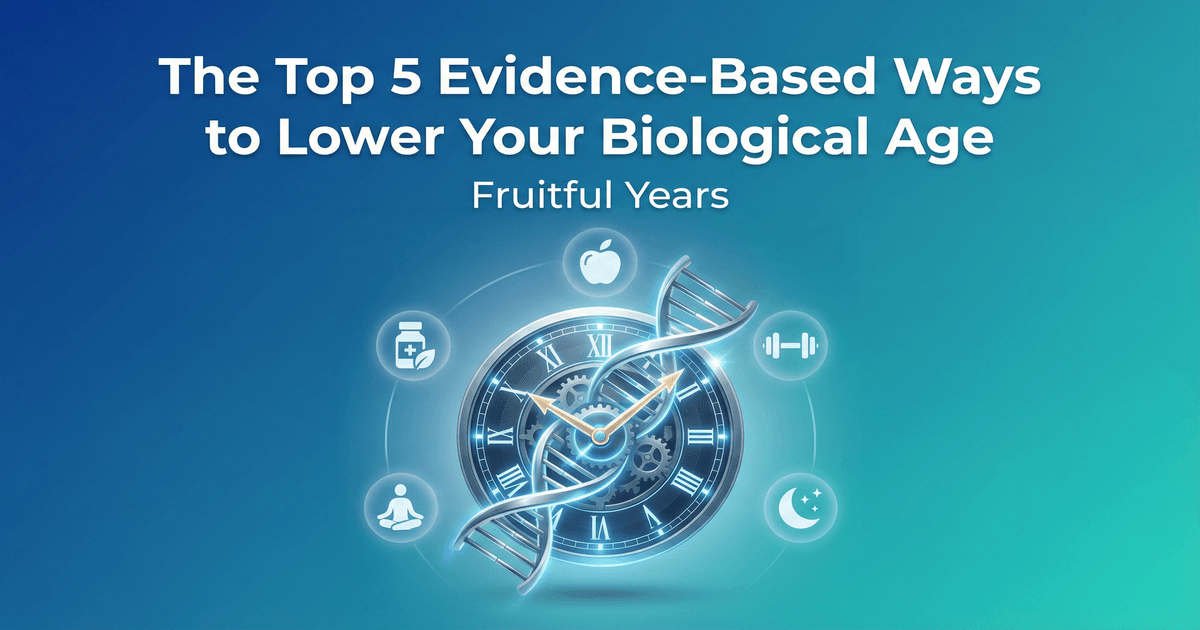
How to Lower Your Biological Age
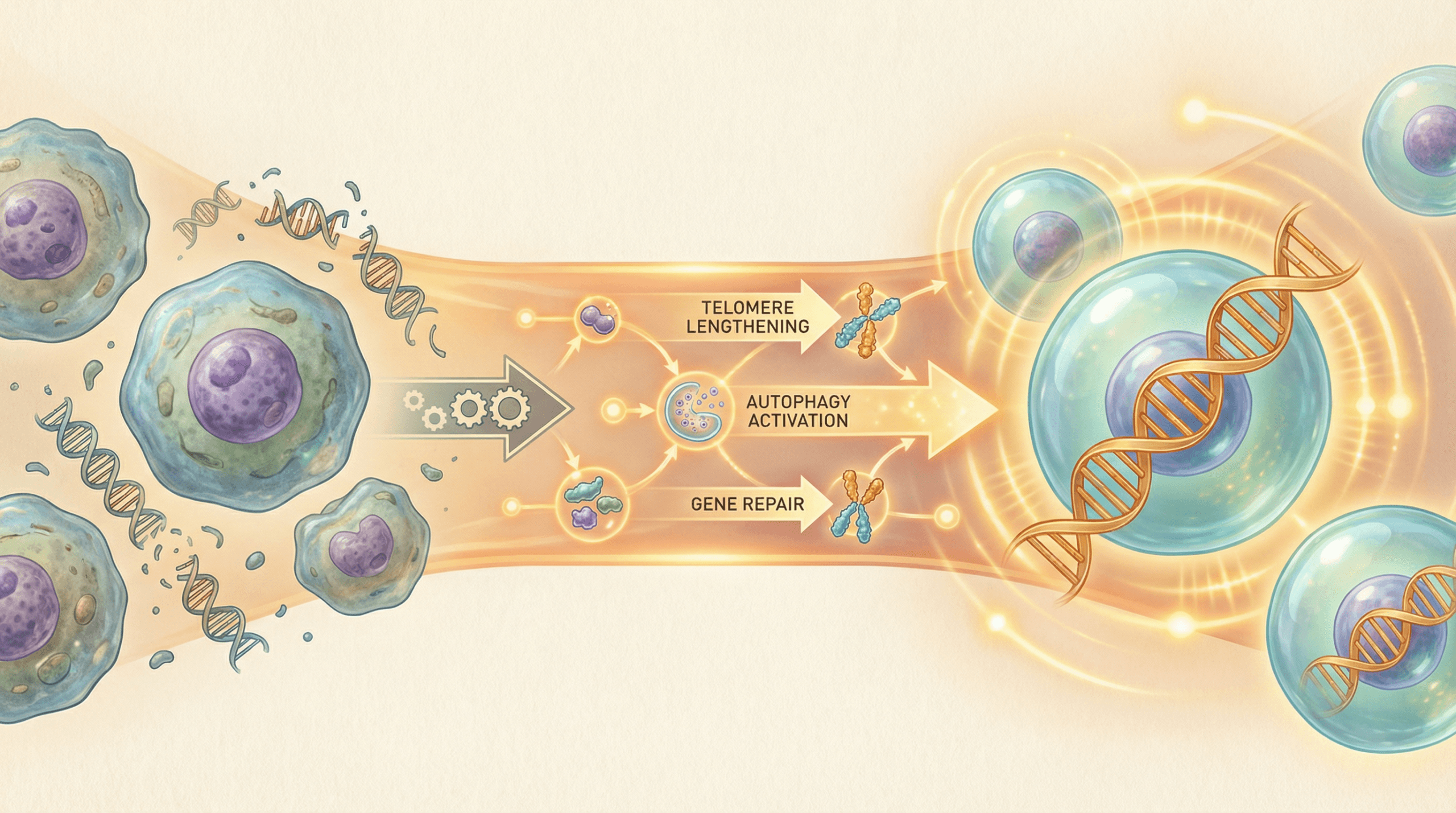
You’ve learned what biological age is and why it matters more than the number of candles on your birthday cake. Now comes the exciting part: you can actually lower your biological age through proven lifestyle interventions. This isn’t about expensive treatments or unproven supplements—it’s about five evidence-based strategies that have been shown in clinical studies to reverse biological aging at the cellular level.
TL;DR: Lower Your Biological Age with Nutrition
- Eat a colorful, nutrient-dense diet rich in polyphenols, healthy fats, and fiber.
- Focus on whole foods like vegetables, fruits, nuts, and fatty fish.
- Minimize processed foods, added sugars, and trans fats.
- Adopt eating patterns like the Mediterranean diet for longevity benefits.
A groundbreaking 2021 study published in Aging demonstrated that participants who followed a comprehensive diet and lifestyle program reduced their biological age by an average of 3.23 years in just eight weeks [1]. Another study from 2023 showed that women following a methylation-supportive program experienced measurable reductions in epigenetic age [2]. The science is clear: your daily habits shape your biological destiny.
Let’s explore the five pillars of biological age reversal, backed by research and ready for you to implement starting today.
1. Optimize Your Diet with Nutrient-Dense
What the science says: Your diet directly influences DNA methylation patterns, which are the foundation of epigenetic aging clocks. A 2023 study in the FASEB Journal confirmed that dietary interventions—particularly those rich in phytonutrients, healthy fats, and fiber—can slow cellular aging [3].
The longevity diet includes:
- Colorful vegetables and fruits rich in polyphenols (berries, leafy greens, cruciferous vegetables)
- Healthy fats from olive oil, avocados, nuts, and fatty fish (salmon, sardines)
- High-quality protein to maintain muscle mass and support cellular repair
- Fiber and probiotics to support gut health, which influences systemic inflammation
- Minimal processed foods, added sugars, and trans fats
The Mediterranean diet is one of the most studied eating patterns for longevity. It emphasizes whole foods, plant-based nutrients, and omega-3 fatty acids—all of which have been shown to reduce biological age markers [4].
Action step: Start by adding one serving of colorful vegetables to each meal and replacing one processed snack per day with a handful of nuts or berries.
2. Move Your Body: Exercise is the Most Powerful Anti-Aging
What the science says: Physical activity is perhaps the single most effective intervention for slowing biological aging. Research from the Mayo Clinic has shown that high-intensity interval training (HIIT) boosts mitochondrial regeneration, the cellular powerhouses that decline with age [5]. A 2023 study published by the American Heart Association found that individuals who followed eight heart-healthy habits (including regular exercise) slowed their biological aging by up to six years [6].
- Aerobic exercise: At least 150 minutes per week of moderate-intensity activity (brisk walking, cycling, swimming)
- Strength training: Two to three sessions per week to combat sarcopenia (age-related muscle loss)
- High-intensity interval training (HIIT): One to two sessions per week for maximum mitochondrial benefits
- Flexibility and balance work: Yoga, tai chi, or stretching to maintain mobility and prevent falls
You don’t need to become a marathon runner. Even 30 minutes of brisk walking five days a week has been shown to reduce biological age markers [7].
Action step: Schedule three 30-minute movement sessions this week. Mix cardio, strength, and flexibility work for a balanced approach.
3. Prioritize Sleep: Your Body’s Most Critical Recovery

What the science says: Sleep is when your body repairs DNA, clears cellular waste, and consolidates memory. Chronic sleep deprivation accelerates biological aging by increasing inflammation, disrupting hormone balance, and impairing cellular repair mechanisms. Studies have shown that consistently getting seven to nine hours of quality sleep per night is associated with slower biological aging [8].
- Maintain a consistent sleep schedule: Go to bed and wake up at the same time every day, even on weekends
- Create a sleep-friendly environment: Keep your bedroom cool (65–68°F), dark, and quiet
- Limit blue light exposure: Avoid screens for at least one hour before bed
- Avoid caffeine after 2 PM and limit alcohol, which disrupts deep sleep
- Wind down with a relaxing routine: Reading, gentle stretching, or meditation
Action step: Set a “screens off” alarm for one hour before your target bedtime tonight.
4. Manage Stress: Reduce Cortisol and Protect Your Telomeres
What the science says: Chronic stress accelerates biological aging by shortening telomeres (the protective caps on your chromosomes) and increasing systemic inflammation. A study from Stanford University found that stress reduction practices—including breathwork, mindfulness, and meditation—can lower biological age markers [9].
- Daily mindfulness or meditation practice: Even 10 minutes per day has measurable benefits
- Breathwork exercises: Box breathing (inhale for 4, hold for 4, exhale for 4, hold for 4) activates the parasympathetic nervous system
- Time in nature: Forest bathing and outdoor walks reduce cortisol levels
- Social connection: Strong relationships buffer against stress and improve longevity
- Hobbies and creative activities: Engaging in activities you love reduces stress hormones
Action step: Try a 5-minute guided meditation or breathwork session today. Apps like Insight Timer or Calm can help you get started.
5. Support Cellular Health with Smart Supplementation
What the science says: While diet should always come first, certain supplements have been shown to support healthy aging by filling nutritional gaps and supporting cellular processes. A 2023 review in PMC highlighted the role of intermittent fasting, phytochemicals, and targeted supplementation in delaying senescence [10].
- Omega-3 fatty acids (EPA/DHA): Support cardiovascular health and reduce inflammation
- Vitamin D: Critical for immune function, bone health, and cellular repair (most people are deficient)
- Magnesium: Supports sleep, stress management, and over 300 enzymatic reactions
- B vitamins (especially B12, folate, B6): Support DNA methylation and cellular energy production
- Polyphenol-rich extracts: Resveratrol, quercetin, and EGCG (from green tea) have shown promise in preclinical studies
Important note: Always consult with a healthcare provider before starting any supplement regimen, especially if you have underlying health conditions or take medications.
Action step: Get your vitamin D levels tested and consider supplementing if you’re deficient (most adults need 1,000–2,000 IU daily).
Putting It All Together: Your 8-Week Biological Age Reset
The beauty of these five strategies is that they work synergistically. When you eat well, you sleep better. When you exercise, you manage stress more effectively. When you reduce stress, your body recovers faster. The whole is greater than the sum of its parts.
The 2021 study that showed a 3.23-year reduction in biological age used an 8-week program that combined all five of these elements. You don’t need to implement everything at once—start with one or two changes and build from there.
You don’t have to be perfect. Start with one or two changes this week, then add more as they become habits. Small, consistent actions compound over time into dramatic improvements in your biological age.
Ready to measure your progress? Take our free Biological Age Calculator to establish your baseline, then retest every 8–12 weeks to track how these strategies are lowering your biological age.
AI Prompts to Explore This Topic Further
Copy and paste any of these prompts into ChatGPT, Claude, or your favourite AI assistant:
- Prompt 1: “Act as a longevity coach and provide a simple weekly plan incorporating the top 5 evidence-based strategies to lower biological age for someone aged 50-75.”
- Prompt 2: “Explain in practical terms how diet, exercise, sleep, stress management, and social connection can each contribute to lowering biological age for adults over 50.”
- Prompt 3: “List five easy-to-implement lifestyle changes based on scientific research that can help a person aged 60 reduce their biological age within six months.”
- Prompt 4: “Act as a health educator and create a checklist of daily habits focused on longevity and healthy aging that effectively lower biological age for people aged 50 and above.”
AI Prompts to Explore This Topic Further
Copy and paste any of these prompts into ChatGPT, Claude, or your favourite AI assistant:
- Prompt 1: “Act as a longevity coach and provide a personalized weekly plan with practical activities and lifestyle changes to help someone aged 50-75 lower their biological age based on the top evidence-based strategies.”
- Prompt 2: “Explain the top 5 scientifically supported methods to reduce biological age, including how each method impacts cellular health and overall aging for adults over 50.”
- Prompt 3: “Act as a nutritionist and suggest a simple, balanced meal plan focused on foods that promote healthy aging and help lower biological age for people in their 50s to 70s.”
- Prompt 4: “Provide a beginner-friendly exercise routine tailored for individuals aged 50-75 that incorporates strength, flexibility, and cardiovascular training to support lowering biological age effectively.”
References & Further Reading
- Harvard T.H. Chan School of Public Health — lifestyle factors and longevity
- PubMed — caloric restriction and biological aging
- National Institute on Aging — exercise, physical activity, and aging
- American Academy of Sleep Medicine — sleep and health
- PubMed — Mediterranean diet and biological aging
Ready to take control of how you age?
{ “@context”: “https://schema.org”, “@type”: “FAQPage”, “mainEntity”: [ { “@type”: “Question”, “name”: “How long does it take to see results from these strategies?”, “acceptedAnswer”: { “@type”: “Answer”, “text”: “Most people see measurable improvements in biological age markers within 8–12 weeks of consistent implementation. Studies show that combining multiple strategies (diet, exercise, sleep, stress management) produces faster results than focusing on just one area. Track your progress with biomarker testing every 3–6 months for the most accurate assessment.” } }, { “@type”: “Question”, “name”: “Do I need to implement all 5 strategies at once?”, “acceptedAnswer”: { “@type”: “Answer”, “text”: “No—start with 1–2 strategies that feel most achievable for your lifestyle.
Research shows that sustainable, gradual changes are more effective than trying to overhaul everything at once. Once you have consistent habits with your first strategy, add another. Even implementing just 2–3 of these strategies can significantly impact your biological age.” } } ] }
Next Steps: Nutrition Checklist
- Add at least one serving of colorful vegetables or fruits to every meal.
- Replace processed snacks with nutrient-dense options like nuts or berries.
- Incorporate healthy fats daily from sources like olive oil, avocados, and fatty fish.
- Limit intake of added sugars, processed foods, and trans fats.
- Consider adopting the Mediterranean diet as a sustainable eating pattern.
- Track your progress and adjust your diet based on how you feel and any health markers.
Deep Dive AI Prompts
Use these prompts with ChatGPT or any AI assistant to explore this topic further:
- Explain how DNA methylation patterns are influenced by different nutrients and their role in biological aging.
- Compare the effects of the Mediterranean diet versus other popular diets on biological age reduction.
- Summarize recent clinical studies on dietary interventions that have successfully lowered biological age.
Frequently Asked Questions
What is biological age and how does nutrition affect it? Biological age reflects how your body is aging at the cellular level, influenced by factors like DNA methylation. Nutrition impacts these processes by providing nutrients that support cellular repair and reduce inflammation.
Can changing my diet really reverse aging? Yes, clinical studies show that diets rich in phytonutrients, healthy fats, and fiber can slow or even reverse markers of biological aging.
Which foods are best for lowering biological age? Colorful vegetables and fruits, healthy fats from olive oil and fatty fish, nuts, and fiber-rich foods are most beneficial.
Is the Mediterranean diet the best choice for longevity? It is one of the most researched diets linked to longevity and biological age reduction due to its emphasis on whole, plant-based foods and healthy fats.
Related Reading
- The Blue Zones Diet: What Do the World’s Longest-Lived People Actually Eat?
- Intermittent Fasting After 60: A Practical Guide to Benefits and Risks
- The Longevity Diet: 7 Foods That Fight Aging at a Cellular Level
Key Takeaway
Regular health screenings provide critical data that help you and your doctor identify and manage risks before they become serious. Staying proactive with biomarker monitoring is a proven strategy to support healthier, longer lives.
Biomarkers and Health Monitoring for Longevity
- Schedule annual comprehensive blood panels to track inflammation, glucose, and lipid levels.
- Monitor blood pressure regularly to detect and manage hypertension early.
- Use wearable devices to track heart rate variability and sleep quality as indicators of biological stress.
- Get bone density scans every 2-3 years to prevent osteoporosis and fractures.
- Discuss biomarker trends with your healthcare provider to personalize your longevity plan.
“Tracking biological age through validated biomarkers offers a powerful approach to personalize interventions and extend healthy lifespan.”
Insight: By consistently tracking vital health markers, adults over 60 can catch risks early and tailor their lifestyle to maintain vitality.