
How often should I get advanced biomarker testing done?

A: For healthy adults focused on longevity, testing every 6-12 months is recommended to track trends and adjust interventions. If you have risk factors (diabetes, heart disease, family history), your doctor may recommend more frequent testing (every 3-6 months). Initial baseline testing helps establish your personal reference ranges.
Is advanced biomarker testing covered by insurance?

AI Prompts to Explore This Topic Further
Copy and paste any of these prompts into ChatGPT, Claude, or your favourite AI assistant:
- Prompt 1: “Act as a geriatric health coach and explain the top 5 advanced biomarker tests beyond cholesterol that people aged 50-75 should consider for healthy aging, including why each is important.”
- Prompt 2: “Provide a practical guide for someone over 50 on how to prepare for and interpret advanced biomarker blood tests related to longevity and cardiovascular health.”
- Prompt 3: “Act as a longevity researcher and list lifestyle changes that can positively impact advanced biomarkers such as inflammation markers, blood sugar variability, and hormone levels in adults aged 50+.”
- Prompt 4: “Explain the differences between standard cholesterol tests and advanced lipid panel testing, and how the latter can offer better insights for preventing age-related diseases after age 50.”
# Article 22: Advanced Biomarker Testing: What to Track Beyond Cholesterol
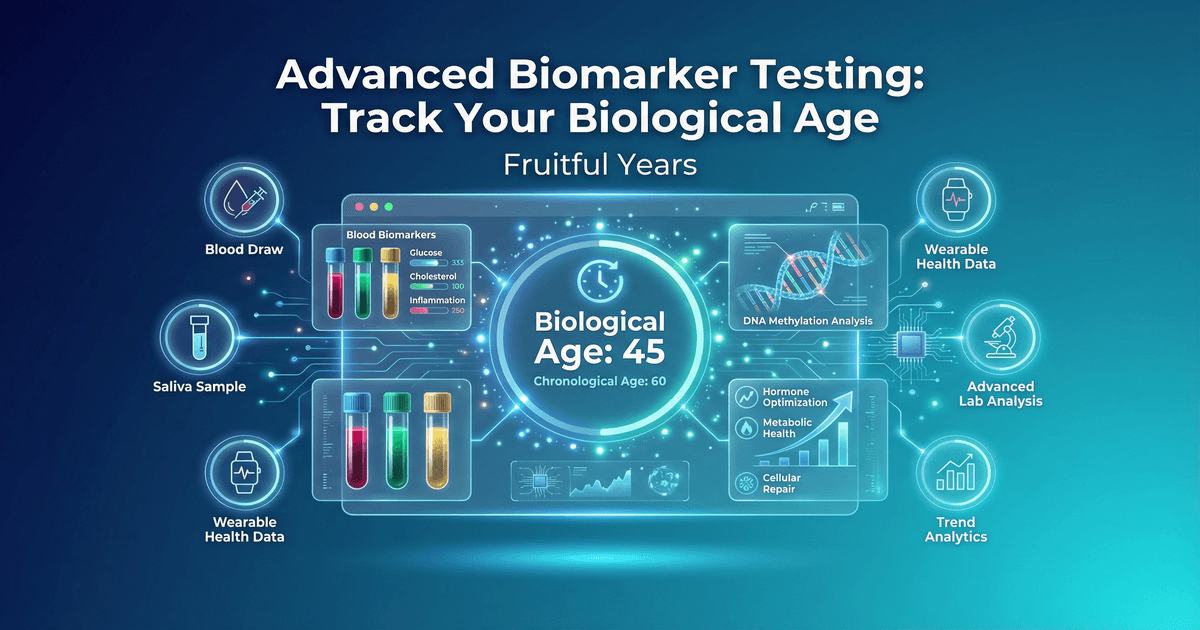
Are you truly healthy, or just not sick yet? Traditional cholesterol tests, while valuable, offer a limited view of our overall well-being. To truly understand and optimize our healthspan—the period of life spent in good health—we need a more comprehensive approach. This is where **advanced biomarker testing** becomes essential, providing a deeper, personalized understanding of our biology and paving the way for proactive longevity.
This article will guide you through key advanced biomarkers that extend beyond the standard lipid panel, offering a more complete picture of your cardiovascular health, inflammatory status, metabolic function, and more. By understanding these markers, you can transition from reactive “sick care” to a proactive, preventative strategy, empowering you to make informed decisions that profoundly impact your health and vitality.
## The Cardiovascular Compass: Navigating Beyond LDL and HDL
Traditional cholesterol tests often miss crucial details about lipid transport and their impact on cardiovascular health. Advanced biomarker testing provides deeper insights into the quality and quantity of lipid particles, which are more indicative of risk than cholesterol levels alone.
### Apolipoproteins (ApoA1, ApoB, ApoB:ApoA1 Ratio)
Apolipoproteins bind to lipids for transport in the bloodstream. **Apolipoprotein A1 (ApoA1)**, found in HDL (“good” cholesterol), helps remove excess cholesterol [1]. **Apolipoprotein B (ApoB)**, the main component of LDL (“bad” cholesterol), carries cholesterol to tissues. High ApoB is strongly linked to fatty plaque formation and cardiovascular disease [1]. Many experts view ApoB as a more accurate predictor of cardiovascular risk than LDL cholesterol alone, as it reflects the total number of atherogenic particles [2]. A favorable **ApoB:ApoA1 ratio** (higher ApoA1 relative to ApoB) indicates lower cardiovascular risk [1].
### Lipoprotein(a) [Lp(a)]
**Lipoprotein(a), or Lp(a)**, is a genetically determined LDL cholesterol variant often missed by standard panels. Elevated Lp(a) is an independent and significant risk factor for cardiovascular disease, including heart attacks and strokes, even with optimal cholesterol [1] [2]. As Lp(a) levels are largely genetic, knowing your level can guide aggressive risk management strategies.
### LDL Particle Number and Size (sdLDL)
Beyond total LDL cholesterol, the **number and size of LDL particles** are critical. Small, dense LDL (sdLDL) particles are more atherogenic, penetrating arterial walls more easily and contributing to plaque formation [2]. A high number of sdLDL particles, even with normal total LDL, indicates elevated cardiovascular risk. Advanced testing measures **LDL particle number (LDL-P)** and particle size distribution.
### Triglyceride:HDL Ratio
The **Triglyceride:HDL ratio** is a powerful indicator beyond individual lipid levels. A high ratio (e.g., above 2.0 or 3.0) often correlates with insulin resistance, metabolic syndrome, and increased cardiovascular disease risk [1]. This ratio offers insight into metabolic health, signaling potential issues even with normal lipid markers, and highlights the link between lipid metabolism and insulin sensitivity in cardiovascular risk.
## The Silent Threat: Inflammation and Metabolic Health Markers
While inflammation is a natural response to injury, chronic low-grade inflammation silently drives many age-related diseases, including cardiovascular disease, diabetes, and certain cancers [1]. Metabolic dysfunction, particularly issues with blood sugar and insulin sensitivity, also accelerates biological aging. Advanced biomarker testing detects these threats early, enabling proactive interventions.
### High-Sensitivity C-Reactive Protein (hs-CRP)
**High-sensitivity C-Reactive Protein (hs-CRP)** is a key marker of systemic inflammation. Unlike standard CRP tests for acute inflammation, hs-CRP detects subtle, chronic low-grade inflammation [1]. Elevated hs-CRP is strongly associated with increased cardiovascular events, even with normal cholesterol, serving as a powerful independent predictor of heart attacks and strokes [2].
### HbA1c and Insulin Resistance (HOMA-IR, LP-IR)
**Glycated Hemoglobin (HbA1c)** measures average blood sugar over 2-3 months, indicating diabetes risk and metabolic health for longevity. High blood sugar contributes to advanced glycation end products (AGEs), damaging tissues and accelerating aging [1].
Understanding **insulin resistance** is crucial. When cells don’t respond to insulin, the pancreas overproduces it, potentially leading to prediabetes and type 2 diabetes. While HbA1c shows long-term control, direct measures like **Homeostatic Model Assessment for Insulin Resistance (HOMA-IR)** (based on fasting glucose and insulin [1]) and the advanced **Lipoprotein Insulin Resistance (LP-IR) score** (quantifying insulin resistance via lipoprotein traits [2]) offer a more nuanced view of metabolic health and arterial plaque formation.
### Fibrinogen
**Fibrinogen**, a liver-produced protein, is central to blood clotting and an acute-phase reactant, rising with inflammation. Elevated levels are linked to increased cardiovascular disease risk due to its role in blood viscosity and clot formation, and as a marker of chronic inflammation [2]. Monitoring fibrinogen offers additional insight into cardiovascular risk and inflammatory status.
## Hormonal Harmony and Organ Vitality: Thyroid, Liver, and Kidney Function
Beyond cardiovascular and metabolic health, hormonal balance and optimal function of vital organs—thyroid, liver, and kidneys—are fundamental to healthspan and slowing aging. Disruptions impact energy, mood, detoxification, and nutrient processing. Advanced biomarker testing provides insight into these critical systems.
### Thyroid Hormones (TSH, Free T3, Free T4)
The **thyroid gland** profoundly impacts metabolism, energy, body temperature, and nearly every organ system [1]. Key hormones to monitor include **Thyroid-Stimulating Hormone (TSH)**, **Free Triiodothyronine (Free T3)**, and **Free Thyroxine (Free T4)**. Imbalances (hypo- or hyperthyroidism) can cause fatigue, weight changes, mood disturbances, hair loss, and increase risks of heart disease and osteoporosis [1]. Optimizing thyroid function is crucial for longevity.
### Liver Function Tests
The **liver** performs over 500 vital functions, including detoxification, protein synthesis, hormone regulation, and metabolism [1]. Monitoring liver health is essential for longevity. Standard liver function tests (LFTs) include enzymes like ALT and AST, bilirubin, and albumin. Elevated enzymes can indicate damage or inflammation. Liver disease death rates are rising [3], highlighting the importance of early detection and intervention through proactive monitoring.
### Kidney Function Tests
Your **kidneys** filter waste, maintain electrolyte balance, and produce hormones [1]. Key indicators of kidney function are **creatinine**, **blood urea nitrogen (BUN)**, and **estimated glomerular filtration rate (eGFR)**. Elevated creatinine and BUN suggest impaired function, while eGFR estimates filtering efficiency. Chronic kidney disease (CKD) is a growing concern [4]. Monitoring is vital for those with diabetes, high blood pressure, or a family history of kidney disease, enabling early intervention to preserve kidney health and healthspan.
## Micronutrient Status and Cellular Health: The Foundational Elements
While macronutrients provide energy, **micronutrients** (vitamins and minerals) are crucial for cellular function, enzyme activity, and overall health. Deficiencies can impair immune function, energy production, and DNA repair, accelerating aging. Advanced biomarker testing identifies these deficiencies for targeted interventions.
### Vitamin D
**Vitamin D**, often called the “sunshine vitamin,” is a hormone vital for bone health, immune function, inflammation modulation, cell growth, and neuromuscular function [1]. Widespread deficiency is common. Optimal levels reduce the risk of chronic diseases like cardiovascular disease, certain cancers, and autoimmune conditions [1]. Regular monitoring of 25-hydroxyvitamin D is crucial for longevity, especially for those with limited sun exposure.
### Ferritin
**Ferritin** stores iron in cells, indicating body iron stores. While essential for oxygen transport, both deficiency and overload are detrimental. Low ferritin signifies iron deficiency, causing anemia, fatigue, and cognitive impairment. High ferritin, without inflammation, suggests iron overload, contributing to oxidative stress and organ damage [2]. Monitoring ferritin ensures healthy iron balance, vital for cellular health and preventing age-related decline.
### Full Blood Count (FBC)
A **Full Blood Count (FBC)** is a routine blood test providing a comprehensive overview of general health, measuring red blood cells, white blood cells, and platelets. It detects conditions like anemia, infection, inflammation, and blood disorders [1]. Though basic, FBC offers foundational insights into immune status, oxygen capacity, and physiological balance, critical for healthspan and disease resilience.
## Actionable Steps: Taking Control of Your Biomarkers
Understanding advanced biomarkers is the first step; true transformation comes from action. This knowledge empowers you to actively shape your health trajectory. Here’s how to translate insights into a personalized longevity plan:
### 1. Consult a Longevity-Focused Healthcare Provider
Navigating advanced biomarkers requires expert guidance. Consult a healthcare provider specializing in longevity, preventative medicine, or health optimization. They can interpret your results within your unique health history, lifestyle, and genetic predispositions, ensuring personalized interventions.
### 2. Embrace Lifestyle Interventions
Many advanced biomarkers respond positively to foundational lifestyle choices, which are cornerstones of healthspan and often the most impactful interventions:
* **Nutrition:** Adopt a whole-foods-based diet rich in fruits, vegetables, lean proteins, and healthy fats, such as the Mediterranean diet [1]. Focus on nutrient density and minimize processed foods, added sugars, and unhealthy fats.
* **Exercise:** Incorporate regular, varied exercise: cardiovascular, strength, and flexibility/balance. Aim for at least 150 minutes of moderate or 75 minutes of vigorous aerobic activity weekly, plus two or more days of strength training [1]. **Stress Management:** Chronic stress can negatively impact inflammation, hormones, and metabolic health. Practice stress-reducing techniques such as meditation, mindfulness, yoga, spending time in nature, or engaging in hobbies you enjoy.
* **Quality Sleep:** Prioritize 7-9 hours of high-quality sleep per night. Sleep is crucial for cellular repair, hormone regulation, and cognitive function. Establish a consistent sleep schedule and create a conducive sleep environment.
### 3. Consider Targeted Supplementation (Under Guidance)
Based on biomarker results, your healthcare provider may recommend targeted supplementation for deficiencies or optimization (e.g., Vitamin D for low levels [1]). Approach supplementation strategically and under professional guidance, as more isn’t always better, and interactions or adverse effects can occur.
### 4. Regular Monitoring and Adjustment
Longevity is a dynamic journey. Regular retesting of advanced biomarkers (every 6-12 months) allows you to track progress, assess intervention effectiveness, and adjust your personalized plan. This iterative process ensures you remain on the optimal path to extending healthspan and achieving longevity goals.
## Conclusion: Your Personalized Path to a Healthier Future
Advanced biomarker testing moves beyond traditional cholesterol tests, offering a powerful lens into your unique biological landscape. By tracking indicators like Apolipoproteins, Lp(a), LDL particle number and size, hs-CRP, HbA1c, LP-IR, thyroid hormones, and markers of liver and kidney function, you gain invaluable insights into cardiovascular health, metabolic efficiency, inflammatory status, and organ vitality. This knowledge empowers a proactive, preventative approach to health, profoundly impacting your healthspan.
Understanding these advanced markers provides clarity and control, enabling you to optimize health, mitigate risks, and build resilience against age-related diseases. Your journey to a longer, healthier life is personalized, guided by your unique biomarker story.
Ready to discover your biological age and take the next step in your longevity journey? Visit [Fruitful Years Biological Age Calculator Link] to learn more and start your personalized longevity plan today!
## References
[1] Medichecks. Longevity Blood Testing: 8 Biomarkers to Get Checked. Available at: https://www.medichecks.com/blogs/longevity/longevity-blood-testing-8-biomarkers-to-check
[2] Healthspan. Heart Vitality Panel. Available at: https://www.gethealthspan.com/labs/advanced-lipid-panel
[3] British Liver Trust. Liver disease in numbers – key facts and statistics (2023). Available at: https://britishlivertrust.org.uk/information-and-support/statistics/
[4] GOV.UK. Chronic Kidney Disease (2020). Available at: https://assets.publishing.service.gov.uk/media/5a82c379e5274a2e8ab593af/ChronickidneydiseaseCKDprevalencemodelbriefing.pdf
How often should I get advanced biomarker testing done?
Is advanced biomarker testing covered by insurance?
AI Prompts to Explore This Topic Further
Copy and paste any of these prompts into ChatGPT, Claude, or your favourite AI assistant:
- Prompt 1: “Act as a geriatric health coach and explain the top 5 advanced biomarker tests beyond cholesterol that people aged 50-75 should consider for healthy aging, including why each is important.”
- Prompt 2: “Provide a practical guide for someone over 50 on how to prepare for and interpret advanced biomarker blood tests related to longevity and cardiovascular health.”
- Prompt 3: “Act as a longevity researcher and list lifestyle changes that can positively impact advanced biomarkers such as inflammation markers, blood sugar variability, and hormone levels in adults aged 50+.”
- Prompt 4: “Explain the differences between standard cholesterol tests and advanced lipid panel testing, and how the latter can offer better insights for preventing age-related diseases after age 50.”
AI Prompts to Explore This Topic Further
Copy and paste any of these prompts into ChatGPT, Claude, or your favourite AI assistant:
- Prompt 1: “Act as a longevity health coach and explain which advanced biomarkers beyond cholesterol are most important for people aged 50-75 to monitor for healthy aging, and why.”
- Prompt 2: “List practical steps a person over 50 can take to get advanced biomarker testing done, including what tests to ask their doctor for and how to interpret the results.”
- Prompt 3: “Act as a medical expert and describe how tracking inflammation markers and hormone levels can contribute to preventing age-related diseases in adults aged 50 to 75.”
- Prompt 4: “Provide a simple guide for someone aged 50+ on how to use advanced biomarker results to make lifestyle changes that support longevity and healthy aging.”