
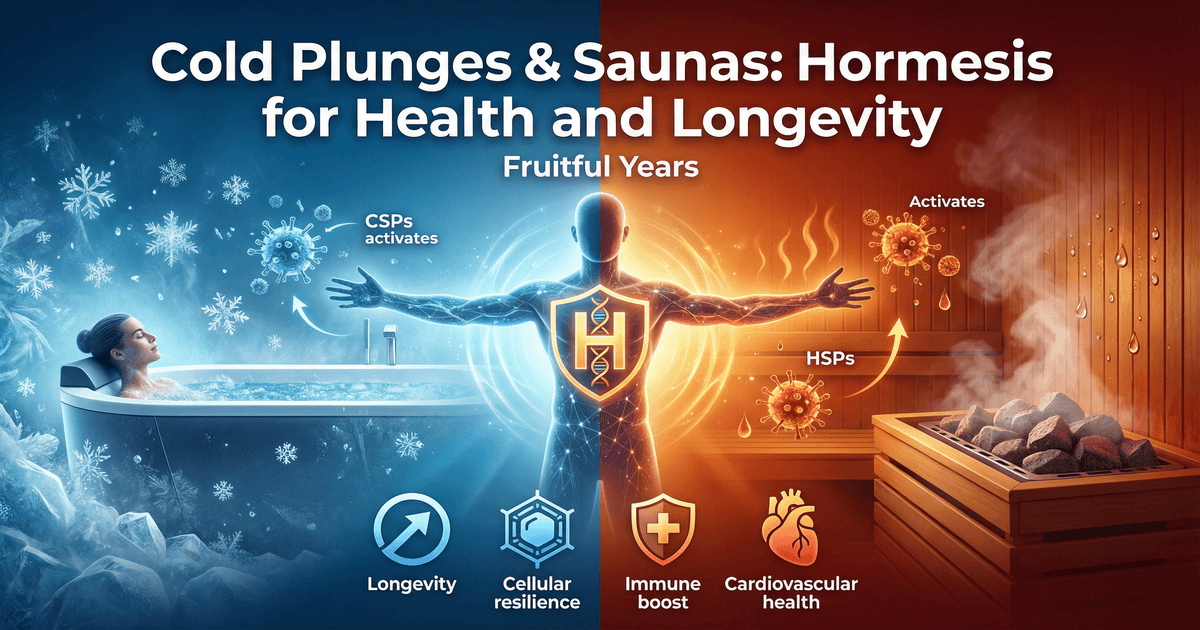
Cold Plunges & Saunas: The Science of Hormesis and Heat/Cold Shock Proteins
If someone told you that deliberately stressing your body could actually make you healthier and live longer, would you believe them? It sounds counterintuitive, but that’s exactly what happens when you expose yourself to controlled, short-term stressors like extreme heat or cold. This phenomenon is called hormesis, and it’s one of the most powerful (and underutilized) tools in the longevity toolkit.
From ancient Roman bathhouses to modern Scandinavian saunas and the recent cold plunge craze popularized by biohackers, humans have long intuited the benefits of thermal stress. Now, science is catching up, revealing the cellular mechanisms that make these practices so powerful for healthy aging.
What Is Hormesis?
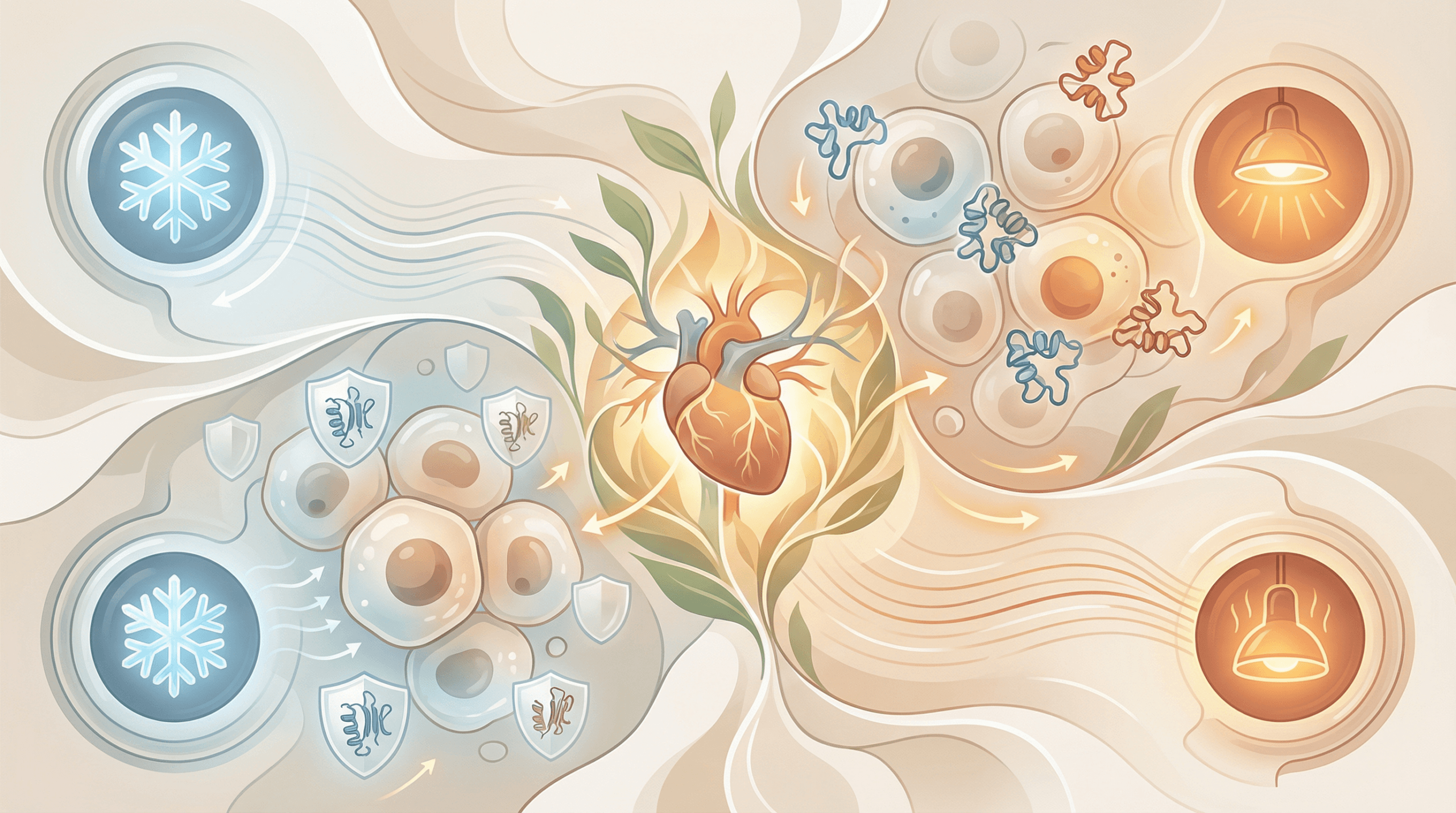
Hormesis is the biological principle that low doses of stress can trigger adaptive responses that make your cells stronger and more resilient [1]. Think of it as a vaccine for your cells: a small, controlled challenge that prepares them to handle bigger threats in the future.
When you expose your body to extreme temperatures—whether hot or cold—you activate ancient survival pathways that:
– Produce heat shock proteins (HSPs) in response to heat
– Produce cold shock proteins (CSPs) in response to cold
– Activate cellular repair mechanisms that clean up damaged proteins and organelles
– Improve mitochondrial function and energy production
– Reduce systemic inflammation and oxidative stress
The key is that the stress must be acute and controlled. Chronic, unmanaged stress (like ongoing psychological stress) accelerates aging. But short, deliberate exposures to heat or cold do the opposite.
The Science of Sauna: Heat Shock Proteins and Cardiovascular Health
Saunas have been used for thousands of years, but only recently have we understood why they work so well. A landmark 2015 study from Finland followed over 2,300 middle-aged men for 20 years and found that those who used saunas 4-7 times per week had a 40% lower risk of all-cause mortality compared to those who used saunas once per week [2].
How Saunas Work at the Cellular Level
When you sit in a sauna (typically 150-195°F or 65-90°C), your core body temperature rises, triggering the production of heat shock proteins (HSPs). These molecular chaperones:
– Refold damaged proteins that have been misshapen by stress or aging
– Target irreparably damaged proteins for degradation (a form of cellular cleanup)
– Protect cells from oxidative stress and inflammation
– Support mitochondrial health and energy production
Saunas also provide cardiovascular benefits similar to moderate exercise. Your heart rate increases, blood vessels dilate, and circulation improves. Regular sauna use has been shown to:
– Lower blood pressure [3]
– Improve endothelial function (the health of blood vessel linings)
– Reduce the risk of cardiovascular disease and stroke [2]
– Enhance detoxification through sweating
Sauna Protocol for Longevity
Frequency: 3-7 sessions per week
Duration: 15-20 minutes per session
Temperature: 150-195°F (65-90°C)
Type: Traditional Finnish sauna or infrared sauna (both effective)
Safety tips:
– Stay hydrated before, during, and after
– Start with shorter sessions (5-10 minutes) if you’re new
– Avoid alcohol before or during sauna use
– Consult your doctor if you have cardiovascular conditions
The Science of Cold Exposure: Cold Shock Proteins and Metabolic Health
Cold exposure—whether through cold showers, ice baths, or cold plunges—activates a different set of adaptive responses. When your body temperature drops, it produces cold shock proteins (CSPs), particularly one called RBM3 (RNA-binding motif protein 3).
How Cold Exposure Works at the Cellular Level
Cold shock proteins have remarkable effects on cellular health:
– Protect neurons and support brain health (RBM3 has been shown to prevent neurodegeneration in animal studies) [4]
– Enhance protein synthesis and cellular repair
– Activate brown adipose tissue (BAT), which burns calories to generate heat
– Improve insulin sensitivity and metabolic health
– Boost mitochondrial biogenesis (the creation of new mitochondria)
Cold exposure also triggers the release of norepinephrine, a hormone and neurotransmitter that:
– Increases alertness and focus
– Reduces inflammation
– Enhances mood and resilience to stress
A 2014 study found that regular cold water immersion increased metabolic rate by up to 350% and activated brown fat, which burns white fat for energy [5].
Cold Exposure Protocol for Longevity
Frequency: 3-5 sessions per week
Duration: 2-10 minutes per session
Temperature: 50-59°F (10-15°C) for cold plunge; as cold as tolerable for cold showers
Progression:
1. Week 1-2: End your shower with 30 seconds of cold water
2. Week 3-4: Increase to 1-2 minutes of cold shower
3. Week 5+: Try a cold plunge or ice bath for 2-5 minutes
Safety tips:
– Never do cold exposure alone (especially in open water)
– Breathe slowly and deeply to manage the shock response
– Warm up gradually afterward (avoid hot showers immediately)
– Avoid if you have heart conditions or Raynaud’s disease
Combining Heat and Cold: The Contrast Therapy Advantage
Many longevity enthusiasts practice contrast therapy—alternating between hot and cold exposure in the same session. This practice, common in Scandinavian countries, may amplify the benefits of both modalities.
A typical contrast therapy session might look like:
1. Sauna: 15-20 minutes
2. Cold plunge: 2-3 minutes
3. Repeat 2-3 cycles
4. End with cold
Contrast therapy enhances circulation, reduces muscle soreness, and may provide additive hormetic benefits. However, more research is needed to confirm whether it’s superior to heat or cold alone.
Who Should (and Shouldn’t) Use Heat and Cold Therapy
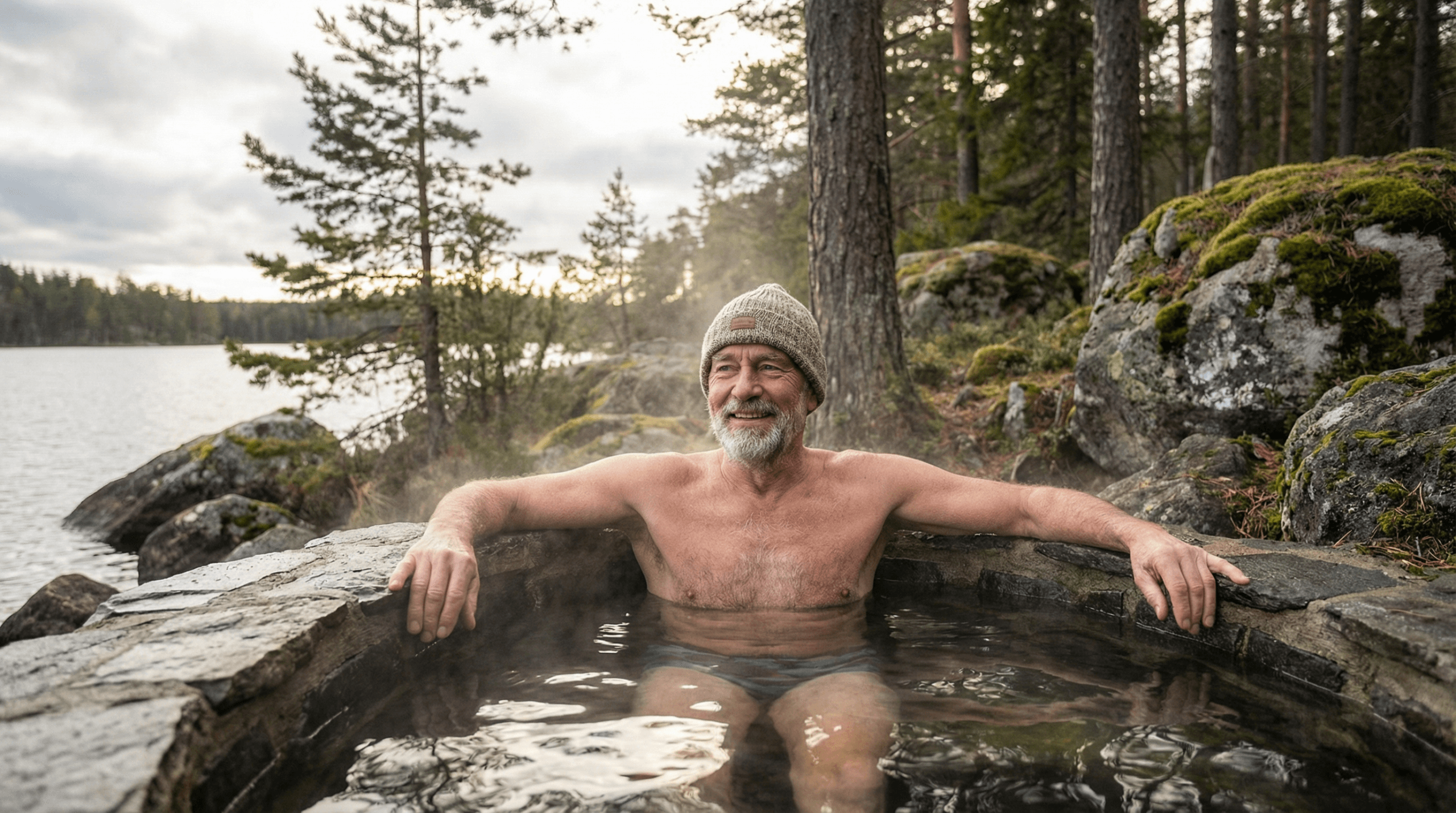
Heat and cold therapy are generally safe for healthy adults, but certain populations should exercise caution or avoid them:
Avoid saunas if you:
– Are pregnant
– Have uncontrolled high blood pressure
– Have severe heart disease or recent heart attack
– Are acutely ill or feverish
Avoid cold exposure if you:
– Have Raynaud’s disease or severe cold sensitivity
– Have uncontrolled heart conditions
– Are pregnant (cold plunges specifically)
– Have open wounds or skin infections
Always consult your healthcare provider before starting any new health practice, especially if you have underlying medical conditions.
Putting It Into Practice: Your First Week
Day 1-2: End your morning shower with 30 seconds of cold water. Focus on slow, controlled breathing.
Day 3-4: If you have access to a sauna (gym, spa, or home unit), try a 10-minute session followed by a cool shower.
Day 5-6: Increase your cold shower to 1 minute. Notice how your body adapts.
Day 7: Rest day—your body needs recovery from hormetic stress too.
The beauty of heat and cold therapy is that they’re accessible, low-cost, and backed by centuries of traditional use and decades of modern science. You don’t need expensive supplements or high-tech gadgets—just a willingness to step outside your comfort zone.
Ready to take your longevity practice to the next level? Take our free Biological Age Calculator to see how your current habits are affecting your aging trajectory.
—
Sources and Further Reading
[1]: https://www.ncbi.nlm.nih.gov/pmc/articles/PMC2248601/ “Hormesis: The dose-response phenomenon. PMC, 2008.”
[2]: https://jamanetwork.com/journals/jamainternalmedicine/fullarticle/2130724 “Association Between Sauna Bathing and Fatal Cardiovascular and All-Cause Mortality Events. JAMA Internal Medicine, 2015.”
[3]: https://www.ahajournals.org/doi/10.1161/JAHA.118.010016 “Sauna Bathing Is Associated With Reduced Cardiovascular Mortality. American Heart Association, 2018.”
[4]: https://www.nature.com/articles/nature14142 “Cold shock induces a major mRNA stabilization event mediated by the cold-inducible RNA-binding protein RBM3. Nature, 2015.”
[5]: https://journals.plos.org/plosone/article?id=10.1371/journal.pone.0092193 “Brown Adipose Tissue Increases After Cold Exposure. PLOS ONE, 2014.”
Q: Should I do sauna or cold plunge first?
A: For contrast therapy, start with heat (sauna) and end with cold. This sequence maximizes circulation benefits and leaves you feeling energized. Always end with cold to close pores and reduce inflammation. If doing them separately, either order works—choose based on your goals (cold for alertness, heat for relaxation).
Q: Can I get hormetic benefits from hot baths or cold showers at home?
A: Yes! While saunas and ice baths are ideal, you can still activate heat and cold shock proteins at home. Hot baths (104-108°F for 20 minutes) provide some HSP benefits, though less than saunas. Cold showers (as cold as tolerable for 2-5 minutes) are highly effective for triggering CSPs and metabolic benefits.
Paste this into ChatGPT, Claude, or your favorite AI assistant to explore this topic further:
👆 Select the text above and press Ctrl+C (or Cmd+C on Mac) to copy the entire prompt.
AI Prompts to Explore This Topic Further
Copy and paste any of these prompts into ChatGPT, Claude, or your favourite AI assistant:
- Prompt 1: “Explain how heat shock proteins and cold shock proteins contribute to healthy aging and longevity, with examples relevant to people over 55.”
- Prompt 2: “Create a weekly beginner-friendly sauna and cold plunge routine for someone aged 60, including safety tips and benefits.”
- Prompt 3: “Summarize recent scientific studies on the effects of hormesis from heat and cold exposure on cardiovascular health in older adults.”
- Prompt 4: “Act as a longevity coach and provide practical tips for safely incorporating cold plunges and saunas into a daily routine for adults over 50 to maximize health benefits while minimizing risks.”
- Prompt 4: “Act as a nutritionist and recommend foods and supplements that can enhance the benefits of cold plunges and sauna sessions for individuals over 50 aiming to improve longevity.”