
mTOR Explained: The Growth Pathway You Need to Control
I. Introduction: Unlocking the Secrets of Longevity – The mTOR Pathway
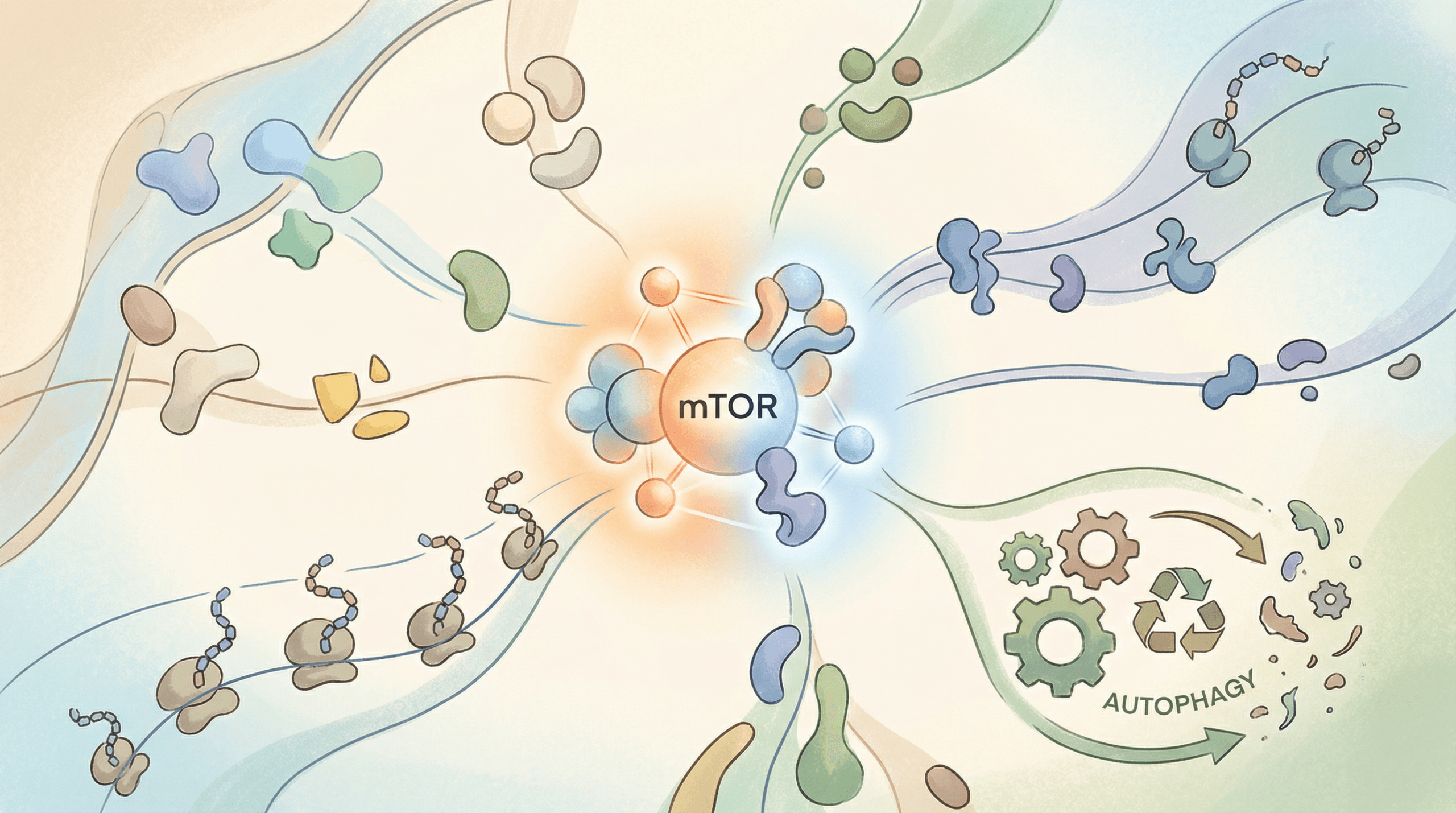
Imagine a switch within your cells that dictates whether they grow and build, or repair and rejuvenate. This switch, known as the mechanistic Target of Rapamycin (mTOR), is a central regulator of nearly every aspect of cellular life, from metabolism and growth to aging itself. While essential for development and repair, an overactive mTOR pathway can inadvertently accelerate the aging process, contributing to various age-related diseases. Understanding and strategically modulating the mTOR pathway aging connection is a key to unlocking extended healthspan and vitality.
II. What is mTOR? The Master Regulator of Your Cells
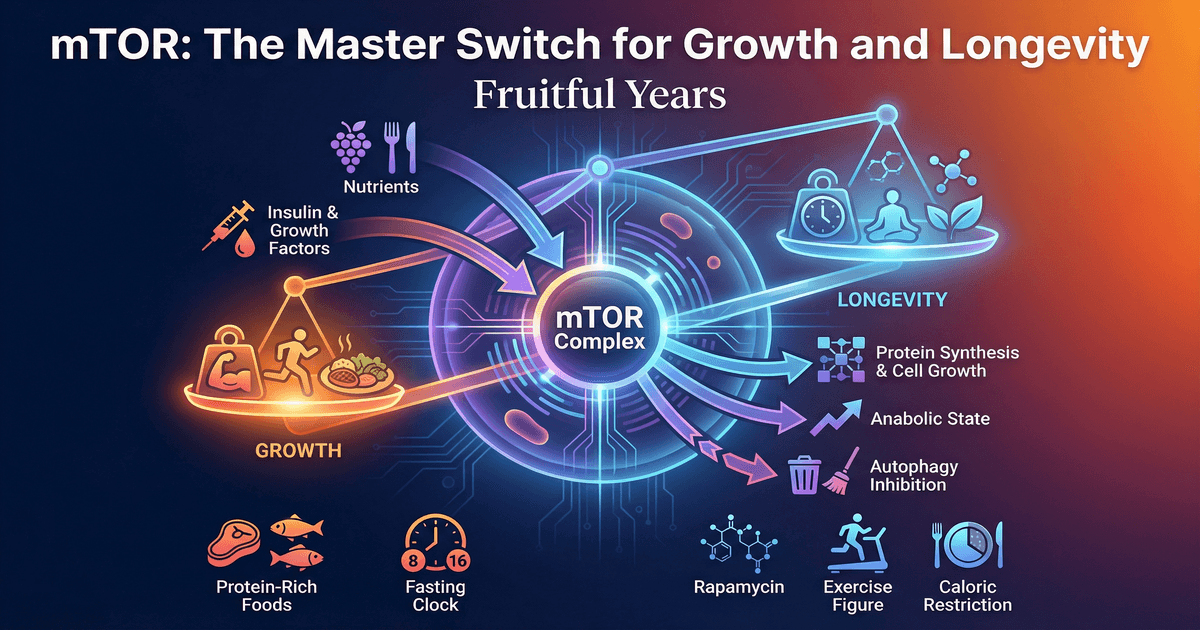
mTOR is a highly conserved protein kinase, meaning it’s an enzyme that modifies other proteins, thereby regulating their activity. It acts as a sophisticated nutrient sensor, constantly monitoring the availability of amino acids, growth factors, and energy levels within your body [1]. Based on these signals, mTOR orchestrates a cascade of cellular responses.
There are two primary mTOR complexes, each with distinct functions:
- mTOR Complex 1 (mTORC1): This complex is the primary sensor of nutrients and growth factors. When activated, mTORC1 promotes anabolic processes – those that build up molecules – such as protein synthesis, cell growth, and proliferation. It also inhibits catabolic processes like autophagy, which is the cell’s recycling and clean-up mechanism [2]. mTORC1 is the complex that is sensitive to rapamycin, a well-known mTOR inhibitor.
- mTOR Complex 2 (mTORC2): While less understood than mTORC1, mTORC2 plays a crucial role in regulating cell survival, metabolism, and the organization of the cell’s internal structure (cytoskeleton). It is generally less sensitive to rapamycin in the short term but can be affected by prolonged exposure [1].
In essence, mTOR acts as a cellular conductor, directing resources towards growth and proliferation when conditions are favorable, and shifting towards maintenance and repair when resources are scarce.
III. The Double-Edged Sword: mTOR’s Role in Aging
The mTOR pathway’s influence on longevity is a classic example of a
double-edged sword. While crucial for growth and development in early life, its persistent activation in later years can contribute to the hallmarks of aging.
Growth vs. Longevity
When nutrients are abundant, mTOR signals cells to grow, divide, and synthesize new proteins. This is vital for muscle building, tissue repair, and overall development. However, this constant state of anabolism comes at a cost. Chronic activation of mTOR can lead to:
- Cellular Senescence: This is a state where cells stop dividing but remain metabolically active, secreting inflammatory molecules that damage surrounding tissues. Overactive mTOR contributes to the accumulation of these “zombie cells” [1].
- Mitochondrial Dysfunction: Mitochondria are the powerhouses of our cells. Chronic mTOR activation can impair mitochondrial function, leading to reduced energy production and increased oxidative stress, a key driver of aging [1].
- Accumulation of Damaged Proteins: When mTOR is constantly active, it suppresses autophagy, the cellular recycling process. This leads to a buildup of misfolded or damaged proteins, which can interfere with normal cellular function and contribute to neurodegenerative diseases [2].
This overactive mTOR pathway aging can contribute to a range of age-related diseases, including type 2 diabetes, cardiovascular disease, neurodegeneration, and even cancer [1]. The goal, therefore, is not to eliminate mTOR activity entirely, but to strategically modulate it to promote periods of growth and repair, balanced with periods of cellular clean-up and rejuvenation.
IV. Autophagy and Protein Synthesis: Key Players in mTOR Regulation
Understanding the interplay between mTOR, autophagy, and protein synthesis is fundamental to harnessing this pathway for longevity.
Autophagy: The Body’s Recycling Program
Autophagy, meaning “self-eating,” is a vital cellular process where cells break down and recycle damaged components, misfolded proteins, and even entire organelles. Think of it as your body’s internal waste disposal and recycling system. This process is crucial for maintaining cellular health, preventing the accumulation of cellular debris, and promoting cellular rejuvenation [2].
mTOR acts as a brake on autophagy. When mTOR is highly active (signaling nutrient abundance), it inhibits autophagy, prioritizing growth and protein synthesis. Conversely, when mTOR activity is reduced (e.g., during fasting or nutrient scarcity), the brake is released, and autophagy is activated, allowing cells to clean house and repair themselves [2].
Protein Synthesis: Building Blocks of Life
Protein synthesis is the process by which cells create new proteins, the workhorses of the body. mTOR is a major driver of protein synthesis, ensuring that cells have the necessary building blocks for growth and repair. While essential, excessive or continuous protein synthesis can be energetically costly and contribute to the accumulation of cellular waste if not balanced by efficient degradation pathways like autophagy [2].
The key to leveraging mTOR for longevity lies in finding the right balance: allowing for periods of mTOR activation to support necessary growth and repair, followed by periods of mTOR inhibition to stimulate autophagy and cellular clean-up. This cyclical modulation helps to optimize cellular health and resilience.
V. Practical Strategies to Modulate Your mTOR Pathway for Longevity
Fortunately, you have significant control over your mTOR pathway through lifestyle interventions. Here are some actionable strategies:
Dietary Interventions
- Caloric Restriction (CR) and Time-Restricted Eating (TRE): Both CR (reducing overall calorie intake) and TRE (confining eating to a specific window each day, like intermittent fasting) have been shown to reduce mTOR activity and activate autophagy. This allows your cells to enter a repair and rejuvenation mode [3]. For example, studies have shown that even short periods of fasting can significantly impact mTOR signaling [3].
- Protein Cycling: While protein is essential, especially for older adults to prevent sarcopenia (muscle loss), constant high protein intake can keep mTOR perpetually active. Protein cycling involves alternating days of higher protein intake with days of lower protein intake. This strategy aims to provide sufficient protein for muscle maintenance while allowing for periods of mTOR inhibition and autophagy activation [4]. Focus on plant-based proteins, which tend to have a lower impact on mTOR than animal proteins, particularly those rich in leucine and methionine [4].
- Specific Nutrients:
- Leucine: This amino acid is a potent activator of mTOR. While important for muscle protein synthesis, excessive intake, especially outside of resistance training, might contribute to chronic mTOR activation. Balancing leucine intake is key.
- Methionine: Found abundantly in animal products, methionine restriction has been shown to extend lifespan in various organisms, partly by influencing mTOR activity [4]. Reducing intake of methionine-rich foods can be a strategy to consider.
Exercise

Exercise offers a powerful way to modulate mTOR, with different types of exercise having distinct effects:
- Resistance Training: Activities like weightlifting temporarily activate mTOR, which is crucial for muscle protein synthesis and building muscle mass. This is a beneficial activation, especially for older adults, as muscle mass is strongly linked to longevity and metabolic health [5].
- Endurance Exercise: Activities like running, swimming, or cycling tend to inhibit mTOR and activate AMPK (AMP-activated protein kinase), another key longevity pathway that promotes autophagy and mitochondrial biogenesis [5].
The ideal approach is to incorporate both resistance and endurance training into your routine to reap the benefits of both mTOR activation for muscle health and mTOR inhibition for cellular clean-up.
Pharmacological Interventions (Proceed with Caution)
- Rapamycin: This drug is a well-known and potent inhibitor of mTORC1. It has shown remarkable results in extending lifespan and healthspan in various animal models [1]. However, rapamycin is a prescription drug with potential side effects and is currently not approved for anti-aging purposes in humans. It is an area of active research, and any consideration of such interventions should be done under strict medical supervision and only as part of a clinical trial.
VI. Taking Control: Actionable Steps for a Healthier, Longer Life
To effectively manage your mTOR pathway for optimal longevity, consider integrating these practical steps into your daily life:
1. Embrace Intermittent Fasting or Time-Restricted Eating: Start with a 12-14 hour fasting window and gradually increase it as comfortable. This can be as simple as finishing dinner earlier and having breakfast later.
2. Consider Protein Cycling: Experiment with alternating days of moderate protein intake (e.g., 0.8-1.0g/kg body weight) with days of slightly lower protein intake (e.g., 0.6-0.7g/kg body weight). Prioritize high-quality, diverse protein sources, including plant-based options.
3. Prioritize Diverse Exercise: Incorporate both resistance training (2-3 times per week) to maintain muscle mass and endurance exercise (3-5 times per week) to promote cellular clean-up and cardiovascular health.
4. Focus on Whole, Unprocessed Foods: A diet rich in fruits, vegetables, whole grains, and lean proteins naturally supports healthy mTOR regulation.
5. Consult a Healthcare Professional: Before making significant dietary or lifestyle changes, especially if you have underlying health conditions, consult with a doctor or a registered dietitian. They can provide personalized guidance and ensure these strategies are appropriate for your individual needs.
VII. Conclusion: Empowering Your Journey to a Fruitful Future
The mTOR pathway is a powerful determinant of your cellular health and longevity. By understanding its mechanisms and applying strategic lifestyle interventions, you can actively influence this pathway to promote cellular repair, reduce the burden of aging, and extend your healthspan. The journey to a longer, healthier life is within your control. Ready to take control of your biological age? Discover more with our comprehensive biological age calculator and personalized insights.
Sources and Further Reading
[1] Papadopoli, D., Boulay, K., Kazak, L., Pollak, M., Mallette, F. A., Topisirovic, I., & Hulea, L. (2019). mTOR as a central regulator of lifespan and aging. F1000Research, 8, F1000 Faculty Rev-998. https://pmc.ncbi.nlm.nih.gov/articles/PMC6611156/
[2] Hands, S. L., Proud, C. G., & Wyttenbach, A. (2009). mTOR’s role in ageing: protein synthesis or autophagy? Aging (Albany NY), 1(7), 586–597. https://www.aging-us.com/article/100070/text
[3] GlobalRPH. (2025, July 8). MTOR And Longevity: Rethinking The Role Of Periodic Nutrient Stimulation. https://globalrph.com/2025/07/mtor-and-longevity-rethinking-the-role-of-periodic-nutrient-stimulation/
[4] Fontana, L., & Partridge, L. (2015). Promoting health and longevity through diet: from model organisms to humans. Cell, 161(1), 106–118. https://www.cell.com/cell/fulltext/S0092-8674(15)00251-X00251-X)
[5] Lira, V. A., & Okutsu, M. (2010). Exercise-induced mitochondrial biogenesis: a role for mTOR signaling? American Journal of Physiology-Endocrinology and Metabolism, 299(3), E343-E344. https://journals.physiology.org/doi/full/10.1152/ajpendo.00287.2010
Q: Should I avoid protein to keep mTOR low?
A: No! Protein is essential, especially after age 50, to prevent muscle loss. The key is protein cycling—alternating higher-protein days (especially around strength training) with lower-protein days. This gives you the muscle-building benefits of mTOR activation while allowing periods of autophagy and cellular repair.
Q: Can I take rapamycin for longevity without a prescription?
A: Rapamycin is a prescription drug and should only be used under medical supervision. While promising in animal studies, human longevity data is limited. Safer alternatives include intermittent fasting, exercise, and dietary strategies that naturally modulate mTOR without pharmaceutical intervention.
Paste this into ChatGPT, Claude, or your favorite AI assistant to explore this topic further:
👆 Select the text above and press Ctrl+C (or Cmd+C on Mac) to copy the entire prompt.
AI Prompts to Explore This Topic Further
Copy and paste any of these prompts into ChatGPT, Claude, or your favourite AI assistant:
- Prompt 1: Explain how mTOR influences aging and suggest lifestyle changes for someone over 60 to balance its activity.
- Prompt 2: Compare the effects of intermittent fasting and protein restriction on mTOR signaling in older adults.
- Prompt 3: Provide a simple weekly meal plan designed to support healthy mTOR regulation for people aged 55 and above.
- Prompt 4: “Act as a health coach and create a beginner-friendly exercise routine that helps modulate mTOR activity to promote muscle maintenance and healthy aging for individuals over 60.”
- Prompt 4: “Act as a medical researcher and summarize the latest scientific findings on mTOR inhibitors and their potential benefits and risks for healthy aging in adults over 50.”