
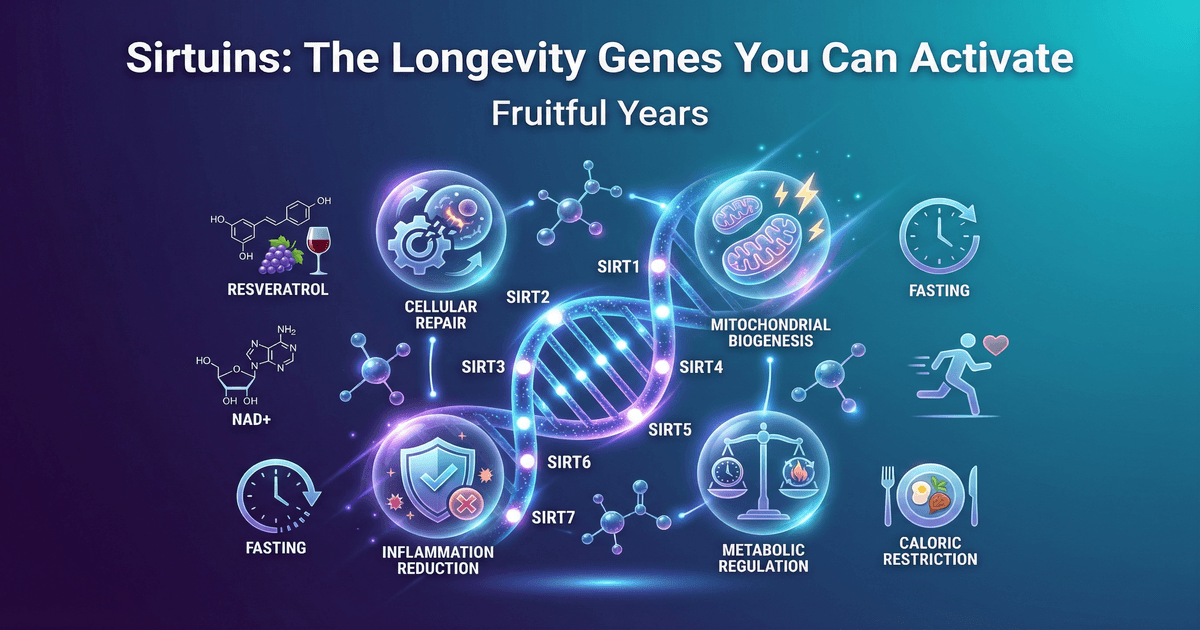
Sirtuins: The ‘Longevity Genes’ and How to Activate Them
What if your body had a built-in anti-aging system—a set of genes that could repair DNA, protect your cells, and slow down the aging process? It sounds like science fiction, but these genes exist. They’re called sirtuins, and they’re among the most studied and promising targets in longevity research.
Sirtuins have been called the “longevity genes” because of their remarkable ability to extend lifespan in laboratory organisms—from yeast to worms to mice [1]. While we can’t yet say for certain that activating sirtuins will help humans live to 120, the evidence suggests they play a critical role in healthy aging, metabolic health, and disease prevention.
The best part? You don’t need a prescription or expensive gene therapy to activate them. Diet, exercise, and certain natural compounds can turn on your sirtuins and unlock their protective benefits.
What Are Sirtuins?
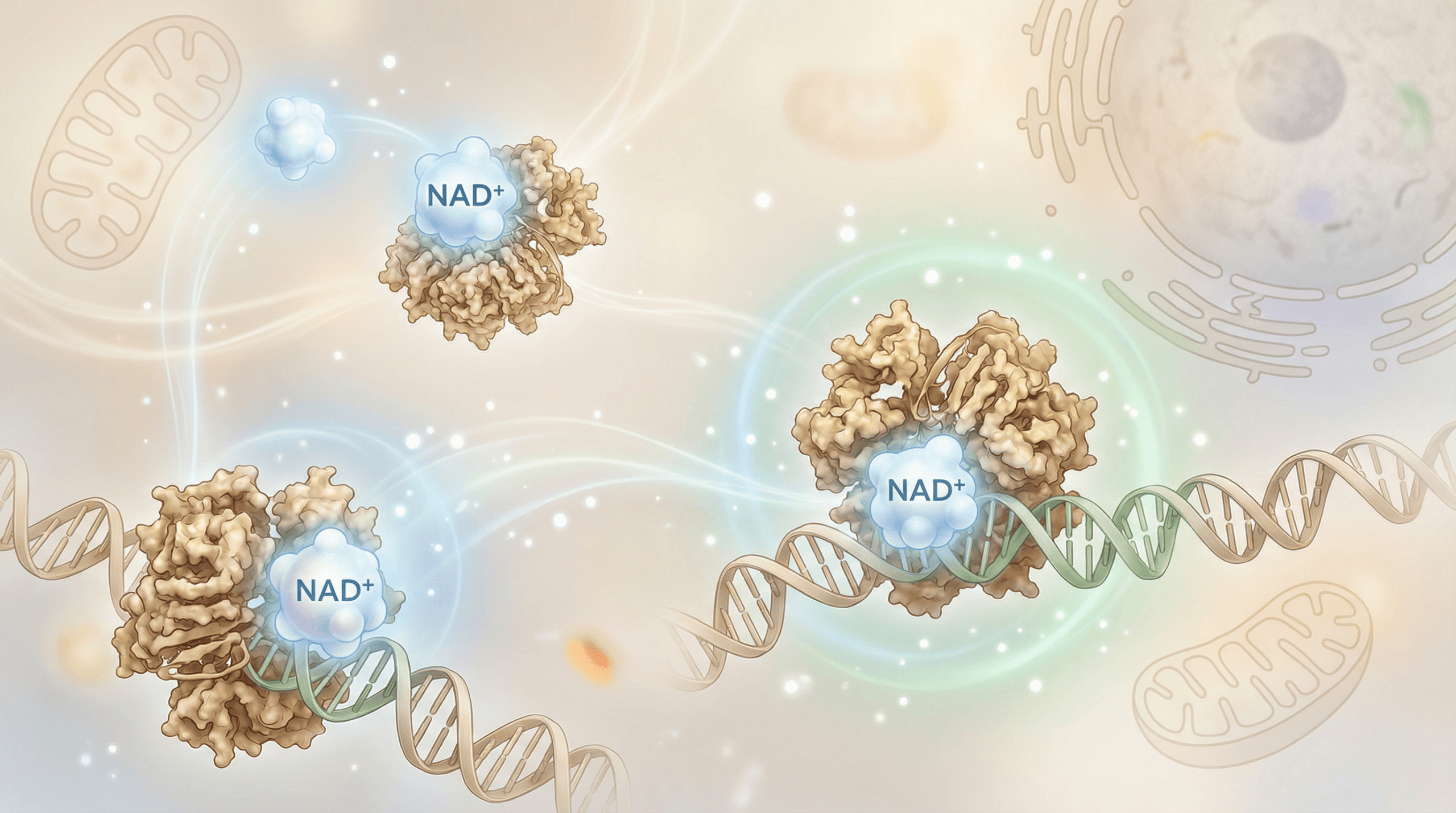
Sirtuins are a family of seven proteins (SIRT1 through SIRT7) that regulate cellular health, metabolism, and aging. They’re found in nearly every cell in your body, and each one has a specific role:
| Sirtuin | Location | Primary Functions |
|———|———-|——————-|
| SIRT1 | Nucleus | DNA repair, gene expression, inflammation control, metabolic regulation |
| SIRT2 | Cytoplasm | Cell cycle regulation, mitosis, tubulin deacetylation |
| SIRT3 | Mitochondria | Energy production, antioxidant defense, mitochondrial health |
| SIRT4 | Mitochondria | Insulin secretion, fatty acid metabolism |
| SIRT5 | Mitochondria | Ammonia detoxification, cellular respiration |
| SIRT6 | Nucleus | DNA repair, telomere maintenance, glucose metabolism, inflammation |
| SIRT7 | Nucleolus | Ribosomal DNA transcription, stress response |
The most studied sirtuin is SIRT1, often referred to as the “master regulator” of aging. It’s activated by calorie restriction, fasting, and exercise, and it influences hundreds of genes related to longevity [2].
How Sirtuins Slow Aging
Sirtuins work by removing acetyl groups from proteins (a process called deacetylation), which changes how those proteins function. This seemingly simple chemical reaction has profound effects on cellular health:
1. DNA Repair and Genomic Stability
As we age, our DNA accumulates damage from environmental stressors, radiation, and normal metabolic processes. SIRT1 and SIRT6 help repair this damage and maintain the integrity of your genome [3]. SIRT6, in particular, is critical for maintaining telomeres—the protective caps on the ends of chromosomes that shorten with age.
2. Mitochondrial Health and Energy Production
SIRT3, SIRT4, and SIRT5 are located in the mitochondria, the powerhouses of your cells. They protect mitochondria from oxidative stress, improve energy efficiency, and promote the creation of new, healthy mitochondria [4]. Dysfunctional mitochondria are a hallmark of aging, so keeping them healthy is essential for longevity.
3. Metabolic Regulation and Insulin Sensitivity
SIRT1 plays a key role in regulating blood sugar, insulin sensitivity, and fat metabolism. It mimics many of the benefits of calorie restriction, including improved glucose control and reduced fat storage [5]. This is why sirtuins are being studied as potential treatments for type 2 diabetes and metabolic syndrome.
4. Inflammation Control
Chronic inflammation is a major driver of aging and age-related diseases. SIRT1 and SIRT6 suppress inflammatory pathways, reducing the production of pro-inflammatory molecules like NF-κB [6]. This anti-inflammatory effect may protect against cardiovascular disease, Alzheimer’s, and cancer.
5. Stress Resistance and Cellular Resilience
Sirtuins help cells adapt to stress by activating protective pathways. When you fast, exercise, or expose yourself to mild stressors (like cold or heat), sirtuins turn on genes that make your cells more resilient and better able to handle future challenges.
How to Activate Your Sirtuins Naturally
The good news is that you don’t need a pill to activate sirtuins (though we’ll discuss supplements in a moment). The most powerful sirtuin activators are lifestyle interventions you can start today.
1. Calorie Restriction and Intermittent Fasting
The most well-established way to activate sirtuins is through calorie restriction (eating 20-30% fewer calories than normal) or intermittent fasting (time-restricted eating). When your body senses low energy availability, it activates SIRT1 to shift into “survival mode,” prioritizing cellular repair and maintenance over growth [7].
Practical approach:
– Try 16:8 intermittent fasting (16 hours fasting, 8-hour eating window)
– Consider one or two 24-hour fasts per week
– Avoid constant snacking—give your body time between meals
2. Exercise (Especially High-Intensity)
Physical activity is one of the most potent sirtuin activators. Both aerobic exercise and strength training increase SIRT1 and SIRT3 activity, particularly when the exercise is challenging enough to create an energy deficit [8].
Practical approach:
– Aim for 150+ minutes of moderate exercise per week
– Include 1-2 high-intensity interval training (HIIT) sessions
– Strength train 2-3 times per week
3. Eat Sirtuin-Activating Foods

Certain plant compounds called polyphenols can activate sirtuins, particularly SIRT1. These compounds are found in colorful fruits, vegetables, and other plant foods.
Top sirtuin-activating foods:
– Resveratrol: Red grapes, red wine, blueberries, dark chocolate
– Quercetin: Onions, apples, berries, green tea
– EGCG: Green tea (matcha has the highest concentration)
– Curcumin: Turmeric (pair with black pepper for absorption)
– Fisetin: Strawberries, apples, persimmons
– Apigenin: Parsley, celery, chamomile tea
Practical approach:
– Eat a variety of colorful plant foods daily
– Drink 2-3 cups of green tea per day
– Use turmeric and other spices liberally in cooking
4. Maintain Healthy NAD+ Levels
Sirtuins require a molecule called NAD+ (nicotinamide adenine dinucleotide) to function. NAD+ levels decline with age, which means sirtuin activity also declines. Boosting NAD+ through diet or supplementation can restore sirtuin function.
Ways to boost NAD+:
– Eat NAD+ precursors: fish, chicken, mushrooms, green vegetables
– Consider NMN or NR supplements (see our article on NAD+ boosters)
– Exercise regularly (increases NAD+ production)
– Get adequate sleep (NAD+ regenerates during sleep)
Sirtuin-Activating Supplements: Do They Work?
The most famous sirtuin-activating supplement is resveratrol, a polyphenol found in red wine. It gained attention in the early 2000s when studies showed it could extend lifespan in yeast, worms, and flies by activating SIRT1 [9].
However, the human evidence for resveratrol is mixed. While it has anti-inflammatory and metabolic benefits, you’d need to drink hundreds of glasses of red wine to get the doses used in animal studies. High-dose resveratrol supplements (250-500 mg/day) may offer some benefits, but more research is needed.
Other sirtuin-activating supplements:
– Quercetin: 500-1,000 mg/day (also a senolytic)
– EGCG (green tea extract): 400-800 mg/day
– Curcumin: 500-1,000 mg/day (with piperine for absorption)
– NMN or NR: 250-500 mg/day (boosts NAD+ to support sirtuin function)
Important: Always consult with a healthcare provider before starting any supplement regimen, especially if you’re taking medications or have underlying health conditions.
The Future of Sirtuin Research
Scientists are actively developing drugs that directly activate sirtuins. One promising compound, SRT2104, is a synthetic sirtuin activator that’s being tested in clinical trials for metabolic and age-related diseases [10]. While these drugs are not yet available, they represent an exciting frontier in longevity medicine.
In the meantime, the lifestyle interventions we’ve discussed—fasting, exercise, and a polyphenol-rich diet—are safe, effective, and available to everyone.
Your Sirtuin Activation Action Plan
This week:
1. Try a 16:8 intermittent fasting schedule (e.g., eat between 12 PM and 8 PM)
2. Add one high-intensity workout to your routine
3. Drink 2-3 cups of green tea daily
4. Eat a colorful, plant-rich meal with turmeric, berries, and dark leafy greens
This month:
1. Maintain your fasting schedule 5-6 days per week
2. Incorporate strength training and HIIT regularly
3. Experiment with sirtuin-activating foods and recipes
4. Consider NAD+ testing or supplementation (consult your doctor)
Sirtuins are your body’s built-in longevity system. By activating them through simple lifestyle changes, you can tap into powerful cellular repair mechanisms that have been honed by millions of years of evolution.
Want to see how your current habits are affecting your biological age? Take our free Biological Age Calculator and discover your personalized longevity roadmap.
—
Sources and Further Reading
[1]: https://www.ncbi.nlm.nih.gov/pmc/articles/PMC3370421/ “Sirtuins in aging and age-related disease. PMC, 2012.”
[2]: https://www.nature.com/articles/nature02804 “SIRT1 regulates aging and resistance to oxidative stress. Nature, 2004.”
[3]: https://www.cell.com/cell/fulltext/S0092-8674(13)00645-6 “SIRT6 is a DNA double-strand break sensor. Cell, 2013.”
[4]: https://www.ncbi.nlm.nih.gov/pmc/articles/PMC4076149/ “SIRT3 mediates mitochondrial biogenesis and oxidative metabolism. PMC, 2014.”
[5]: https://www.nature.com/articles/nature03354 “SIRT1 regulates insulin secretion and glucose homeostasis. Nature, 2004.”
[6]: https://www.ncbi.nlm.nih.gov/pmc/articles/PMC3519188/ “Sirtuins and inflammation: Friends or foes? PMC, 2012.”
[7]: https://www.science.org/doi/10.1126/science.1136253 “Calorie restriction activates SIRT1 and extends lifespan. Science, 2007.”
[8]: https://journals.physiology.org/doi/full/10.1152/japplphysiol.00647.2011 “Exercise increases SIRT1 and SIRT3 expression. Journal of Applied Physiology, 2012.”
[9]: https://www.nature.com/articles/nature01960 “Resveratrol extends lifespan in Saccharomyces cerevisiae. Nature, 2003.”
[10]: https://www.sciencedirect.com/science/article/pii/S1550413113002416 “SRT2104 extends survival of male mice on a standard diet. Cell Metabolism, 2013.”
Q: Can I activate sirtuins without fasting?
A: Yes! While fasting is one of the most powerful sirtuin activators, you can also boost sirtuin activity through high-intensity exercise, eating polyphenol-rich foods (green tea, berries, dark chocolate), and maintaining healthy NAD+ levels. Combining multiple strategies is often more sustainable than relying on fasting alone.
Q: Is drinking red wine an effective way to activate sirtuins?
A: While red wine contains resveratrol (a sirtuin activator), you’d need to drink hundreds of glasses to match the doses used in research studies. A glass or two may offer modest benefits, but the alcohol content outweighs any longevity gains. It’s better to get resveratrol from grapes, berries, or supplements.
Paste this into ChatGPT, Claude, or your favorite AI assistant to explore this topic further:
👆 Select the text above and press Ctrl+C (or Cmd+C on Mac) to copy the entire prompt.
AI Prompts to Explore This Topic Further
Copy and paste any of these prompts into ChatGPT, Claude, or your favourite AI assistant:
- Prompt 1: “Explain how sirtuins influence the aging process and list natural ways to activate them for someone over 55.”
- Prompt 2: “Provide a weekly meal and exercise plan designed to boost sirtuin activity and support healthy aging.”
- Prompt 3: “Compare the benefits and risks of popular sirtuin-activating supplements for people aged 60 and above.”
- Prompt 4: “Act as a longevity researcher and summarize the latest scientific studies on sirtuins, highlighting their potential impact on healthy aging for individuals over 50.”
- Prompt 4: “Act as a health coach and create a daily mindfulness and lifestyle routine that supports sirtuin activation and promotes healthy aging for individuals over 50.”