Important: This article is general education, not supplement advice. NMN and NR may raise NAD+ markers in some studies, but that does not prove they extend lifespan or meaningfully slow aging in humans. Speak with a qualified clinician before using supplements, especially if you have cancer history, take medications, are pregnant or breastfeeding, or have chronic health conditions.
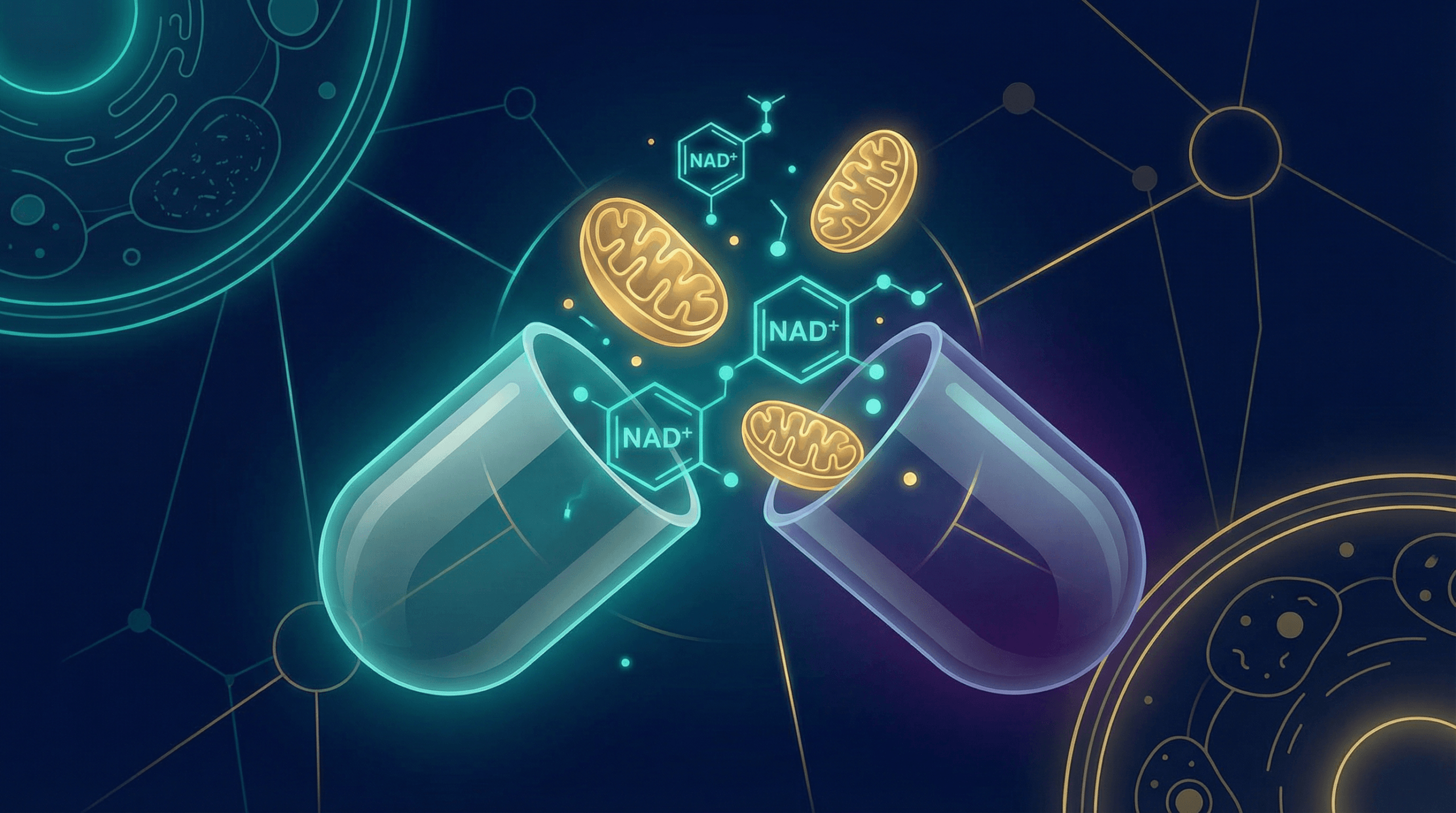
In the world of longevity and biohacking, few molecules have generated as much excitement as NAD+ (Nicotinamide Adenine Dinucleotide). Hailed as a “key coenzyme,” it is a critical coenzyme found in every cell of your body, essential for metabolism, energy production, and cellular maintenance. As we age, our NAD+ levels decline precipitously, and this decline is linked to many of the hallmarks of aging.
This has led to a booming market for NAD+ precursor supplements, most notably Nicotinamide Mononucleotide (NMN) and Nicotinamide Riboside (NR). But does the science support the hype? This guide will cut through the marketing claims to examine the evidence, explore the potential benefits and risks, and help you make an informed decision about whether these supplements are right for your longevity protocol.
What the Human Studies Show
While early animal studies on NAD+ precursors showed dramatic results, including extended lifespan in mice, the human evidence is more modest but still promising.
- Safety and Efficacy: Multiple human clinical trials have demonstrated that both NMN and NR are generally well-tolerated in short-term studies. These studies consistently show that supplementation successfully increases blood NAD+ levels [3].
- Physical Performance: A 2021 study published in the Journal of the International Society of Sports Nutrition found that NMN supplementation improved aerobic capacity in amateur runners. The group taking the highest dose of NMN showed the most significant improvement in their cardiovascular fitness [4].
- Muscle Function and Insulin Sensitivity: A study from Washington University School of Medicine found that NMN supplementation improved muscle insulin sensitivity and structure in prediabetic, overweight older women. This suggests a potential role in combating age-related metabolic decline [5].
It is crucial to note that no human study has yet proven that NMN or NR can extend human lifespan. The current evidence supports their role in improving specific markers of health and function, particularly those that decline with age.
FAQ About NAD+ Supplements
- When should I take it?
Many experts, including Dr. Sinclair, recommend taking NMN or NR in the morning, as NAD+ levels are involved in regulating our circadian rhythm.
- Are there any side effects?
At standard doses, side effects are rare and typically mild, such as flushing or an upset stomach. However, the long-term effects of sustained high NAD+ levels are still unknown.
- Can I boost NAD+ without supplements?
Yes. High-intensity exercise, fasting or caloric restriction, and minimizing alcohol consumption are associated with supporting NAD+ levels.
For a safer starting point, see the step-by-step guide to building your personal longevity protocol.
Next Steps: A Prudent Approach to NAD+ Supplementation
- Focus on the Foundation First: Before spending money on supplements, ensure you have optimized the free and evidence-supported approaches to supporting NAD+: consistent exercise (especially HIIT), a healthy diet, and quality sleep.
- Manage Expectations: View NAD+ precursors as an experimental tool for supporting cellular health, not a magic pill. The foundation of your longevity plan should always be lifestyle.
Before adding supplements, start with the basics: download the free 6 Health Numbers to Track After 45 checklist.
References
[1] Sinclair, D. A., & LaPlante, M. D. (2019). Lifespan: Why We Age—and Why We Don’t Have To. Atria Books.
[2] Grozio, A., et al. (2019). Slc12a8 is a nicotinamide mononucleotide transporter. Nature Metabolism, 1(1), 47-57. https://www.nature.com/articles/s42255-018-0009-4
[3] Irie, J., et al. (2020). Effect of oral administration of nicotinamide mononucleotide on clinical parameters and nicotinamide metabolite levels in healthy Japanese men. Endocrine Journal, 67(2), 153-160. https://www.jstage.jst.go.jp/article/endocrj/67/2/67_EJ19-0313/_article
[4] Liao, B., et al. (2021). Nicotinamide mononucleotide supplementation enhances aerobic capacity in amateur runners: a randomized, double-blind study. Journal of the International Society of Sports Nutrition, 18(1), 54. https://jissn.biomedcentral.com/articles/10.1186/s12970-021-00442-4
[5] Yoshino, M., et al. (2021). Nicotinamide mononucleotide increases muscle insulin sensitivity in prediabetic women. Science, 372(6547), 1224-1229. https://www.science.org/doi/10.1126/science.abe9985
Frequently Asked Questions
Does NMN or NR actually raise NAD+ levels in humans? Yes — multiple human trials have confirmed that both NMN and NR supplementation raise NAD+ levels in blood and some tissues. A 2022 trial published in Nature Aging found that 300mg/day of NMN for 60 days significantly increased NAD+ metabolites in skeletal muscle. However, raising blood NAD+ levels does not automatically translate into the dramatic effects seen in mouse studies.
Which is better — NMN or NR? Both are effective NAD+ precursors, but they follow slightly different conversion pathways. NMN converts to NMN directly in the gut before entering cells, while NR is converted to NMN inside cells. Some researchers (including David Sinclair) favour NMN; others prefer NR based on the longer human trial record. Practically, the difference in real-world outcomes appears modest. NR tends to be less expensive.
What is a reasonable dose? Human trials have used a range of doses. There is no established optimal dose for healthy aging. Speak with a qualified clinician before starting any supplement regimen, especially if you have health conditions or take medications.
Are there any known side effects or safety concerns? Short-term human trials (up to 12 weeks) have generally found NMN and NR to be well-tolerated with few adverse effects. Mild side effects reported include nausea, flushing, and digestive discomfort at higher doses. Long-term safety data in humans is still limited. One theoretical concern is that elevated NAD+ could theoretically stimulate cell growth pathways — this is unproven in humans but warrants caution for those with a history of cancer.
Related Reading
- The Blue Zones Diet: What Do the World’s Longest-Lived People Actually Eat?
- Rapamycin and Metformin: The Longevity Drugs Being Studied
- Senolytics: Can We Clear Zombie Cells to Reverse Aging?
- Cold Plunges & Saunas: The Science of Hormesis and Heat/Cold Shock Proteins
Key Takeaway
Not all NAD+ supplements are created equal; prioritizing quality and medical guidance reduces potential harm. Staying informed and cautious helps ensure these supplements contribute positively to your healthspan.
Reducing Risk for a Longer Healthspan
- Choose NAD+ precursors like NMN and NR only from reputable, independently verified quality brands to avoid contaminants.
- Avoid combining NAD+ supplements with unproven or experimental compounds that may increase health risks.
- Consult your healthcare provider before starting NAD+ supplements, especially if you have chronic conditions or take medications.
- Limit dosage to scientifically studied amounts; higher doses have not been proven safer or more effective.
- Monitor for any adverse effects and discontinue use if unusual symptoms occur.
“While NAD+ precursors like NMN and NR show promise, rigorous clinical trials are essential to establish their safety and efficacy for aging interventions.”
Insight: By carefully selecting and monitoring NAD+ supplements, adults over 60 can minimize risks while supporting healthy aging.