CELLULAR AGING RESEARCH
What Is Autophagy? Cellular Cleanup, Fasting and the Evidence
Autophagy is a cellular recycling process, not a switch you can reliably turn on with a fasting timer. Use the science to understand claims, while choosing everyday habits for their demonstrated benefits.
About this guide and its sources
By Ken Gardner, a non-clinician writing from personal experience and research reading. AI-assisted editing is disclosed in our editorial policy.
Editorial update: . This update clarifies headings, related reading and source context. It is not an independent medical review or a complete reassessment of every health claim.
What human autophagy research has measured
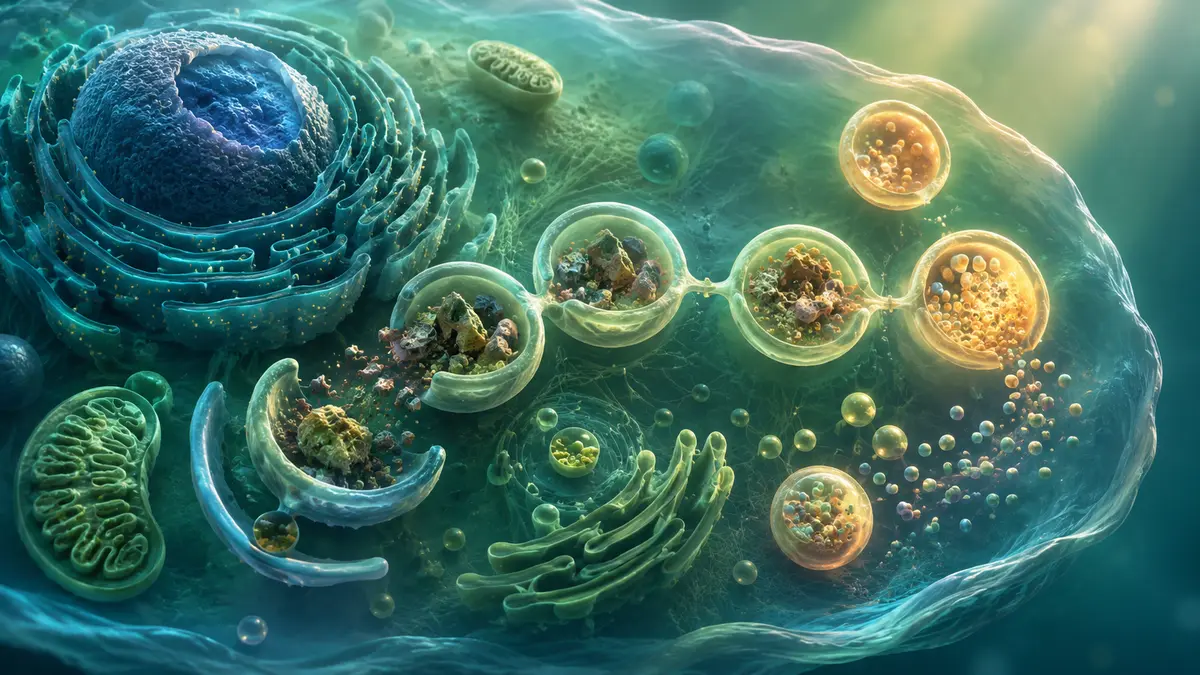
Autophagy helps cells recycle components and respond to changing conditions. Its activity varies across tissues, and measuring the process in humans is more complicated than checking one marker.
Research on fasting and autophagy cannot supply an exact personal countdown to cellular cleanup. Translating a mechanism into a rigid fasting rule skips important uncertainty and safety considerations.
Four questions to ask about an autophagy claim
Identify what was measured
Why it matters: A laboratory marker does not necessarily measure the full recycling process.
Practical application / what to track: Ask whether a study measured autophagic flux, a related marker or a different outcome.
Check the population
Why it matters: Animal and cell findings do not prescribe a human routine.
Practical application / what to track: Record the species or participants before repeating a headline.
Protect nutrition
Why it matters: Longer fasting can conflict with food needs or prescribed care.
Practical application / what to track: Discuss diabetes medicines, low body weight, unintentional weight loss or eating-disorder history before considering restriction.
Choose a concrete health goal
Why it matters: Everyday function is more actionable than an unmeasured cellular target.
Practical application / what to track: Use a suitable movement or meal-planning goal and track feasibility rather than supposed autophagy hours.
Common claims and mistakes to question
- Do not confuse a mechanism with a benefit: changing a pathway or laboratory marker is not the same as improving health.
- Check who was studied: results in cells, mice or a particular patient group may not apply to you.
- Avoid self-prescribing: a study protocol is not a personal treatment plan.
Primary care discussion checklist
Use the questions that fit your situation. Keep personal health notes private and bring them through your clinic’s approved channel.
- Would changing meal timing be appropriate given my medicines and nutritional needs?
- What outcome should we focus on instead of an autophagy claim?
- Are fatigue, weight changes or other symptoms something we should assess first?
Next steps and related reading
For the practical nutrition decision, read intermittent fasting after 60: evidence and risks. For the wider context, explore the hallmarks of aging.
Choose one useful next step rather than adding several new tasks at once.
Educational guidance. Not medical advice.
Longevity Diet Food List: What to Eat After 45
Explore everyday food choices without chasing anti-aging promises.
See How the Starter Kit Works
See how the checklist and planner can help prepare a focused visit question.
Hallmarks of Aging After 45: A Plain-English Guide
Understand the biological framework behind many longevity headlines.
Evidence & Primary Sources
The 2025 exploratory analysis studied 121 people with obesity over six months. It measured autophagic flux in blood cells, with a post hoc between-group finding at six months; it did not establish an exact fasting-hour threshold or a personal longevity benefit. Broader reviews explain mechanisms and their limits.
Authorship and editorial disclosures. This editorial update does not claim a new independent medical review. Report a correction.
FREE LONGEVITY STARTER KIT
Choose one useful next step.
A six-health-numbers checklist and a weekly habit planner, ready to use without signing up.
Email delivery is optional and includes occasional Fruitful Years emails. Unsubscribe anytime.