
GUT HEALTH AND NUTRITION
Gut Microbiome After 45: What Your Gut Bacteria Can and Can’t Tell You
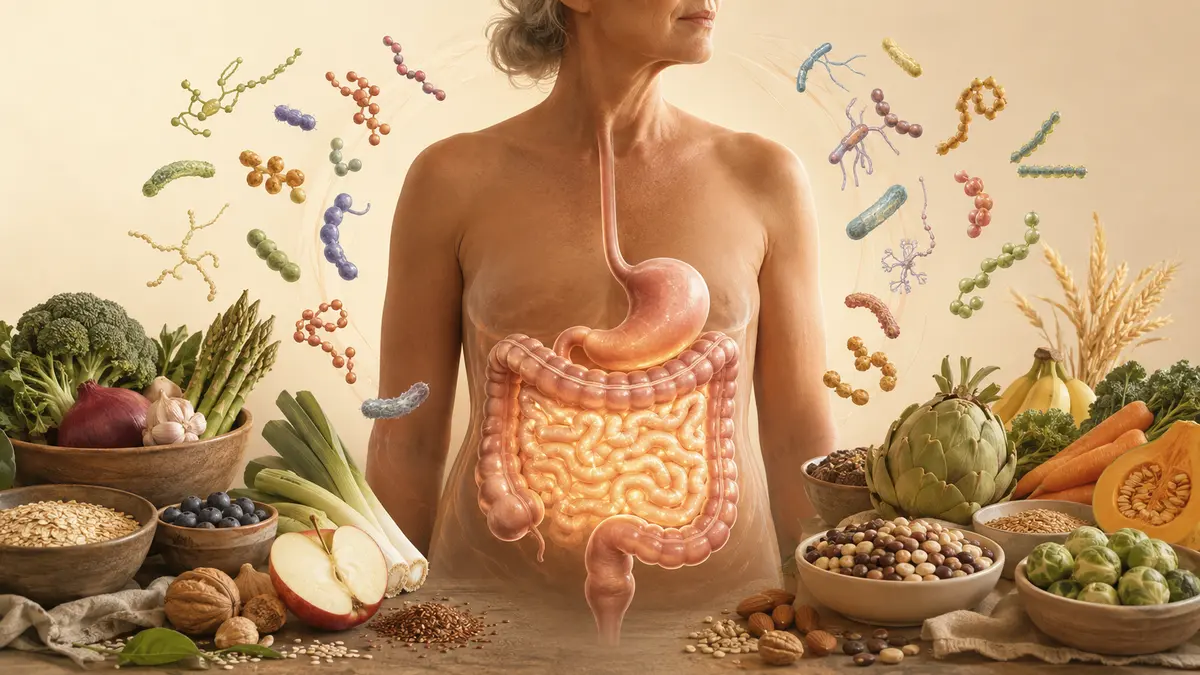
Your gut microbiome is a changing community of microorganisms, not a single score to perfect. Focus on foods you tolerate and questions that matter, rather than assuming a stool report can prescribe a longevity diet.
The evidence and the problem
Research links microbiome patterns with aspects of aging, but association does not by itself show what caused a health outcome. Consumer reports cannot resolve all the effects of diet, medication, illness and sampling.
NCCIH’s probiotic guidance emphasizes that usefulness and safety depend on the product and situation. A general “gut health” claim is not a treatment plan.
A practical breakdown
Start with a tolerable food pattern
Why it matters: Nutrition has a purpose beyond altering bacteria.
Practical application / what to track: Choose varied foods within your needs and restrictions; note tolerance rather than chasing a species count.
Distinguish the products
Why it matters: Prebiotics, probiotics and fermented foods are not interchangeable.
Practical application / what to track: Ask what exact ingredient or strain was studied for the relevant condition.
Question a stool-test promise
Why it matters: A colorful report can appear more definitive than its evidence.
Practical application / what to track: Ask what validated clinical decision the result would change.
Keep medication context
Why it matters: Medicines can affect digestion and microbial patterns.
Practical application / what to track: Bring a medicine and supplement list to your clinician; do not stop treatment to improve a microbiome score.
Common mistakes and mindset guardrails
- Diagnosing yourself from a consumer report.
- Adding several supplements at once.
- Restricting many foods from one result.
Do not delay assessment of persistent digestive changes, bleeding, unintended weight loss, fever or anemia while trying a product. Seek urgent help for severe or rapidly worsening symptoms.
Primary care discussion checklist
Use the questions that fit your situation. Keep personal health notes private and bring them through your clinic’s approved channel.
- Do these digestive symptoms need assessment before changing my diet?
- Would this test or probiotic have an evidence-based role for my situation?
- Could medication or a dietary restriction be contributing?
Next steps and related reading
Choose one useful next step rather than adding several new tasks at once.
Educational guidance. Not medical advice.
Longevity Diet Food List: What to Eat After 45
Continue with a focused guide, then keep the questions relevant to your situation.
Advanced Biomarker Tests After 45: What’s Worth Tracking?
Continue with a focused guide, then keep the questions relevant to your situation.
The Blue Zones Diet After 45: What the Research Suggests
Continue with a focused guide, then keep the questions relevant to your situation.
Evidence & Primary Sources
Original references and further reading are retained below. These include research and educational resources; inclusion is not a study-level appraisal or endorsement. See our evidence and editorial policy.
Authorship and editorial disclosures. This editorial update does not claim a new independent medical review. Report a correction.
More in Nutrition · All Guides
FREE LONGEVITY STARTER KIT
Choose one useful next step.
A six-health-numbers checklist and a weekly habit planner, ready to use without signing up.
Email delivery is optional and includes occasional Fruitful Years emails. Unsubscribe anytime.