
GLUCOSE MONITORING
Continuous Glucose Monitors After 45: What to Know Before You Try One
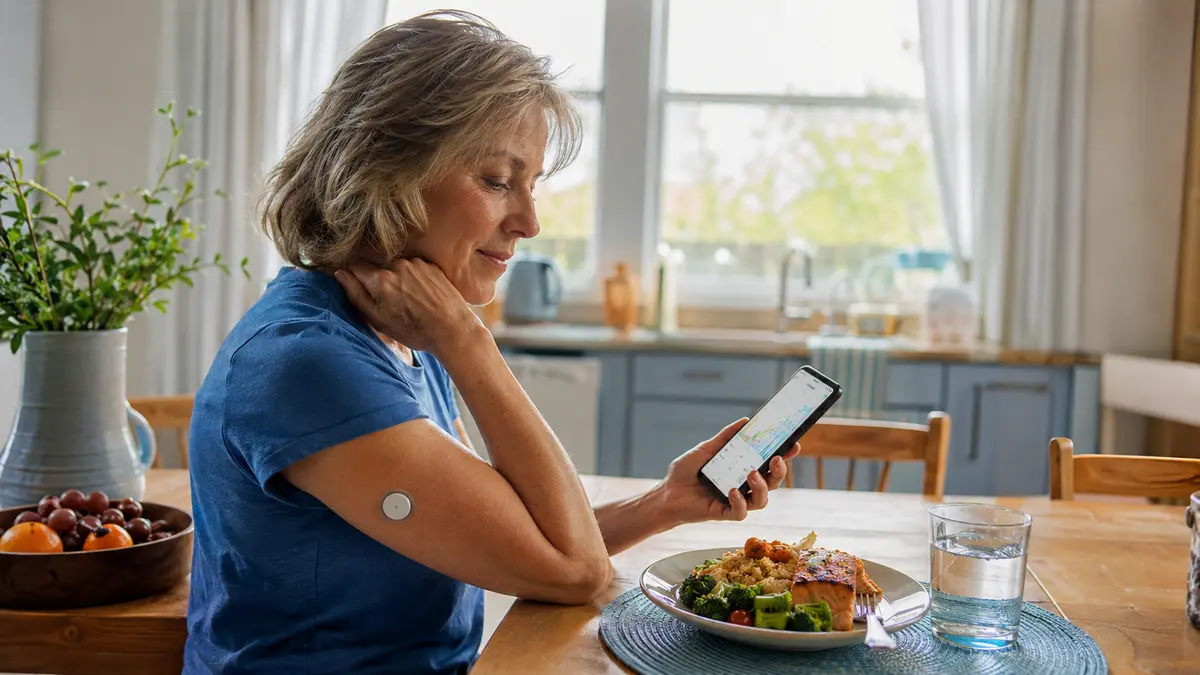
A continuous glucose monitor can reveal patterns, but a detailed graph is not automatically useful medical information. Start with the question it should answer, especially if you do not have diabetes.
What a CGM measures and why context matters
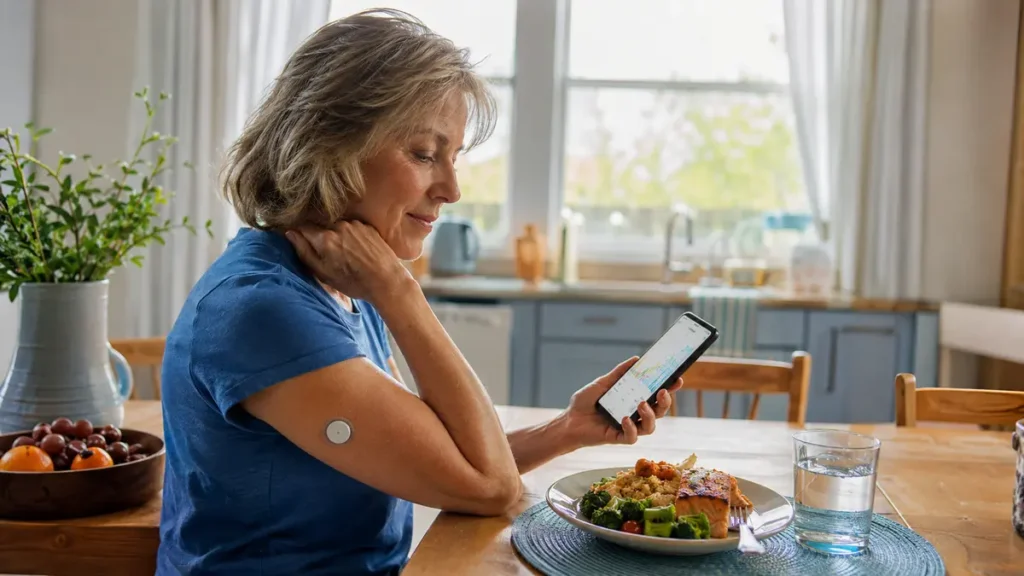
A CGM estimates glucose in fluid between cells rather than measuring a laboratory blood sample. Device readings and blood glucose can differ, particularly during rapid changes.
Diabetes Canada’s monitoring guidance concerns clinical management. Benefits in diabetes should not be assumed to prove a longevity benefit for people without diabetes. Device eligibility and alerts differ.
Decide what monitoring would change
Define the question
Why it matters: Useful monitoring starts with a decision, not curiosity alone.
Practical application / what to track: Ask whether the information could change your care or an appropriate habit; begin with existing clinical results.
Choose an appropriate device
Why it matters: Not every device provides the alerts a person needs.
Practical application / what to track: Confirm its approved users, medication considerations and low-glucose alerts with your clinician or pharmacist.
Record context
Why it matters: Meals, activity and sensor conditions can affect interpretation.
Practical application / what to track: If use is appropriate, note the circumstances around a pattern rather than labeling a food harmful from one rise.
Agree on an action plan
Why it matters: A consumer graph is not a diagnosis or a treatment instruction.
Practical application / what to track: Ask how to confirm unexpected readings, what symptoms need help and when to review the information.
Avoid misleading glucose-graph conclusions
- Chasing a flat line. A post-meal rise alone does not establish harm.
- Changing medication or a prescribed meal plan from a graph. Use your clinical care plan.
- Ignoring anxiety, cost or skin problems. More data is not always more useful.
Before buying: confirm current local eligibility, ongoing sensor costs, app privacy and alert features. The FDA’s original Stelo clearance excluded insulin users and people with problematic hypoglycemia; an over-the-counter label does not mean every device suits every person. Follow your individual care plan for symptoms and unexpected readings.
Primary care discussion checklist
Use the questions that fit your situation. Keep personal health notes private and bring them through your clinic’s approved channel.
- Would a CGM answer a useful question for me, or would standard testing be more appropriate?
- Do my medicines or low-glucose risks affect device choice and alerts?
- How should I respond to symptoms or readings that do not seem right?
Next steps and related reading
Before buying a sensor, use the CGM discussion questions to establish whether monitoring would answer a useful question and who would interpret unexpected readings. Compare ongoing costs and privacy terms before deciding.
Educational guidance. Not medical advice.
Advanced Biomarker Tests After 45: What’s Worth Tracking?
Use the clinical discussion checklist to ask what a test result would change.
Longevity Diet Food List: What to Eat After 45
Explore everyday food choices without chasing anti-aging promises.
See a completed Starter Kit example
See what the Starter Kit includes before deciding which planning tool to use.
Evidence & Primary Sources
Original references and further reading are retained below. These include research and educational resources; inclusion is not a study-level appraisal or endorsement. See our evidence and editorial policy.
- FDA: original Stelo over-the-counter clearance for adults (March 2024)
- FDA: later Stelo eligibility expansion (June 2026)
- 2026 systematic review
- 2025 study of 18 expert clinicians reviewing 20 selected, potentially challenging reports
- NIDDK guidance on low blood glucose
- Diabetes Canada’s monitoring guidance
- CDC: Monitoring Your Blood Sugar
- Diabetes Canada: Technology and Devices
Authorship and editorial disclosures. This editorial update does not claim a new independent medical review. Report a correction.
More in Biomarkers & Diagnostics · All Guides
FREE LIVING WELL STARTER KIT
Choose one useful next step.
A completed example, a two-week plan and tracker, plus an optional appointment sheet. Free to use without signing up.
Four printable or fillable pages. Choose one action that fits your life.