
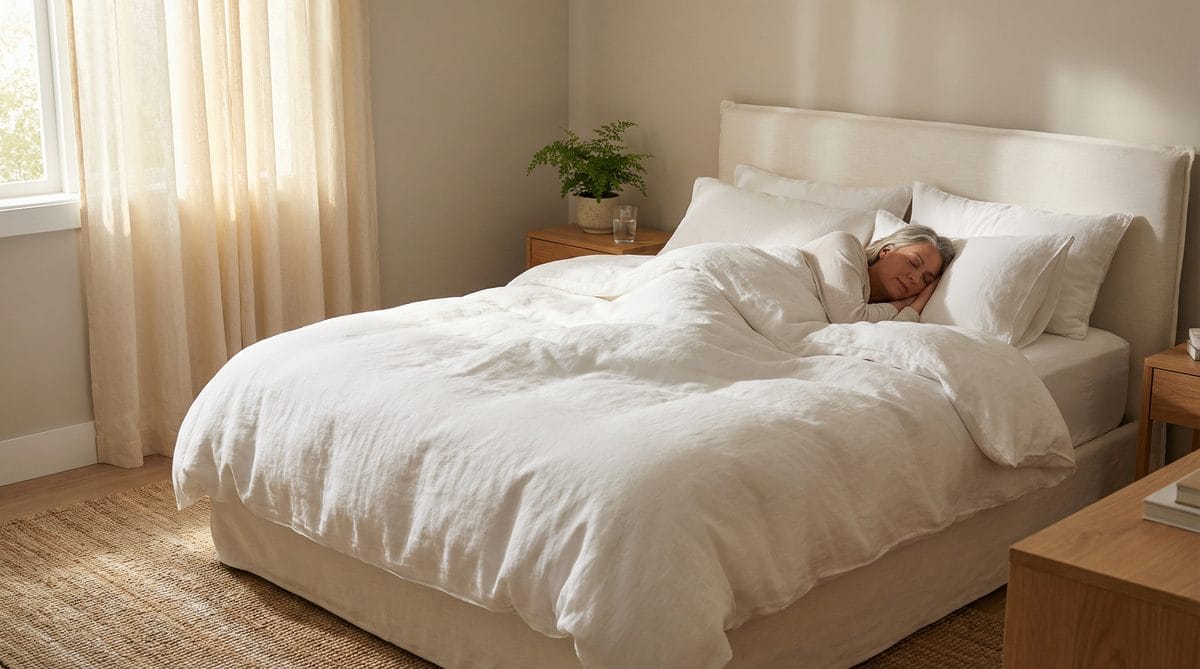
Sleep and Longevity After 45: A Practical Recovery Guide

This article is educational and is not medical advice. Talk with a qualified healthcare professional if you have ongoing insomnia, suspected sleep apnea, severe daytime sleepiness, depression, medication concerns, or other medical issues affecting sleep.

Quick Summary

  • Sleep is not passive downtime — it is an active recovery process that matters more as you age.
  • After 45, poor sleep can make energy, mood, recovery, and consistency with other healthy habits harder to maintain.
  • Start by tracking your current sleep patterns for seven days before making changes.
  • A consistent wake time, morning light, an evening wind-down, and a comfortable bedroom are the foundation.
  • If you snore, gasp during sleep, or feel severely sleepy during the day, talk with a clinician — these can be signs of a sleep disorder.

Sleep Is Not Just Downtime

It is easy to think of sleep as simply the absence of activity — the hours when nothing is happening. In reality, sleep is one of the most productive periods in your day. While you rest, your body is repairing heart and blood vessels, regulating hormones that control hunger and blood sugar, consolidating memories, and supporting immune function. According to theNational Heart, Lung, and Blood Institute (NHLBI), getting enough quality sleep at the right times helps protect your mental health, physical health, quality of life, and safety.

This guide is not about reversing aging or guaranteeing longevity. It is about building a practical, realistic sleep routine that supports better energy, recovery, thinking, mood, and consistency in your daily life — especially after 45.

Why Sleep Matters More After 45

As we move through our mid-40s and beyond, the margin for error with poor sleep narrows. Sleep plays a direct role in physical recovery, particularly if you are maintaining a regular exercise routine. It supports mental clarity, reaction time, and emotional regulation. From a metabolic and cardiovascular perspective, consistent sleep is one of the most important inputs you can control. The CDC notes that adults who sleep fewer than seven hours per night are more likely to report high blood pressure, heart disease, diabetes, obesity, and depression.

Sleep patterns also change naturally after 45. The National Institute on Aging (NIA) explains that older adults tend to become sleepier earlier in the evening, wake earlier in the morning, and experience lighter, more fragmented sleep. These are normal physiological shifts — but they are not something you simply have to accept as permanent. Most of them are addressable with consistent habits.

How Much Sleep Do You Actually Need?

The NIA recommends seven to nine hours per night for older adults — consistent with the general adult recommendation. The right amount for you personally may vary, but consistently sleeping fewer than seven hours is associated with increased health risks. The goal is not just duration, but quality: uninterrupted sleep that includes adequate deep and REM stages.

The 5-Part Sleep Foundation

Rather than chasing a long list of sleep tips, focus on five core habits. These are the interventions with the strongest evidence base and the most practical impact for adults over 45.

  1. Consistent wake time. Choose a wake time and keep it every day, including weekends. This single habit does more to stabilize your sleep than almost anything else. Your body’s internal clock responds to consistency, and a regular wake time anchors your entire sleep-wake cycle.
  2. Morning light exposure. Get outside within 30 to 60 minutes of waking, even on cloudy days. Natural light in the morning helps set your circadian rhythm and supports healthy melatonin production in the evening. This is especially important in winter at northern latitudes.
  3. Evening wind-down. Create a 30 to 60 minute buffer before bed. Dim the lights, reduce screen use, and avoid stimulating content or stressful conversations. Your nervous system needs a transition period between the demands of the day and sleep.
  4. Comfortable sleep environment. A cool, dark, and quiet bedroom supports better sleep quality. Most adults sleep better at a room temperature of around 16 to 19 degrees Celsius (60 to 67 Fahrenheit). Blackout curtains and white noise can help if light or sound are issues.
  5. Consistent bedtime. Pair your fixed wake time with a consistent bedtime. Going to bed at roughly the same time each night reinforces your body’s sleep pressure and makes it easier to fall asleep without effort.

If you are currently doing none of these, start with just one — the consistent wake time. Build from there.

Your 7-Day Sleep Reset: A Simple Starting Point

Before changing anything, spend one week tracking your current sleep. This gives you a baseline and helps you identify what is actually affecting your sleep. Here is a simple framework:

DayFocusAction
1–2Baseline trackingRecord sleep and wake times, energy levels, and anything that disrupted sleep
3Wake timeSet a consistent wake time and keep it regardless of when you fell asleep
4Morning lightAdd 10–15 minutes of outdoor light within 60 minutes of waking
5Evening wind-downBegin a 30-minute screen-free wind-down before your target bedtime
6Sleep environmentCheck room temperature, light, and noise; make one adjustment
7ReviewCompare your energy and sleep quality to days 1–2; decide what to continue

This is not a rigid protocol — it is a starting point. The goal is awareness before action.

Sleep and Exercise: A Two-Way Relationship

Regular physical activity is one of the most evidence-backed ways to improve sleep quality. It increases the proportion of deep slow-wave sleep, reduces the time it takes to fall asleep, and supports overall sleep duration. The relationship works in both directions: better sleep also supports better exercise performance, recovery, and consistency.

Timing matters. Exercise earlier in the day or in the afternoon tends to support sleep better than late-evening workouts, which can raise core body temperature and alertness close to bedtime. That said, individual responses vary — if evening exercise works for you and does not delay your sleep, there is no need to change it. The strength training discussed in our longevity exercise guide covers how to structure resistance and aerobic training for recovery and healthy aging.

Sleep, Nutrition, and Your Longevity Protocol

Sleep and nutrition are closely linked. Poor sleep increases appetite-regulating hormones in ways that make it harder to maintain consistent eating patterns. Blood sugar regulation is also affected by sleep quality — people who sleep poorly tend to have more variable glucose responses. Our guide on building your personal longevity protocol walks through how to structure movement, nutrition, recovery, and sleep into a practical, repeatable system. The longevity diet guide also covers how nutrition and sleep interact, particularly around blood sugar and energy levels.

Sleep, Biomarkers, and Recovery

Sleep patterns may influence energy, blood pressure, appetite, recovery, and glucose habits — but it is important to be clear about what that means. Sleep does not fix biomarkers on its own. Rather, consistent sleep supports the conditions that make it easier to manage those numbers over time. Any biomarker results should always be interpreted with a clinician who knows your full health picture.

If you are tracking health numbers as part of a longevity approach, our guide on advanced biomarker testing explains what to track beyond standard cholesterol panels and how to have a productive conversation with your doctor about the results.

Common Mistakes Worth Knowing About

Many adults try to fix sleep in ways that do not address the underlying patterns. A few of the most common mistakes include trying to resolve poor sleep with supplements before fixing the routine itself, treating weekends as a completely different schedule, and ignoring snoring or daytime sleepiness rather than discussing them with a clinician.

Other patterns worth watching for: using alcohol as a sleep aid (it disrupts sleep quality even when it helps you fall asleep faster), consuming late caffeine without noticing its effect, exercising too late in the evening if it delays sleep onset, trying too many changes at once rather than one at a time, and assuming that poor sleep is simply a normal part of getting older. The NIA is clear that while sleep patterns change with age, persistent poor sleep is not something to simply accept.

What to Ask Your Clinician

If sleep is a consistent concern, a conversation with your doctor is a reasonable next step. Here are some questions worth raising:

  • Could my symptoms suggest sleep apnea or another sleep disorder?
  • Could medications, pain, stress, alcohol, or caffeine be affecting my sleep?
  • Should I be evaluated if I wake unrefreshed despite enough hours in bed?
  • Are there safe options for insomnia that do not rely only on pills?
  • Which health numbers should we track if sleep is affecting my energy or recovery?

The NIA notes that cognitive behavioural therapy (CBT-I) is an effective approach for insomnia, and that sleep medicines carry risks and should not be used long-term without medical guidance.

Frequently Asked Questions

How many hours of sleep do adults over 45 need?

The National Institute on Aging recommends seven to nine hours per night for older adults — the same as for all adults. The amount you need personally may vary, but consistently sleeping fewer than seven hours is associated with increased health risks.

Is it normal to sleep less as you get older?

Sleep patterns do change with age — older adults tend to go to sleep earlier and wake earlier. However, persistent poor sleep, frequent waking, or severe daytime sleepiness are not simply normal parts of aging. They are worth discussing with a clinician.

What is the most important sleep habit to start with?

A consistent wake time is often the easiest place to start because it is something you can control directly. Both the NIA and CDC recommend the same wake time every day, including weekends, as a foundation for better sleep.

Can alcohol help you sleep?

Alcohol may help you fall asleep faster, but it disrupts sleep quality — particularly in the second half of the night. Both the NIA and CDC advise avoiding alcohol, even in small amounts, for better sleep. This is one of the more common and underappreciated sleep mistakes.

When should I talk to a doctor about my sleep?

Talk with a clinician if you experience ongoing insomnia, snoring or gasping during sleep, morning headaches, severe daytime sleepiness, or if you wake unrefreshed despite getting enough hours in bed. These can be signs of a treatable sleep disorder.

Your Next Step

If you are ready to take a practical next step, start with your seven-day sleep baseline this week. Track what is actually happening before you change anything. Then choose one habit from the 5-part foundation to focus on for the following two weeks.

And if you want to see how sleep fits into a broader picture of healthy aging, download the free 6 Health Numbers to Track After 45 checklist. It is a simple, practical starting point for understanding what to monitor as part of a longevity-focused routine.

Sources

Leave a Comment