The 9 Hallmarks of Aging: A Beginner’s Guide
TLDR: Understanding the 9 hallmarks of aging provides a roadmap to understanding why we age and how we can intervene to promote a longer, healthier life. This guide breaks down these complex biological processes into easily digestible information, offering actionable steps to help you slow biological aging.
Introduction: Unlocking the Secrets of Aging
Have you ever wondered why some people seem to defy the hands of time, maintaining their vitality and sharp minds well into their later years, while others experience a more rapid decline? The answer lies deep within our cells, in a series of fundamental biological processes known as the 9 hallmarks of aging. These hallmarks, first comprehensively outlined in a landmark 2013 paper by López-Otín and colleagues [1], and further expanded upon in 2023 [2], represent the molecular and cellular damage that accumulates over time, driving the aging process and increasing our susceptibility to age-related diseases. By understanding these core mechanisms, we gain powerful insights into how we can potentially slow down biological aging and extend our healthspan – the period of life spent in good health.
This article will serve as your beginner’s guide to the 9 hallmarks of aging, demystifying each one and exploring practical strategies you can adopt to mitigate their effects. Get ready to embark on a journey that empowers you to take control of your aging process, fostering a future of sustained vitality and well-being.
The Nine Hallmarks of Aging: A Closer Look
1. Genomic Instability
Our DNA, the intricate instruction manual for our bodies, is under constant assault. From the UV rays of the sun to environmental pollutants and even normal metabolic processes within our cells, countless factors can cause damage. Genomic instability refers to the accumulation of this damage to our genetic material over time [1] [3]. This isn’t just about a few misplaced letters; it can manifest as significant errors like mutations, deletions of crucial genetic sequences, or even large-scale rearrangements of chromosomes. When our DNA is compromised, it can lead to the production of faulty proteins, impair cellular function, and significantly increase the risk of age-related diseases, most notably cancer. Imagine trying to build a complex machine with a constantly corrupting blueprint – the results would be disastrous.
Actionable Tip: To bolster your body’s defenses against genomic instability, prioritize a diet rich in antioxidants. Foods like colorful berries, dark leafy greens, and vibrant vegetables are packed with compounds that neutralize harmful free radicals. Minimize exposure to known environmental toxins, such as cigarette smoke, industrial chemicals, and excessive unfiltered UV radiation. Furthermore, ensuring adequate, restorative sleep is crucial, as many DNA repair processes occur during this vital period.
2. Telomere Attrition
Think of telomeres as the protective caps at the ends of our chromosomes, much like the plastic tips on shoelaces. Their primary role is to prevent the ends of chromosomes from fraying, sticking together, or being mistakenly identified as damaged DNA. Each time a cell divides, these telomeres naturally shorten. This telomere attrition acts as a cellular clock; once telomeres reach a critically short length, the cell can no longer divide and enters a state called cellular senescence, or programmed cell death [1] [4]. This progressive shortening is a fundamental driver of cellular aging and contributes to the limited replicative capacity of our cells.
Actionable Tip: While telomere shortening is a natural process, certain lifestyle choices can influence its rate. Regular moderate-intensity exercise has been linked to better telomere maintenance. Stress reduction techniques, such as meditation, yoga, or spending time in nature, can also help mitigate stress-induced telomere shortening. A balanced diet rich in omega-3 fatty acids (found in fatty fish, flaxseeds, and walnuts) and other anti-inflammatory nutrients can further support telomere health.
3. Epigenetic Alterations
Beyond the sequence of our DNA, there’s another layer of genetic control known as epigenetics. This refers to chemical modifications that influence gene expression without changing the underlying DNA sequence itself. These epigenetic marks act like switches, turning genes on or off, or dialing their activity up or down. Over time, our epigenome can become dysregulated, leading to inappropriate gene activation or silencing [1] [5]. This can disrupt cellular function, impair cellular identity, and contribute significantly to the aging process. Imagine the instruction manual for your body not having typos, but rather incorrect sticky notes telling you to skip vital sections or repeatedly read irrelevant ones.
Actionable Tip: Supporting healthy epigenetic function involves a nutrient-rich diet. Foods abundant in B vitamins, folate, and other methyl donors (such as eggs, legumes, dark leafy greens, and liver) provide the necessary building blocks for proper epigenetic modifications. Regular physical activity and effective stress management techniques are also vital, as they can positively influence epigenetic patterns and promote cellular resilience.
4. Loss of Proteostasis
Proteins are the molecular machines that carry out nearly all cellular functions. Proteostasis, or protein homeostasis, is the intricate system that ensures proteins are correctly synthesized, folded into their proper three-dimensional structures, transported to their correct locations, and degraded when they become damaged or no longer needed. As we age, this delicate balance can be disrupted, leading to a loss of proteostasis [1] [2]. This results in the accumulation of misfolded or damaged proteins, which can aggregate and interfere with normal cellular processes. This phenomenon is a hallmark of many neurodegenerative diseases, including Alzheimer’s and Parkinson’s, where protein aggregates form toxic plaques and tangles.
Actionable Tip: Promote cellular cleanup and protein quality control through practices that activate autophagy, the cell’s natural recycling program. Intermittent fasting and regular exercise are powerful activators of autophagy. A diet rich in diverse, high-quality amino acids from sources like lean meats, fish, eggs, and plant-based proteins supports healthy protein synthesis and repair mechanisms.
5. Deregulated Nutrient-Sensing
Our cells are incredibly adept at sensing the availability of nutrients and adjusting their metabolic activity accordingly. Key nutrient-sensing pathways, such as mTOR (mammalian target of rapamycin), AMPK (AMP-activated protein kinase), and sirtuins, act as master regulators of growth, repair, and stress responses. In youth, these pathways are finely tuned, promoting growth when nutrients are abundant and shifting towards repair and maintenance during periods of scarcity. However, with age, these pathways can become deregulated, leading to an imbalance that often favors growth and energy storage over crucial repair and maintenance processes [1] [2]. This deregulation contributes to metabolic disorders like type 2 diabetes and obesity, and accelerates cellular aging.
Actionable Tip: Strategies that mimic nutrient scarcity can help re-sensitize these pathways. Practices like caloric restriction (reducing overall calorie intake without malnutrition) or time-restricted eating (intermittent fasting, where eating is confined to a specific window each day) can promote cellular repair and enhance longevity. Incorporate foods known to activate AMPK and sirtuins, such as green tea, coffee, and resveratrol-rich foods like grapes and blueberries.
6. Mitochondrial Dysfunction
Mitochondria are often called the powerhouses of our cells, responsible for generating the vast majority of the energy (ATP) needed for all cellular activities. They are also involved in crucial processes like calcium signaling and programmed cell death. With age, mitochondria can become less efficient, producing less energy and simultaneously generating more harmful reactive oxygen species (ROS) as byproducts [1] [2]. This mitochondrial dysfunction leads to a vicious cycle: reduced energy production contributes to cellular decline, while increased ROS cause oxidative stress, damaging other cellular components, including DNA, proteins, and lipids. This contributes to fatigue, muscle weakness, and a wide array of age-related diseases.
Actionable Tip: Regular aerobic exercise is one of the most potent interventions for boosting mitochondrial health and promoting mitochondrial biogenesis – the creation of new, healthy mitochondria. Nutrients such as CoQ10, alpha-lipoic acid, L-carnitine, and magnesium are vital cofactors for mitochondrial function and energy production. A diet rich in colorful fruits and vegetables also provides antioxidants to combat ROS.
7. Cellular Senescence
When cells accumulate too much damage, experience excessive telomere shortening, or are exposed to chronic stress, they can enter a state called cellular senescence. Senescent cells are often referred to as ‘zombie cells’ because they stop dividing but remain metabolically active, refusing to die. Instead, they secrete a potent cocktail of inflammatory molecules, proteases, and growth factors known as the Senescence-Associated Secretory Phenotype (SASP) [1] [2]. This SASP can harm surrounding healthy cells and tissues, contributing to chronic low-grade inflammation (inflammaging), tissue dysfunction, and the progression of age-related diseases like arthritis, cardiovascular disease, and neurodegeneration.
Actionable Tip: While research into senolytics (compounds that selectively eliminate senescent cells) is ongoing and promising, maintaining a healthy lifestyle is currently the best defense. Regular physical activity has been shown to help clear senescent cells and reduce the SASP. A diet rich in anti-inflammatory foods, adequate sleep, and stress management can also help minimize the accumulation and harmful effects of senescent cells.
8. Stem Cell Exhaustion

Our bodies possess an incredible capacity for self-repair and regeneration, largely thanks to stem cells. These remarkable cells are characterized by their ability to self-renew (make more copies of themselves) and differentiate into various specialized cell types, replenishing tissues and repairing damage throughout our lives. However, with age, the number, function, and regenerative capacity of our stem cells decline – a phenomenon known as stem cell exhaustion [1] [2]. This impairment means our bodies become less efficient at repairing damage, replacing old cells, and maintaining tissue homeostasis. This contributes to age-related issues such as muscle loss (sarcopenia), slower wound healing, hair graying, and reduced organ function.
Actionable Tip: Supporting stem cell health is crucial for maintaining regenerative capacity. A nutrient-dense diet, particularly one rich in vitamins, minerals, and antioxidants, provides the necessary building blocks. Regular physical activity, especially resistance training, can stimulate stem cell activity in muscles. Adequate sleep and minimizing chronic stress are also vital for optimal stem cell function. Emerging research suggests compounds like curcumin, resveratrol, and certain forms of vitamin D may support stem cell health, though more human studies are needed.
9. Altered Intercellular Communication
Cells within our bodies do not exist in isolation; they are constantly communicating with each other through a complex network of signaling molecules, hormones, neurotransmitters, and direct cell-to-cell contact. This intricate intercellular communication is essential for coordinating tissue function, immune responses, and maintaining overall physiological balance. With age, this communication system can become altered and dysfunctional [1] [2]. This breakdown can manifest as chronic low-grade inflammation (inflammaging), impaired immune surveillance (leading to increased susceptibility to infections and cancer), and dysfunctional interactions between different cell types and tissues. This creates a pro-aging environment that can accelerate the decline of various organ systems.
Actionable Tip: Reducing chronic inflammation is key to optimizing intercellular communication. An anti-inflammatory diet, rich in whole, unprocessed foods, abundant fruits and vegetables, healthy fats (like omega-3s from fatty fish, olive oil, and avocados), and lean proteins, is paramount. Regular exercise, effective stress management techniques (such as mindfulness or meditation), and maintaining a healthy gut microbiome (through probiotics and prebiotics) all play crucial roles in fostering optimal intercellular communication and a robust immune system.
Conclusion: Taking Control of Your Aging Journey
Understanding the 9 hallmarks of aging is not merely an academic exercise; it is about empowering yourself with profound knowledge to proactively influence your healthspan. While aging is an inevitable biological process, the rate at which we experience its effects and the quality of life we maintain are significantly within our control. By adopting evidence-based lifestyle strategies that directly address these fundamental biological mechanisms – from protecting your DNA to nurturing your mitochondria and supporting cellular repair – you can profoundly impact your biological age and enjoy a more vibrant, fulfilling life for years to come.
Ready to take the next step in your longevity journey? Discover your biological age and receive personalized recommendations to optimize your health. Visit our biological age calculator today!
Sources and Further Reading
[1] López-Otín, C., Blasco, M. A., Partridge, L., Serrano, M., & Kroemer, G. (2013). The hallmarks of aging. Cell, 153(6), 1194-1217. [https://pmc.ncbi.nlm.nih.gov/articles/PMC3836174/](https://pmc.ncbi.nlm.nih.gov/articles/PMC3836174/)
[2] López-Otín, C., Blasco, M. A., Partridge, L., Serrano, M., & Kroemer, G. (2023). Hallmarks of aging: An expanding universe. Cell, 186(2), 243-278. [https://www.sciencedirect.com/science/article/pii/S0092867422013770](https://www.sciencedirect.com/science/article/pii/S0092867422013770)
[3] López-Gil, L., et al. (2023). Genomic Instability and Epigenetic Changes during Aging. PMC, 10531692. [https://pmc.ncbi.nlm.nih.gov/articles/PMC10531692/](https://pmc.ncbi.nlm.nih.gov/articles/PMC10531692/)
[4] Unlocking longevity: the role of telomeres and its targeting. (n.d.). PMC. [https://pmc.ncbi.nlm.nih.gov/articles/PMC10850353/](https://pmc.ncbi.nlm.nih.gov/articles/PMC10850353/)
[5] Wang, K., et al. (2022). Epigenetic regulation of aging: implications for… Nature, s41392-022-01211-8. [https://www.nature.com/articles/s41392-022-01211-8](https://www.nature.com/articles/s41392-022-01211-8)
Q: What are the 9 hallmarks of aging?
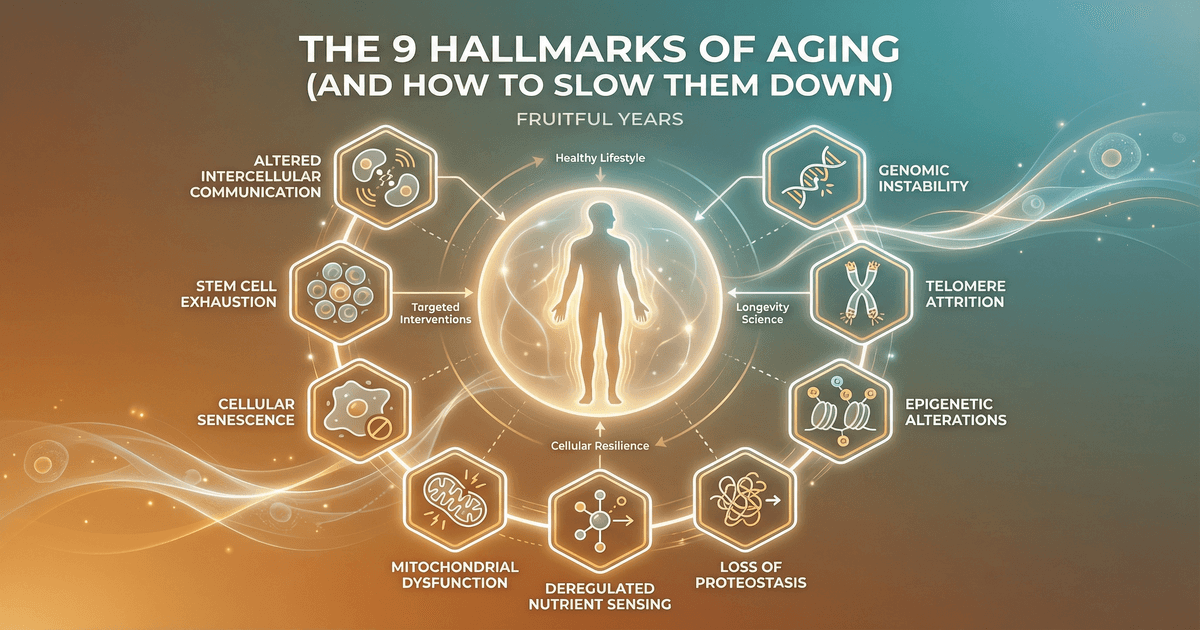
A: The 9 hallmarks of aging are: genomic instability, telomere attrition, epigenetic alterations, loss of proteostasis, deregulated nutrient sensing, mitochondrial dysfunction, cellular senescence, stem cell exhaustion, and altered intercellular communication. These are the fundamental biological processes that drive aging across all species.
Q: Can I target all 9 hallmarks with lifestyle changes?
A: Yes, to varying degrees. Exercise, nutrition, sleep, and stress management can positively influence multiple hallmarks simultaneously. For example, intermittent fasting affects nutrient sensing and autophagy (proteostasis), while exercise improves mitochondrial function and reduces cellular senescence. No single intervention targets all 9, but a comprehensive longevity protocol addresses most of them.
Paste this into ChatGPT, Claude, or your favorite AI assistant to explore this topic further:
👆 Select the text above and press Ctrl+C (or Cmd+C on Mac) to copy the entire prompt.
AI Prompts to Explore This Topic Further
Copy and paste any of these prompts into ChatGPT, Claude, or your favourite AI assistant:
- Prompt 1: “Explain the 9 hallmarks of aging in simple language suitable for someone over 55 interested in healthy aging.”
- Prompt 2: “List practical daily habits that can positively influence each of the 9 hallmarks of aging for adults aged 55 to 70.”
- Prompt 3: “Summarize current scientific research on treatments targeting the hallmarks of aging and their potential benefits for longevity.”
- Prompt 4: “Act as a longevity coach and create a weekly plan incorporating lifestyle changes that support healthy aging by addressing the 9 hallmarks of aging.”
- Prompt 4: “Act as a health educator and create an engaging infographic outline that visually explains the 9 hallmarks of aging and their impact on healthy aging for readers over 50.”