

TL;DR: Getting 10–30 minutes of outdoor morning sunlight within the first hour of waking is one of the most powerful, evidence-based, and free interventions you can do to lower your biological age. It works by anchoring your body’s master clock (circadian rhythm), optimizing key hormones like cortisol and melatonin, and supporting cardiovascular health.
Immediate Action Steps:
- Go outside within 60 minutes of waking. This is when your internal clock is most receptive.
- Aim for 10–30 minutes of direct sunlight. No sunglasses for the first 5–10 minutes.
- Be consistent. Make it a non-negotiable daily habit, even on cloudy days.
- Use the checklist at the end of this article to build this habit into your routine.
What Is Morning Sun Exposure and Who Is It For?
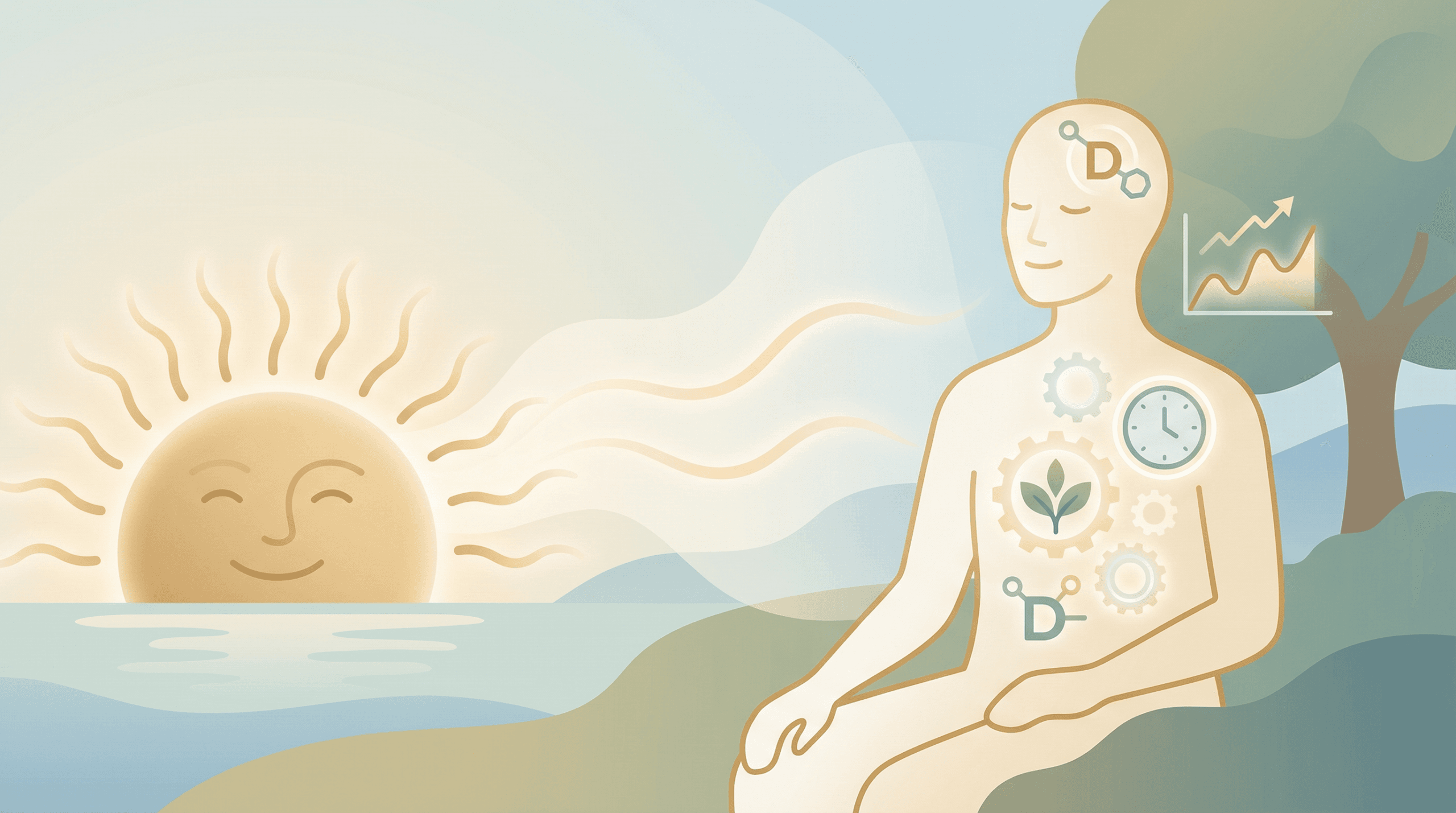
In the quest for a longer, healthier life, we often focus on complex diets and strenuous exercise. But what if one of the most powerful tools for longevity is as simple as stepping outside your door each morning? This article is for anyone looking for a simple, actionable, and science-backed habit to improve their health and slow down the aging process. It explores the science behind morning sun exposure and provides a practical guide to making it a cornerstone of your personal longevity strategy.
While your chronological age ticks forward year by year, your biological age tells a different story. It is a dynamic measure of your cellular health, reflecting the cumulative effects of your lifestyle and environment. The exciting news is that you have significant control over this number. By making strategic, evidence-based changes, you can effectively slow down, and in some cases even reverse, your body’s internal clock.
My Experience: Over the last few years, I have become more serious about getting outside in the morning. I try to get out first thing, if only briefly, preferably barefoot. I am usually doing errands in the early morning, and I try to go on my first dog walk before noon. The most significant changes I’ve noticed are a dramatic improvement in my daytime energy levels (no more afternoon slump) and much deeper, more consistent sleep.
The Master Clock: How Morning Sun Exposure Anchors Your Circadian Rhythm
Deep within your brain lies a master clock known as the suprachiasmatic nucleus (SCN). This cluster of 20,000 nerve cells orchestrates your body’s circadian rhythms—the 24-hour cycles that govern nearly every biological process, including your sleep-wake cycle, hormone release, metabolism, and immune function [1]. For this master clock to function correctly, it needs a clear, consistent signal from the outside world. That signal is morning sunlight.
When the photoreceptors in your eyes detect the specific wavelengths of early morning sunlight, they send a direct signal to the SCN, effectively anchoring your entire circadian system for the day. This simple act sets off a cascade of hormonal and metabolic events that are crucial for optimal health and a lower biological age. Studies have shown that disruptions to this natural rhythm are linked to a higher risk of mortality and a wide range of diseases, including cardiovascular disease, cancer, and metabolic syndrome [2, 3].
“Roughly speaking, the effect of morning light is that it advances the clock, while evening and night light delays the clock.” [4]
The Hormonal Symphony: Cortisol, Melatonin, and Serotonin
Morning sun exposure orchestrates a precise hormonal symphony that dictates your energy, mood, and sleep quality. One of the first and most critical effects is the stimulation of a healthy Cortisol Awakening Response (CAR). While often vilified as the “stress hormone,” a robust cortisol spike in the morning is essential for alertness, focus, and energy. Morning light triggers this natural rise, helping you feel awake and ready for the day [5].
Simultaneously, morning sunlight suppresses the production of melatonin, the hormone that promotes sleep. This clear “off switch” for melatonin ensures you feel alert during the day and helps consolidate sleep at night. Crucially, this morning light exposure also sets the timer for melatonin to be released again approximately 14–16 hours later, paving the way for a restful night’s sleep [6]. Finally, sunlight boosts the brain’s production of serotonin, a neurotransmitter that plays a vital role in mood regulation, promoting feelings of well-being and calmness [7].
| Hormone | Effect of Morning Sun | Benefit for Longevity |
|---|---|---|
| Cortisol | Triggers a healthy morning spike | Increases daytime energy, focus, and alertness |
| Melatonin | Suppresses production during the day | Improves sleep quality and regulates the sleep-wake cycle |
| Serotonin | Boosts production | Enhances mood, focus, and emotional stability |
Table 1: The Hormonal Effects of Morning Sunlight
Beyond the Clock: Vitamin D, Nitric Oxide, and Cardiovascular Health

The benefits of sunlight extend far beyond circadian regulation. Sun exposure is the primary way our bodies produce Vitamin D, a critical hormone-like vitamin essential for bone health, immune function, and inflammation control. Studies have found that individuals with low Vitamin D levels may have a higher biological age, and supplementation has been shown to slow the shortening of telomeres, a key marker of cellular aging [8, 9].
Furthermore, recent research has uncovered that sunlight exposure has cardiovascular benefits that are independent of Vitamin D. When sunlight (specifically UVA radiation) hits the skin, it triggers the release of nitric oxide from stores in the skin into the bloodstream. Nitric oxide is a potent vasodilator, meaning it relaxes the inner muscles of your blood vessels, causing them to widen. This process has been shown to lower blood pressure, a major risk factor for heart disease and stroke [10, 11].
Next Steps: Your Morning Sun Checklist
Incorporating this powerful longevity habit into your daily routine is simple and free. Use this checklist to get started:
- Go outside within 60 minutes of waking. Even on cloudy days, outdoor light is far more powerful than indoor light.
- Leave your sunglasses off for the first 5–10 minutes. This allows the light to signal your brain’s master clock directly. Never look directly at the sun.
- Expose as much skin as is practical to maximize Vitamin D production and nitric oxide release.
- Be consistent for one week. Track how you feel — notice your afternoon energy and sleep quality.
Want to Go Deeper? Try These AI Prompts
Copy and paste any of these into ChatGPT, Perplexity, or your favourite AI assistant:
- “Act as an evidence-based chronobiologist advising adults over 60. What does the latest research say about the optimal duration and timing of morning sunlight exposure for older adults, and how does it differ by latitude and season? Prioritize peer-reviewed studies from the last 5–10 years and include links to the sources.”
- “Act as an integrative longevity researcher specializing in habit stacking for healthy aging. How does morning light exposure interact with other longevity habits like cold exposure, intermittent fasting, or exercise — do they amplify or interfere with each other’s effects on circadian health? Prioritize peer-reviewed studies from the last 5–10 years and include links to the sources.”
- “Act as a sleep medicine specialist advising someone over 60 who lives in a northern climate with dark or overcast winters. What are the best evidence-based alternatives or supplements to outdoor morning sunlight for maintaining circadian health and melatonin regulation through the winter months? Prioritize peer-reviewed studies from the last 5–10 years and include links to the sources.”
- “Act as a skeptical scientist reviewing the popular claims about morning sunlight and longevity. What are the strongest methodological criticisms of this research, what does the skeptical literature say, and where is the evidence weakest or most overstated? Prioritize peer-reviewed studies from the last 5–10 years and include links to the sources.”
Disclaimer: The information in this article is for informational purposes only and is not intended as medical advice. Please consult with a qualified healthcare professional before making any changes to your health routine.
References
[1] Cleveland Clinic. (2024). Circadian Rhythm.
[2] Zheng, K., et al. (2025). Circadian syndrome and mortality risk in adults aged ≥ 40 years. Scientific Reports.
[3] Nuszkiewicz, J., et al. (2025). Circadian Rhythm Disruptions and Cardiovascular Disease Risk. NCBI.
[4] Tähkämö, L., et al. (2019). Systematic review of light exposure impact on human circadian rhythm. Chronobiology International.
[5] Scheer, F. A., & Czeisler, C. A. (2005). Melatonin, sleep, and circadian rhythms. Sleep Medicine Reviews.
[6] Czeisler, C. A. (2013). Perspective: casting light on sleep deficiency. Nature.
[7] Lambert, G. W., et al. (2002). Effect of sunlight and season on serotonin turnover in the brain. The Lancet.
[8] Vlismas, K., et al. (2023). The Effect of Vitamin D Supplementation on Telomere Length. International Journal of Molecular Sciences.
[9] Kresovich, J. K., et al. (2022). Association of Vitamin D Status with Biological Age. The Journals of Gerontology: Series A.
[10] Liu, D., et al. (2014). UVA-induced nitric oxide from the skin regulates systemic blood pressure in humans. Journal of Investigative Dermatology.
[11] Weller, R. B. (2016). Sunlight has cardiovascular benefits independently of vitamin D. Blood Purification.
Ready to take control of how you age?