
UNDERSTANDING AGING BIOLOGY
Hallmarks of Aging After 45: A Plain-English Guide
The hallmarks of aging are a map of research questions, not a personal treatment checklist. Learn the main categories so you can recognize when a product’s mechanistic explanation runs ahead of human evidence.
The evidence and the problem
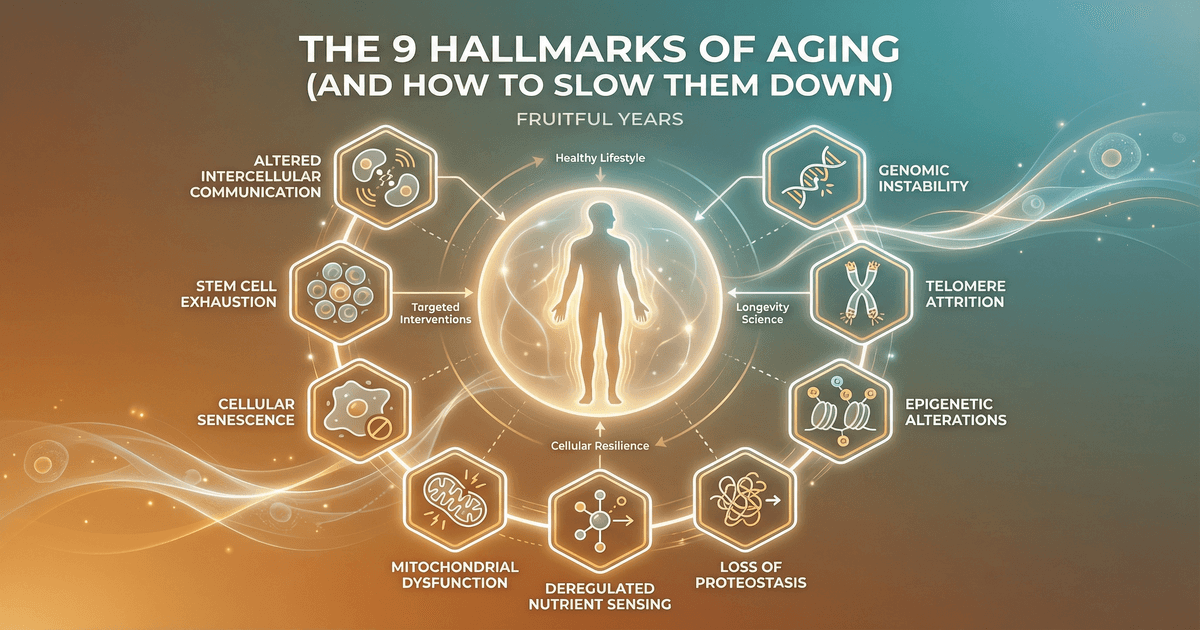
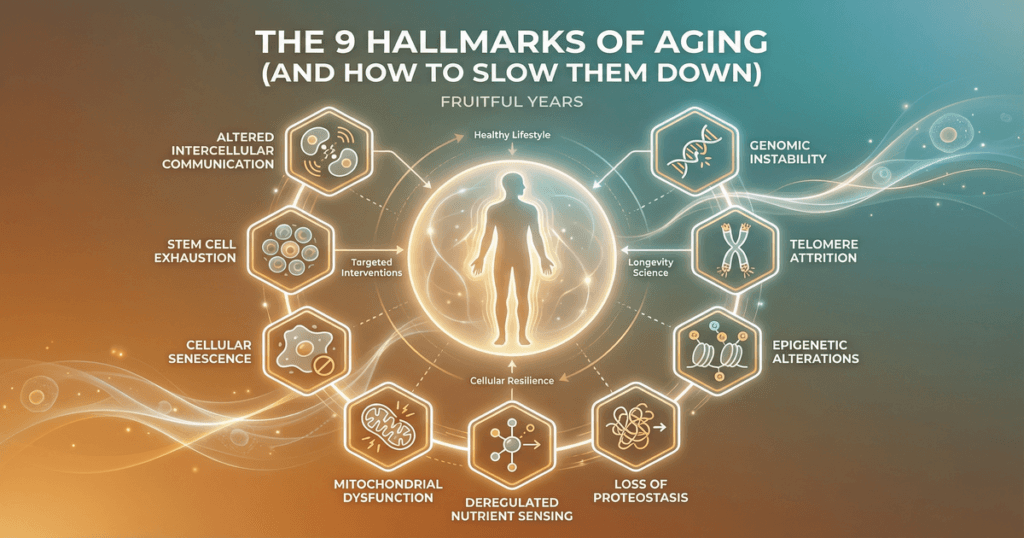
The 2023 Hallmarks of Aging update expanded the earlier nine-hallmark framework. It organizes interconnected biology rather than prescribing a consumer test or supplement routine.
Technical language can make an intervention sound established when it is still experimental. The next question is always what meaningful outcome was demonstrated, in whom and with what risks.
A practical breakdown
Cellular damage and maintenance
Why it matters: Several hallmarks concern damage or loss of cellular upkeep.
Practical application / what to track: Recognize genomic instability, telomere attrition, epigenetic alterations, loss of proteostasis and disabled macroautophagy as research categories, not home-test targets.
Responses to stress and nutrients
Why it matters: A helpful response in one context can become problematic in another.
Practical application / what to track: Look for deregulated nutrient sensing, mitochondrial dysfunction and cellular senescence; ask whether the evidence is mechanistic or clinical.
Tissue and system effects
Why it matters: Aging also involves interactions beyond an individual cell.
Practical application / what to track: Recognize stem-cell exhaustion, altered intercellular communication, chronic inflammation and dysbiosis without assuming a product corrects them.
Translate a claim carefully
Why it matters: A pathway change does not establish a treatment’s net value.
Practical application / what to track: Record the named hallmark, human outcome, comparison group, duration and reported harms before drawing a conclusion.
Common mistakes and mindset guardrails
- Using the list as twelve problems to self-treat.
- Assuming a biomarker change means age reversal.
- Confusing a compelling diagram with clinical evidence.
If an older illustration on this post shows nine hallmarks, it depicts the earlier framework. The current discussion uses the 12 categories in the 2023 paper; neither version is a treatment guide.
Primary care discussion checklist
Use the questions that fit your situation. Keep personal health notes private and bring them through your clinic’s approved channel.
- Does this mechanism suggest any evidence-based action for my situation?
- What human outcomes support the intervention being offered?
- Which established health priorities should remain the focus?
Next steps and related reading
Choose one useful next step rather than adding several new tasks at once.
Educational guidance. Not medical advice.
Biological Age After 45: What It Means and What to Track
Continue with a focused guide, then keep the questions relevant to your situation.
Advanced Biomarker Tests After 45: What’s Worth Tracking?
Continue with a focused guide, then keep the questions relevant to your situation.
Senolytics After 45: What to Know About “Zombie Cells” and Healthy Aging
Continue with a focused guide, then keep the questions relevant to your situation.
Evidence & Primary Sources
Original references and further reading are retained below. These include research and educational resources; inclusion is not a study-level appraisal or endorsement. See our evidence and editorial policy.
Authorship and editorial disclosures. This editorial update does not claim a new independent medical review. Report a correction.
FREE LONGEVITY STARTER KIT
Choose one useful next step.
A six-health-numbers checklist and a weekly habit planner, ready to use without signing up.
Email delivery is optional and includes occasional Fruitful Years emails. Unsubscribe anytime.