A Beginner’s Guide to Autophagy: Your Body’s Natural Cleanup Process

TL;DR:

Autophagy, which translates to “self-eating,” is your body’s essential cellular recycling system. It clears out damaged cells, misfolded proteins, and invading pathogens to keep your internal machinery running smoothly. This process is fundamental to slowing the aging process, and you can activate it naturally through practices like intermittent fasting, specific types of exercise, and consuming certain foods. This article explains what autophagy is, why it’s crucial for longevity, and provides a 4-step practical guide to activating it.


What is Autophagy and Why Does It Matter for Aging?

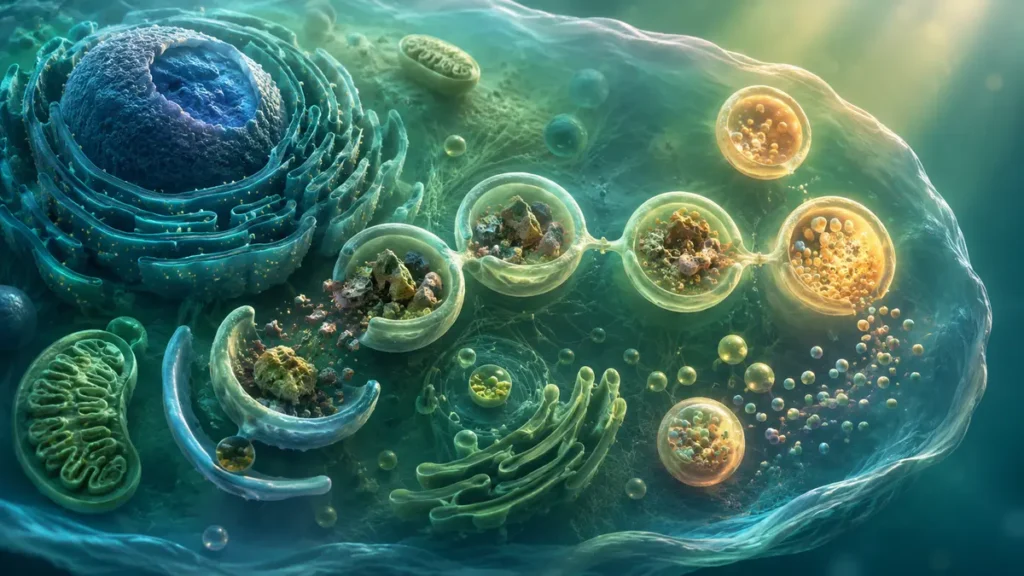
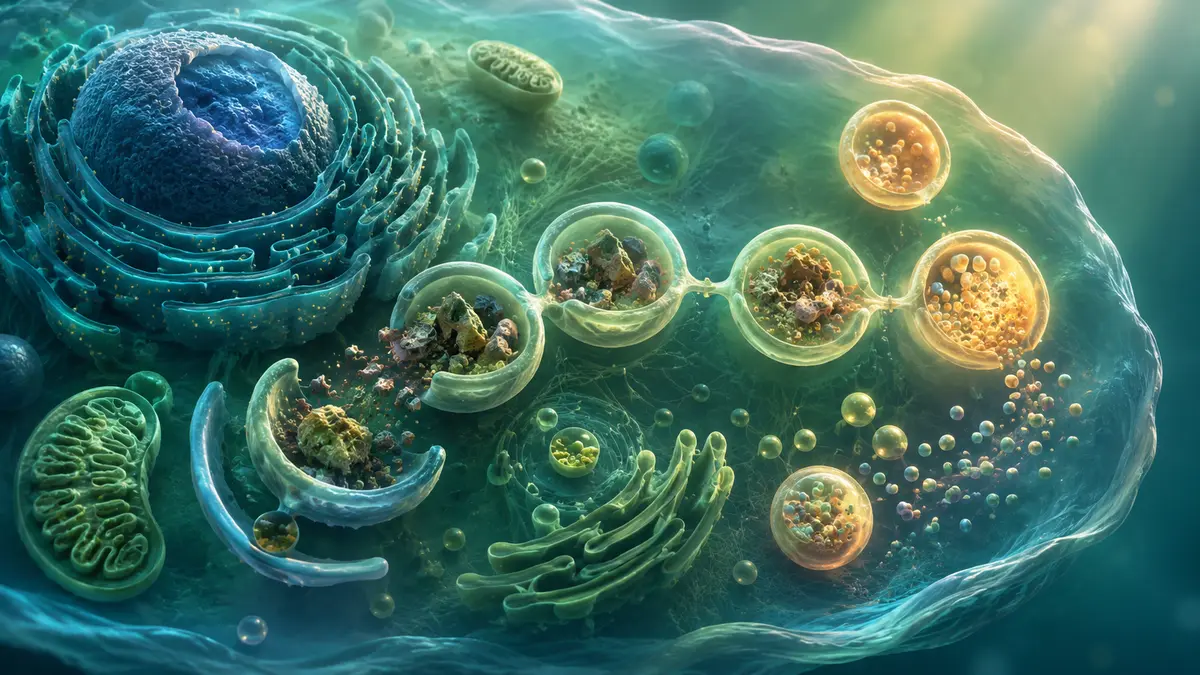
Imagine your body is a bustling city. Every day, factories (your cells) produce goods, but they also generate waste—old parts, broken machinery, and garbage. If this waste isn’t collected, it piles up, causing everything to slow down and eventually break. Autophagy is the city’s highly efficient sanitation crew. It’s a natural, regulated process where cells break down and recycle their own dysfunctional or unnecessary components [1].

This cleanup process is not just about tidiness; it’s a core survival mechanism. When cells are under stress—such as from nutrient deprivation during fasting—autophagy ramps up. It breaks down non-essential parts into raw materials, providing energy and building blocks to repair or create new, essential components. As we age, the efficiency of our autophagic processes naturally declines. This slowdown is considered one of the key Hallmarks of Aging [2]. When cellular junk accumulates, it can lead to inflammation, metabolic dysfunction, and an increased risk of age-related diseases, including neurodegenerative conditions like Alzheimer’s and Parkinson’s [3]. By intentionally activating autophagy, we can help counteract this decline and maintain cellular health for longer.

The Three Main Triggers of Autophagy

While autophagy is always happening at a low level, there are three primary stressors that signal your body to significantly ramp up this cellular cleanup process. Understanding these triggers is key to intentionally leveraging autophagy for its anti-aging benefits.

TriggerMechanismPrimary Benefit
Nutrient DeprivationFasting lowers insulin and glucose, activating AMPK, a master metabolic switch that initiates autophagy.System-wide cellular cleanup, particularly in the liver and muscle tissue.
ExerciseHigh-intensity and endurance exercise creates a local energy deficit in muscle cells, triggering autophagy to repair exercise-induced damage.Targeted repair and strengthening of muscle fibers, improved mitochondrial quality.
Specific PhytonutrientsCompounds in certain foods (e.g., EGCG in green tea, resveratrol in grapes) can mimic the effects of fasting at a cellular level.Gentle, systemic boost to autophagic activity without requiring a full fast.

These triggers are not mutually exclusive; in fact, they can be stacked for a more powerful effect. For example, performing a workout in a fasted state can induce a more robust autophagic response than doing the same workout after a meal.

A Practical 4-Step Guide to Activating Autophagy

Step 1: Implement Intermittent Fasting

Intermittent fasting (IF) is the most powerful and well-studied method for inducing systemic autophagy. By restricting your eating to a specific window each day, you lower your insulin levels for a prolonged period, which is a key signal for autophagy to begin.

  • For Beginners (12/12): Start by simply ensuring there are 12 hours between your last meal of the day and your first meal of the next. For example, if you finish dinner at 8 PM, you would not eat again until 8 AM. This aligns with your natural circadian rhythm.
  • Intermediate (16/8): This is the most popular IF schedule. You fast for 16 hours and eat within an 8-hour window (e.g., 12 PM to 8 PM). This provides a more robust stimulus for autophagy.
  • Advanced (OMAD/24h): For those experienced with fasting, a 24-hour fast once or twice a week (also known as One Meal a Day, or OMAD) can induce a very strong autophagic response. This is not recommended for beginners.

Actionable Step:

Start with a 12/12 fasting schedule for one week. If you feel good, try extending your fasting window to 14 or 16 hours.

Step 2: Incorporate Autophagy-Activating Exercise

Exercise induces autophagy primarily in the muscles being used. The goal is to create a temporary and manageable level of metabolic stress. Both endurance and high-intensity exercise are effective.

  • Endurance Cardio: Activities like jogging, cycling, or swimming for 60 minutes or more can trigger autophagy in your leg and core muscles.
  • High-Intensity Interval Training (HIIT): Short bursts of all-out effort followed by brief recovery periods (e.g., 30 seconds of sprinting, 60 seconds of walking, repeated 8 times) are very effective at stimulating an autophagic response in a shorter amount of time.

Actionable Step:

Aim for at least 150 minutes of moderate-intensity cardio or 75 minutes of vigorous-intensity cardio per week, as recommended by the American Heart Association [4]. For an extra boost, try doing your workout at the end of your fasting window.

Step 3: Eat Autophagy-Promoting Foods

While fasting is the primary driver, certain foods contain compounds that can enhance the process. These are often referred to as “autophagy mimetics” because they mimic the effects of fasting on a cellular level.

  • Green Tea: Rich in EGCG, which has been shown to induce autophagy.
  • Coffee: Both regular and decaffeinated coffee contain polyphenols that promote autophagy.
  • Extra Virgin Olive Oil: A key component of the Mediterranean diet, its compounds can support cellular cleanup.
  • Cruciferous Vegetables: Sulforaphane in broccoli and other cruciferous veggies can activate pathways that support autophagy.
  • Berries and Red Grapes: Contain anthocyanins and resveratrol, respectively, which have been linked to autophagy activation.

Actionable Step:

During your eating window, focus on incorporating these foods into your meals. A cup of green tea in the afternoon or using olive oil as your primary fat are simple ways to start.

Step 4: Prioritize High-Quality Sleep

Sleep is when your brain’s dedicated cleanup crew, the glymphatic system, is most active. This system flushes out metabolic waste and misfolded proteins that accumulate in the brain during the day, a process that is closely linked with autophagy [5]. Poor sleep disrupts this process and has been linked to the buildup of amyloid-beta, a protein associated with Alzheimer’s disease.

Actionable Step:

Aim for 7-9 hours of high-quality, uninterrupted sleep per night. Maintain a consistent sleep schedule, create a dark and cool sleep environment, and avoid screens for at least an hour before bed.


Deep Dive AI Prompts

“Act as a cellular biologist. Explain the detailed molecular pathway of autophagy, starting from the activation of AMPK by low insulin, the formation of the phagophore, the engulfing of cellular debris into an autophagosome, and its fusion with the lysosome. Use precise scientific terminology.”*

“Create a 7-day workout plan that is optimized for inducing autophagy. The plan should alternate between high-intensity interval training (HIIT) and steady-state endurance cardio, and specify the duration and intensity for each session. Include a warm-up and cool-down protocol.”*

“I am a 55-year-old woman new to intermittent fasting. My goal is to work up to a 16:8 schedule. Design a 4-week transition plan that gradually increases my fasting window each week. Provide tips for managing hunger and maintaining energy levels during the transition.”*

“Compare the effects of a 24-hour water fast versus a 3-day water fast on autophagy in different organs (liver, brain, muscle). What are the key benefits and potential risks of each duration? Cite scientific literature to support your claims.”*


Frequently Asked Questions

How long do I need to fast to activate autophagy?

While autophagy is always happening at a baseline level, studies suggest it begins to significantly ramp up after 12-16 hours of fasting. The longer you fast, the more robust the response, with significant induction often measured after 24-48 hours.

Does drinking coffee or tea break a fast and stop autophagy?

No. Black coffee and unsweetened tea contain virtually no calories and will not raise your insulin levels. In fact, the polyphenols in both beverages have been shown to

promote

autophagy, so they can be beneficial to consume during your fasting window.

Can autophagy be dangerous?

For the vast majority of healthy adults, inducing autophagy through intermittent fasting and exercise is safe and beneficial. However, it is not recommended for individuals who are pregnant, underweight, or have a history of eating disorders. Those with medical conditions, particularly diabetes, should consult their doctor before starting a fasting regimen.

Is there a way to measure if I’m in autophagy?

Currently, there are no commercially available tests for home use that can directly measure your level of autophagy. It is a complex cellular process that can only be accurately measured in a laboratory setting. The best approach is to consistently practice the proven methods (fasting, exercise) that are known to activate it.


Next Steps Checklist

  • [ ] Define Your Eating Window: Choose a consistent 8, 10, or 12-hour window in which you will eat your meals.
  • [ ] Schedule Your First Fast: Plan to complete your first 12 or 16-hour fast tomorrow.
  • [ ] Plan a Fasted Workout: Schedule one of your workouts for this week to take place near the end of your fasting window.
  • [ ] Stock Up on Autophagy-Boosting Foods: Add green tea, berries, and extra virgin olive oil to your shopping list.
  • [ ] Optimize Your Sleep Environment: Ensure your bedroom is dark, quiet, and cool to improve sleep quality.

Related Reading


References

[1] Mizushima, N., & Komatsu, M. (2011). Autophagy: renovation of cells and tissues. Cell, 147(4), 728–741. https://doi.org/10.1016/j.cell.2011.10.026

[2] López-Otín, C., Blasco, M. A., Partridge, L., Serrano, M., & Kroemer, G. (2013). The Hallmarks of Aging. Cell, 153(6), 1194–1217. https://doi.org/10.1016/j.cell.2013.05.039

[3] Levine, B., & Kroemer, G. (2019). Biological Functions of Autophagy Genes: A Disease Perspective. Cell, 176(1-2), 11–42. https://doi.org/10.1016/j.cell.2018.09.048

[4] American Heart Association. (2022). American Heart Association Recommendations for Physical Activity in Adults and Kids. https://www.heart.org/en/healthy-living/fitness/fitness-basics/aha-recs-for-physical-activity-in-adults

[5] Reddy, O. C., & van der Werf, Y. D. (2020). The Sleeping Brain: Harnessing the Power of the Glymphatic System through Lifestyle Choices. Brain sciences, 10(11), 868. https://doi.org/10.3390/brainsci10110868

Leave a Comment