
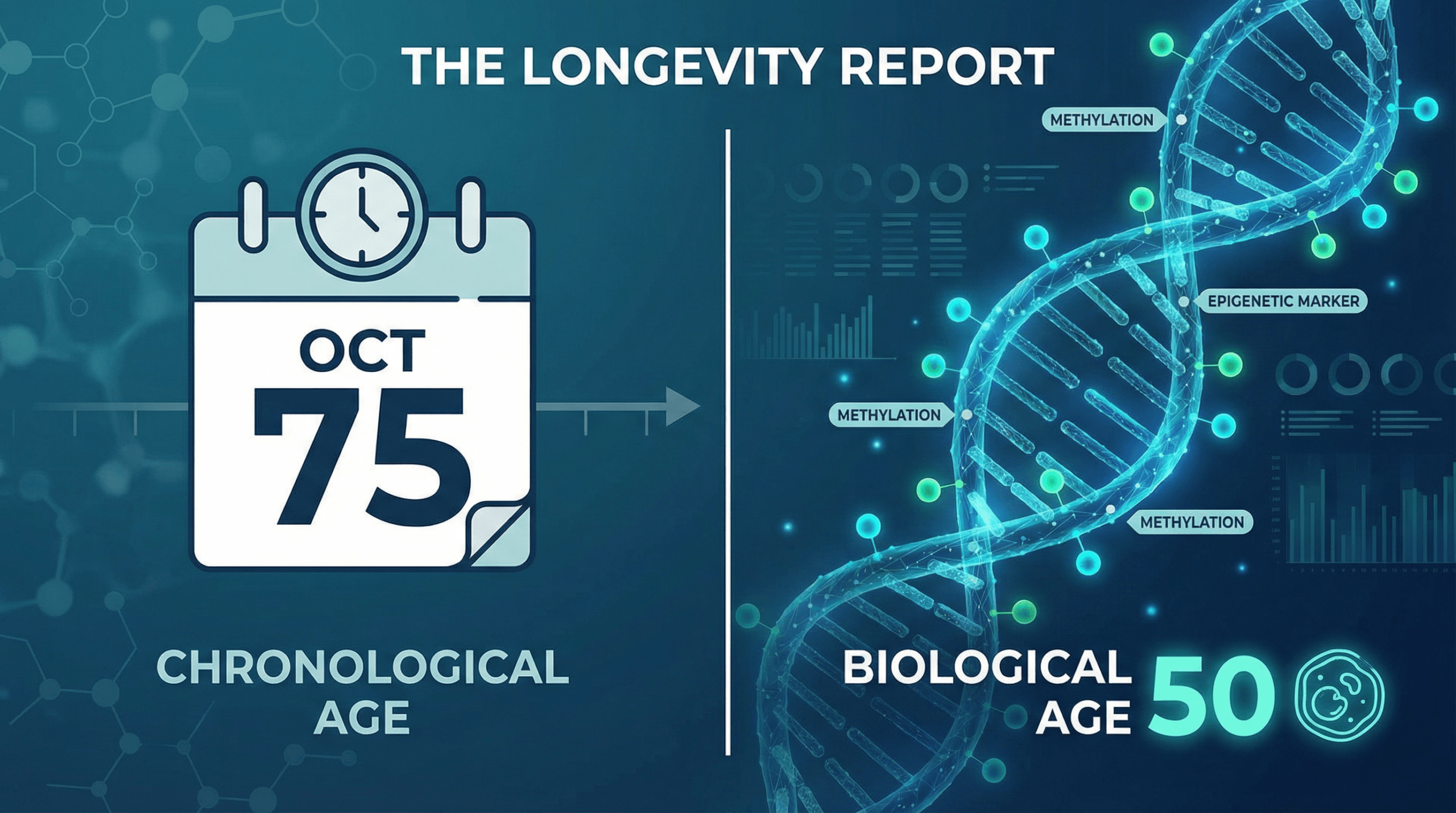
TL;DR:
While chronological age measures how many years you’ve been alive, biological age measures how old your body
acts
at a cellular and molecular level. It is a far more accurate predictor of your healthspan and lifespan. You can measure your biological age using epigenetic clocks and other biomarkers, and more importantly, you can lower it through targeted lifestyle interventions like diet, exercise, and stress management.
Your Two Ages: Chronological vs. Biological
Every year, you celebrate a birthday, marking another year of your chronological age. This number is fixed and unchangeable. However, we all know people who seem much younger or older than their years. This observation points to a more profound concept: biological age. Biological age is a dynamic measure of your body’s functional health, reflecting the cumulative damage and wear-and-tear on your cells, tissues, and organs.
Think of two vintage cars from the same year. One was kept in a garage, meticulously maintained, and driven carefully. The other was left outside, driven hard, and rarely serviced. Although they have the same chronological age, their “biological age”—their level of rust, engine wear, and overall function—is vastly different. The same is true for our bodies. Your lifestyle choices, environment, and genetics all influence whether your biological age is higher or lower than your chronological age. A lower biological age is associated with a longer healthspan, a reduced risk of chronic disease, and a more youthful appearance and function [1].
How is Biological Age Measured? The Science of Epigenetic Clocks
For years, scientists used indirect markers like blood pressure and cholesterol to estimate biological age. But the real breakthrough came with the discovery of epigenetic clocks. The epigenome is a complex system of chemical tags that sit on top of your DNA, telling your genes when to switch on and off. As we age, the patterns of these tags change in predictable ways.
Specifically, a process called DNA methylation is the key. Methyl groups are small chemical tags that attach to DNA. The pattern of methylation across your genome changes as you age. Epigenetic clocks are algorithms that analyze the methylation patterns at hundreds or thousands of specific sites on your DNA to calculate your biological age with remarkable accuracy [2].
| Clock Name | Developer | Key Feature | What It Predicts |
|---|---|---|---|
| Horvath Clock | Steve Horvath | The first and most famous multi-tissue clock. | All-cause mortality. |
| Hannum Clock | Anke Hannum | Based on blood data, good at predicting immune system age. | Inflammatory markers. |
| PhenoAge | Morgan Levine | Incorporates clinical biomarkers with DNA methylation for a more functional prediction. | Morbidity and disease risk. |
| DunedinPACE | Duke University | Measures the pace of aging, like a speedometer for your biological decline. | Risk of chronic disease and disability. |
These tests are now commercially available through various companies, typically requiring a blood or saliva sample. They provide a powerful snapshot of your current aging trajectory.
The Top 5 Factors That Influence Your Biological Age
Your biological age is not set in stone. It is highly responsive to your daily habits. These five areas have the most significant impact:
- Nutrition: A diet high in processed foods, sugar, and unhealthy fats accelerates aging by promoting inflammation and metabolic dysfunction. Conversely, a nutrient-dense, anti-inflammatory diet rich in polyphenols (found in colorful plants) can slow it down.
- Exercise: Sedentary lifestyles are a major contributor to accelerated aging. Regular exercise, especially a combination of strength training and cardio, has been shown to reverse biological age by improving mitochondrial health, reducing inflammation, and maintaining muscle mass.
- Sleep: Sleep is when your body and brain perform critical repair and cleanup processes. Chronic sleep deprivation (less than 7 hours a night) disrupts these processes, leading to increased inflammation and a higher biological age.
- Stress Management: Chronic stress floods your body with the hormone cortisol, which can damage cells, disrupt sleep, and accelerate epigenetic aging. A consistent stress management practice (like meditation or mindfulness) is crucial.
- Toxin Exposure: Exposure to toxins like tobacco smoke, excessive alcohol, and environmental pollutants creates oxidative stress, which directly damages DNA and accelerates aging.
A 3-Step Strategy to Lower Your Biological Age
Lowering your biological age is an achievable goal. Studies have shown that focused lifestyle interventions can reduce it in as little as eight weeks [3].
Step 1: Measure Your Baseline
You can’t manage what you don’t measure. The first step is to get a baseline reading of your biological age. You can do this through a commercial epigenetic age test. At the same time, get a comprehensive blood panel from your doctor that includes markers for metabolic health (HbA1c, fasting insulin), inflammation (hs-CRP), and lipids (ApoB).
Step 2: Implement Targeted Lifestyle Changes
Based on your results and the five key factors above, implement specific, targeted changes. Don’t try to change everything at once. Pick the lowest-hanging fruit.
- If your diet is poor: Focus on eliminating sugary drinks and adding one serving of leafy greens to every dinner.
- If you are sedentary: Start with a 30-minute brisk walk every day and two 30-minute strength training sessions per week.
- If your sleep is poor: Commit to a consistent bedtime and wake-up time, even on weekends, and create a completely dark sleep environment.
Step 3: Re-test and Refine
After 3 to 6 months of consistent effort, re-test your biological age and key blood markers. This will provide direct feedback on whether your interventions are working. Use the results to refine your approach. Perhaps your diet changes were very effective, but you need to focus more on exercise intensity. This cycle of testing, intervening, and refining is the core of a data-driven approach to longevity.
Deep Dive AI Prompts
“Act as a geneticist. Explain the mechanism of DNA methylation in detail. How do methyl groups attach to CpG sites, and how does this process change with age? Describe how an epigenetic clock algorithm uses these patterns to calculate biological age.”*
“I am a 45-year-old who just received my DunedinPACE score, and it is 1.1, indicating I am aging 10% faster than the norm. Based on the five key factors of biological aging, create a comprehensive 3-month lifestyle protocol designed to lower this score. Be specific with diet, exercise, and supplement recommendations.”*
“Compare the pros and cons of three different types of biological age tests: DNA methylation clocks, telomere length tests, and biomarker-based platforms (like those from InsideTracker). Which one provides the most actionable information for a layperson?”*
“Generate a sample one-week meal plan that is specifically designed to be ‘epigenetically healthy.’ The plan should be rich in methyl donors and polyphenols, such as folate, vitamin B12, betaine, turmeric, and green tea.”*
Frequently Asked Questions
How much can I realistically lower my biological age?
This depends on your starting point. If your biological age is already much lower than your chronological age, there may be less room for improvement. However, for most people, studies have shown that dedicated lifestyle changes can lower biological age by 3 to 5 years, with some individuals achieving even more significant reductions.
Are biological age tests accurate?
The leading DNA methylation clocks are highly accurate and reproducible in laboratory settings. However, there can be variability between different commercial tests depending on the specific algorithm and DNA sites they analyze. It is best to stick with one reputable brand for consistent tracking over time.
What’s the difference between biological age and telomere length?
Telomere length is just one component of biological aging. Telomeres are the protective caps on the ends of your chromosomes, and they naturally shorten as cells divide. While telomere length is a useful biomarker, epigenetic clocks that analyze hundreds of methylation sites provide a more comprehensive and accurate picture of the overall aging process.
Is it possible to have a high biological age even if I feel healthy?
Yes. Biological age is a measure of what is happening at a cellular level, which often precedes the onset of noticeable symptoms. A high biological age can be an early warning sign that your current lifestyle, while not causing immediate problems, is setting the stage for future chronic disease. This is why measuring it can be so powerful for prevention.
Next Steps Checklist
- [ ] Research Commercial Age Tests: Investigate reputable brands for DNA methylation-based biological age testing.
- [ ] Book a Blood Test: Schedule an appointment with your doctor or a direct-to-consumer lab to get your key metabolic and inflammatory markers tested.
- [ ] Identify Your “Aging Accelerant”: Honestly assess which of the five key factors is likely contributing most to your biological age and make a plan to address it.
- [ ] Start a Simple Form of Exercise: Commit to 30 minutes of brisk walking or other moderate-intensity cardio at least 5 days a week.
- [ ] Add Methyl-Donors to Your Diet: Incorporate foods rich in folate and B vitamins, such as leafy greens, lentils, and eggs.
Related Reading
- Healthspan vs. Lifespan: Are You Living Longer or Just Getting Older?
- An Introduction to Epigenetic Clocks: How Science Measures Aging
- The 9 Hallmarks of Aging: A Beginner’s Guide
References
[1] Levine, M. E., Lu, A. T., Quach, A., Chen, B. H., Assimes, T. L., Bandinelli, S., … & Horvath, S. (2018). An epigenetic biomarker of aging for lifespan and healthspan. Aging, 10(4), 573–591. https://doi.org/10.18632/aging.101414
[2] Horvath, S., & Raj, K. (2018). DNA methylation-based biomarkers and the epigenetic clock theory of ageing. Nature Reviews Genetics, 19(6), 371–384. https://doi.org/10.1038/s41576-018-0004-3
[3] Fitzgerald, K. N., Hodges, R., Hanes, D., Stack, E., Cheishvili, D., Szyf, M., … & Lerman, R. H. (2021). Potential reversal of epigenetic age using a diet and lifestyle intervention: a pilot randomized clinical trial. Aging, 13(7), 9419–9432. https://doi.org/10.18632/aging.202913
Key Takeaway
Keeping your brain active and challenged is essential for cognitive longevity. Make learning a daily habit, not an occasional event.
Keeping Your Brain Sharp
- Read for at least 20 minutes each day.
- Learn one new skill or hobby this month.
- Do a crossword, Sudoku, or logic puzzle daily.
- Engage in meaningful conversations — they stimulate the brain.
“Live as if you were to die tomorrow. Learn as if you were to live forever.”
Insight: The brain retains neuroplasticity well into old age — learning new things is one of the best investments you can make.