Article Snapshot & Core Protocol
- The core reality: Some physical decline is part of aging, but much of the loss of strength, stamina, balance, and mobility is accelerated by inactivity and deferred maintenance.
- The biological advantage: Unlike a vintage vehicle, which only wears out with use, the human body adapts, repairs, and strengthens when given the right physical challenges and adequate recovery.
- The 4-part framework: Fuel quality and adequate protein, daily joint and balance maintenance, aerobic engine conditioning, and progressive strength preservation.
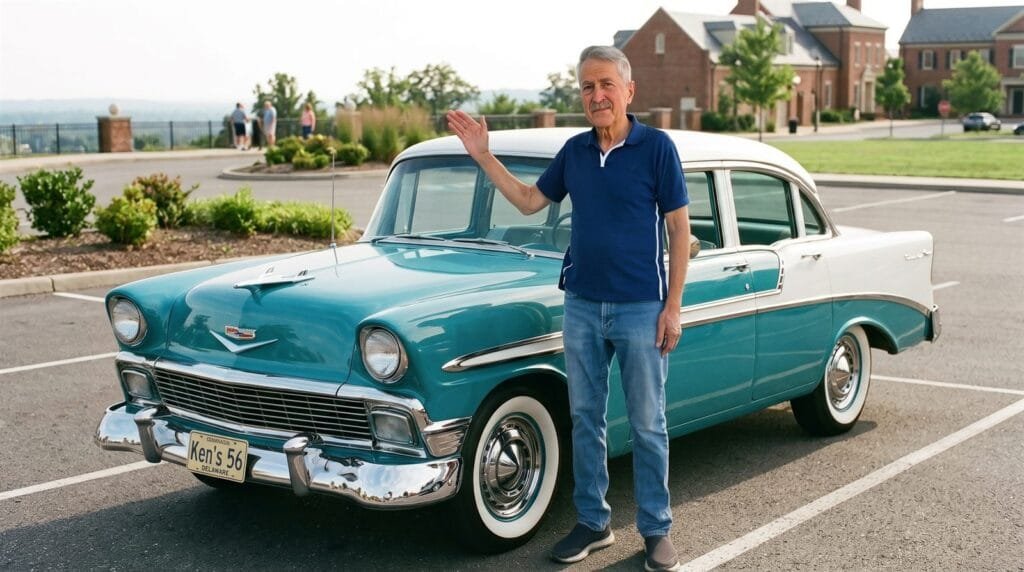
The 1956 Chevrolet Bel Air pictured above and I share a common milestone: we were both built in 1956.
Nearly seven decades later, neither of us has stayed capable by accident. If you leave a classic car parked in a damp garage for years, the brake calipers seize, the fuel lines gum up, the hoses dry rot, and the chassis rusts from the inside out.
Yet, when it comes to our own health, modern culture often treats physical decline as an unavoidable cliff rather than a maintenance issue. We faithfully change our vehicle’s oil every 5,000 miles, rotate the tires, and investigate dashboard warning lights immediately, yet we expect our bodies to run indefinitely on low-grade fuel and zero scheduled servicing.
At this stage in my life, I am not interested in chasing cosmetic youth. My goal is preserving day-to-day capability: walking briskly up steep hills, carrying heavy bags of soil, getting off the floor easily without assistance, and having plenty of energy left in the tank for real life.
Machines possess one major limitation: they can only wear down. Human biology holds a distinct mechanical advantage: when you give the body the right physical inputs, clean fuel, and adequate recovery, it actively repairs, remodels, and gets stronger.
Learning how to prevent physical decline as you age starts with one shift in mindset: stop waiting for breakdowns, and start doing the small maintenance work that keeps independence possible.
What Physical Decline Actually Means
When people worry about physical decline, they are rarely thinking about a single lab number. They are thinking about the quiet, compounding losses that eventually threaten independence:
- Slowing aerobic stamina: Getting winded climbing one flight of stairs.
- Loss of functional muscle: Finding grocery bags heavier and struggling to stand up from a deep chair.
- Compromised balance: Feeling unsteady on uneven ground or in low light.
- Joint stiffness: Creaking knees and tight hips that take too long to warm up in the morning.
- Slower recovery: Feeling wiped out for days after basic yard work or a long afternoon on your feet.
Some cellular aging is inevitable. Functional decline, however, is much more negotiable than most people assume. Public-health guidance for older adults consistently points to the same basics: regular aerobic activity, muscle-strengthening work, and balance practice. The CDC’s older-adult activity guidance recommends at least 150 minutes of moderate activity per week, plus strength work and balance training. The National Institute on Aging makes the same practical point: endurance, strength, flexibility, and balance all matter.
The Mechanical Breakdown: Car Maintenance vs. Body Longevity
| Vehicle System | Biological Counterpart | The Cost of Neglect | The Preventive Habit |
|---|---|---|---|
| Fuel & Filters | Nutrition & Protein Intake | Blood sugar swings, chronic low-grade inflammation, muscle loss | Whole foods, dietary nitrates, prebiotic fiber, and 1.0-1.2g/kg protein |
| Suspension & Alignment | Joints & Balance System | Stiff hips, reduced mobility, increased fall risk | Daily range-of-motion drills and single-leg balance work |
| Engine Output | Aerobic Capacity & Mitochondria | Rapid fatigue, loss of stamina, declining cardiovascular reserve | Steady-state, conversational cardio, often called Zone 2 |
| Chassis Rigidity | Musculoskeletal Strength | Sarcopenia, bone thinning, loss of physical independence | Progressive resistance training with compound movement patterns |
Step 1: Upgrade the Fuel and Protect the Fuel Lines
Putting low-grade, contaminated fuel into an engine eventually gums up the injectors and causes knocking. In the human body, decades of ultra-processed food, excess sugar, and inadequate protein can make it harder to maintain healthy blood vessels, stable energy, and lean muscle.
My Daily Fuel Rules
- Clean inputs: Focus on leafy greens, beets, polyphenol-rich foods, and extra virgin olive oil to support cardiovascular health.
- Prioritize daily protein: Muscle tissue needs raw building blocks to repair itself. A practical target for many active older adults is roughly 1.0 to 1.2 grams of quality protein per kilogram of body weight, spread across the day.
- Support the gut: Include prebiotic fibers and naturally fermented foods to support digestion and help keep inflammatory load lower.
This does not require perfection. It requires a bias toward foods your body recognizes and can use.
Step 2: Service the Suspension and Check the Steering
A car’s ball joints and tie rods need regular movement and lubrication to keep from seizing. Your joints operate on a similar principle. Cartilage has very little direct blood supply and relies on regular movement and compression to circulate nutrient-rich fluid.
Balance is the steering and braking system. It is not glamorous, but it may be one of the most important defenses against losing independence after 65.
The Daily Mobility & Balance Drill
- Full-range movement: Spend 5 to 10 minutes every morning moving your ankles, hips, thoracic spine, and shoulders through their full comfortable range.
- Post-meal walking: A brisk 10-to-15-minute walk after your largest meal keeps joints moving and can help smooth the blood sugar rise after eating. For more on building a daily walking habit, see how walking compares with dedicated aerobic exercise.
- The 30-second balance check: Practice standing on one foot while brushing your teeth or waiting for the kettle to boil. If you cannot hold a single-leg stance for 20 to 30 seconds without wobbling, incorporate supported single-leg stands and heel-to-toe tandem walks into your daily routine.
Step 3: Rebuild Your Aerobic Engine
Under the hood of your muscle cells sit mitochondria, the cellular power plants that convert oxygen and fuel into usable energy. As the years pass, mitochondrial efficiency tends to drop, especially when we stop asking our bodies for sustained aerobic output.
One of the most reliable ways to rebuild this engine is steady-state, conversational-pace aerobic exercise, often called Zone 2 cardio. This lower-intensity work trains your cells to use oxygen efficiently and lets you accumulate enough volume without beating up your joints.
How to Train the Engine
- The baseline: Build toward 150 to 180 minutes of moderate aerobic activity per week, such as three to four 45-minute sessions on a stationary bike, rower, or brisk outdoor walk.
- The intensity check: You should be moving at a pace where you can comfortably speak full sentences without gasping for breath.
- Going deeper: Learn how to set up your training in my full guide to Zone 2 cardio after 50, and calculate your target heart rate numbers with the Zone 2 heart rate calculation guide.
- Tracking reserve capacity: To understand how high-end cardiovascular fitness protects longevity, explore why VO2 max represents your cardiovascular reserve.
Step 4: Reinforce the Chassis
A high-mileage vehicle needs a rigid frame to remain stable and safe at speed. In human biology, your muscular system serves as your structural chassis and your metabolic armor.
Starting in our 30s and accelerating later in life, we naturally lose muscle mass and strength unless we actively stimulate muscle protein synthesis through resistance work. Cardio keeps the engine running, but strength training keeps the frame from buckling.
The Practical Strength Framework
- Train basic movement patterns twice weekly: Focus on movements that translate directly to daily life: sit-to-stands, hip hinges, pushing, pulling, and loaded carries.
- Track functional progress: Measure objective markers like grip strength with an inexpensive hand dynamometer once a month to make sure your functional power is trending in the right direction.
- Use a complete plan: Follow the detailed roadmap in my practical strength and grip-training plan after 60.
My Weekly Maintenance Schedule
Consistency beats intensity every single time. Here is a realistic template that balances stimulus with recovery:
| Frequency | Maintenance Activity | Target Focus |
|---|---|---|
| Daily | 7,000-9,000 total steps and 5-10 minutes of morning mobility | Baseline circulation, glucose management, joint fluid flow |
| Daily | Single-leg balance drills for 1-2 minutes | Balance, coordination, and fall prevention |
| 3-4 days/week | 35-45 minutes of Zone 2 cardio at conversational pace | Mitochondrial density and cardiorespiratory endurance |
| 2 days/week | 30 minutes of full-body resistance training | Sarcopenia defense, bone density, and functional strength |
| Monthly | Resting vitals and hand-grip dynamometer check | Objective baseline monitoring |
Safety and Gradual Progression
If you are starting from a period of inactivity, begin well below your maximum effort.
Start with 10-minute walks and one set of bodyweight chair squats, then build time and load gradually over weeks and months. Sharp joint pain, chest pain, dizziness, or extreme exhaustion are signs to stop, rest, and adjust.
If you have a chronic medical condition, take cardiovascular medications, or have a history of falls, consult your physician or a physical therapist to tailor your starting baseline safely.
Frequently Asked Questions
Can physical decline be reversed after age 60?
Yes, at least in part. You cannot stop chronological time, but many older adults can build strength, improve aerobic stamina, regain balance, and move with more confidence when the training stimulus is appropriate and progressive.
What is the single best exercise to prevent physical decline?
There is no single magic exercise. If forced to choose two foundations, pair regular conversational walking or Zone 2 cardio with progressive strength training. The first protects your heart and cellular energy; the second protects muscle, bones, and independence.
Is walking 10,000 steps a day enough to stay fit?
Walking is an outstanding foundation for metabolic health and joint movement, but it does not provide enough targeted resistance to preserve all major muscle groups. It works best when paired with two weekly strength sessions and a little balance practice.
How often should adults over 60 strength train?
For most healthy adults, two full-body strength sessions per week is a practical starting point. The goal is not bodybuilding. The goal is maintaining the strength to stand, carry, climb, lift, brace, and recover.
Where to Go Next
- New to aerobic training? Start with the beginner’s guide to Zone 2 cardio.
- Unsure of your training intensity? Use the target heart rate calculation guide to find your conversational training zone.
- Ready to protect your strength? Read the strength and grip protocol for 60+.
That 1956 Chevy and I are both high-mileage machines. Neither of us can be traded in for a factory-fresh model, but neither of us is ready for the scrap heap, either. With deliberate, daily preventive care, your vintage engine can continue running smoothly for decades to come.