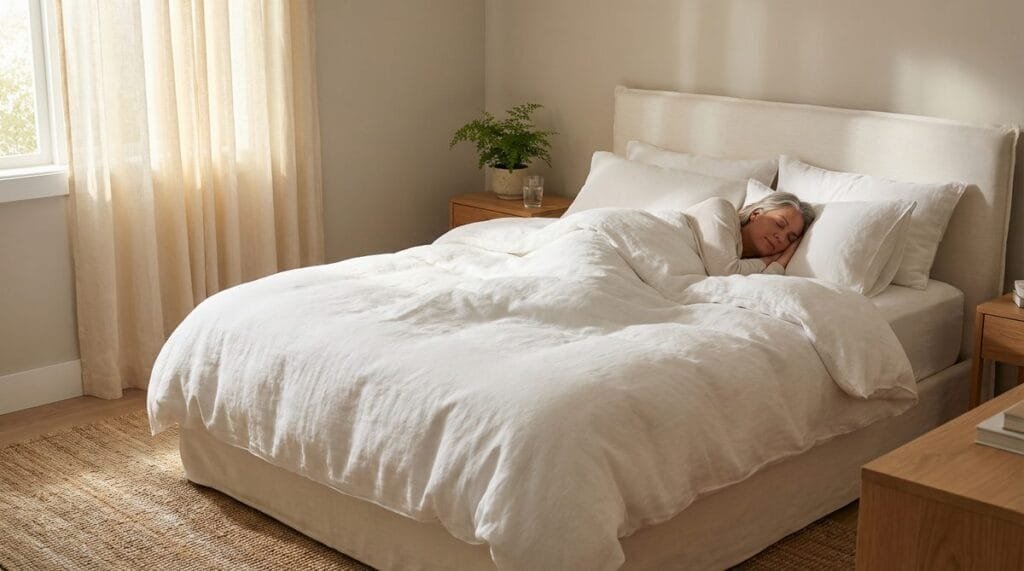
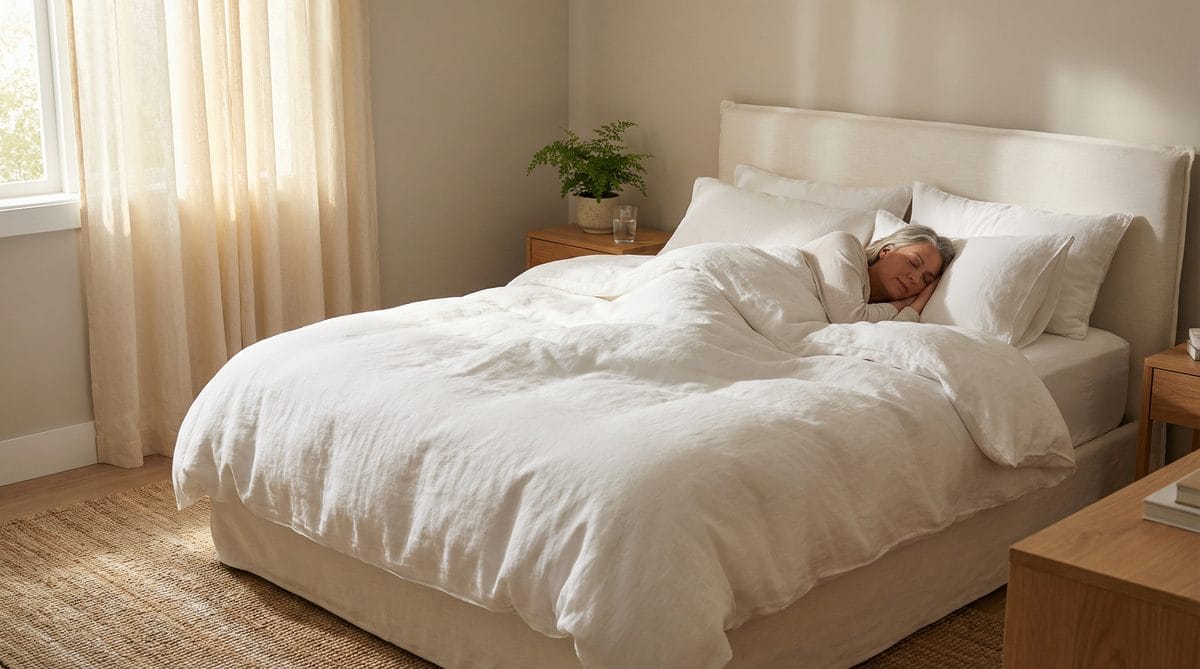
There is a longevity intervention that costs nothing, requires no gym membership, no supplements, and no willpower at the dinner table. You are already doing it — or at least, you should be. Sleep is the most underrated tool in the longevity toolkit, and the science behind it has never been more compelling.
For decades, sleep was treated as passive downtime — the biological equivalent of a computer screensaver. We now know that is profoundly wrong. During sleep, your body is engaged in a cascade of critical repair and maintenance processes: clearing toxic waste from the brain, consolidating memories, regulating hormones, repairing cellular damage, and resetting the immune system. Shortchange these processes night after night, and you are not just tired — you are accelerating the biological aging of every organ in your body.
What the Latest Research Tells Us
The evidence linking sleep to longevity has become overwhelming in recent years. A landmark 2025 study published in The Lancet found that people with poor sleep habits show measurable signs of faster brain aging compared to those who sleep consistently well. [1] A separate study from Oregon Health & Science University, published in late 2025, found clear correlations between insufficient sleep and reduced life expectancy across multiple U.S. states. [2]
The Buck Institute for Research on Aging — one of the world’s leading independent longevity research institutions — summarized the current consensus clearly: sleep is as important to health and longevity as diet and exercise. [3] The Goldilocks rule applies: too little sleep is harmful, too much is also harmful, but seven to eight hours per night appears to be the sweet spot for most adults.
What happens to those who consistently sleep less than seven hours? Large-scale studies show they are significantly more likely to develop heart disease, type 2 diabetes, obesity, and cognitive decline. They also tend to die younger. [4] The risk is not trivial — sleeping fewer than six hours per night has been associated with a 12 percent higher risk of premature death compared to those sleeping seven to eight hours. [5]
The Cellular Mechanisms: How Sleep Slows Aging
Understanding why sleep affects longevity requires a brief look at what is happening at the cellular level during those hours of rest.
Telomere preservation. Telomeres are the protective caps at the ends of chromosomes — think of them as the plastic tips on shoelaces. They naturally shorten with age, and when they become too short, cells can no longer divide properly. Poor sleep is consistently associated with shorter telomeres, meaning that chronically sleep-deprived individuals show signs of accelerated cellular aging. [3]
Epigenetic aging. Beyond telomeres, researchers can now measure “biological age” through epigenetic clocks — patterns of chemical modifications to DNA that reflect how old your cells actually are, regardless of your chronological age. Studies show that poor sleepers have epigenetic ages that are measurably older than their birth certificates would suggest. [1]
Glymphatic clearance. During deep sleep, the brain’s glymphatic system — a network of channels surrounding blood vessels — expands and flushes out metabolic waste products, including amyloid-beta proteins associated with Alzheimer’s disease. [3] This nightly brain cleanup is one of the most important functions of sleep, and it only occurs effectively during deep, uninterrupted sleep. Chronic sleep disruption impairs this process, contributing to the accumulation of toxic proteins over time.
Hormonal regulation. Growth hormone — essential for tissue repair, muscle maintenance, and metabolic health — is released primarily during the first few hours of deep sleep. Cortisol, the stress hormone, is regulated by sleep-wake cycles. Disrupted sleep leads to chronically elevated cortisol, which accelerates inflammation, promotes fat storage, and suppresses immune function.
Sleep Changes With Age — And What to Do About It
If you are over 50, you have probably noticed that sleep is not quite what it used to be. You may fall asleep earlier, wake earlier, sleep more lightly, or find yourself waking multiple times during the night. These changes are real and physiological — they are not a sign of weakness or something to simply accept.
Older adults experience a shift in circadian rhythm (the internal clock that regulates sleep-wake cycles), a reduction in deep slow-wave sleep, and decreased production of melatonin (the hormone that signals darkness and sleep onset). [6] The result is sleep that is lighter, more fragmented, and less restorative.
The good news is that most of these changes are addressable. Here are the evidence-based interventions that make the biggest difference:
| Intervention | Mechanism | Evidence Level |
|---|---|---|
| Consistent sleep/wake time | Anchors circadian rhythm | Very strong |
| Morning light exposure | Resets circadian clock | Strong |
| Cooler bedroom temperature (16–19°C) | Facilitates deep sleep | Strong |
| Eliminating screens 60–90 min before bed | Reduces blue light melatonin suppression | Moderate–Strong |
| Avoiding alcohol within 3 hours of bed | Preserves sleep architecture | Strong |
| Regular aerobic exercise | Increases slow-wave sleep | Strong |
| Limiting caffeine after 2 pm | Reduces adenosine interference | Strong |
| Cognitive Behavioural Therapy for Insomnia (CBT-I) | Addresses sleep anxiety and habits | Very strong (first-line treatment) |
The Seven Pillars of Sleep Optimization
Based on the current evidence, here are the most impactful changes you can make to improve both the quantity and quality of your sleep:
1. Anchor your wake time. The single most powerful thing you can do for sleep quality is to wake at the same time every day — including weekends. Your wake time anchors your entire circadian rhythm. Everything else follows from this.
2. Get morning light. Within 30 minutes of waking, spend 10–20 minutes outside in natural light (or use a 10,000-lux light therapy lamp on cloudy days). Morning light exposure sets your circadian clock and promotes healthy melatonin production in the evening. This is especially important in winter at northern latitudes.
3. Keep your bedroom cool. Core body temperature must drop by approximately 1–2°C to initiate and maintain sleep. A bedroom temperature of 16–19°C (60–67°F) is optimal for most adults. A warm bath or shower 90 minutes before bed can paradoxically help — the subsequent drop in body temperature accelerates sleep onset.
4. Protect your sleep window. Decide on your target sleep window (e.g., 10 pm to 6 am) and treat it as non-negotiable. Avoid scheduling activities that push your bedtime later, and resist the temptation to stay up for “just one more episode.”
5. Eliminate alcohol as a sleep aid. Alcohol is one of the most common sleep disruptors. While it may help you fall asleep faster, it fragments sleep architecture, suppresses REM sleep, and causes early-morning waking. Even one or two drinks within three hours of bedtime measurably reduces sleep quality. [3]
6. Address sleep anxiety directly. Many older adults develop anxiety about sleep itself — lying awake worrying about not sleeping, which makes sleep even harder. Cognitive Behavioural Therapy for Insomnia (CBT-I) is the gold-standard treatment for chronic insomnia and is more effective than sleeping pills in the long term. It is available through many Canadian healthcare providers and online programs.
7. Exercise — but time it right. Regular aerobic exercise is one of the most effective ways to improve deep sleep quality. However, vigorous exercise within two to three hours of bedtime can be stimulating for some people. Morning or afternoon exercise is generally optimal.
Sleep Tracking: Useful Tool or Anxiety Generator?
Consumer sleep trackers (Oura Ring, Fitbit, Apple Watch, Garmin) have become popular tools for monitoring sleep. They can be genuinely useful for identifying patterns — whether you are consistently getting enough sleep, whether your sleep quality improves with lifestyle changes, and whether your resting heart rate and heart rate variability (HRV) are trending in the right direction.
However, a word of caution: some people develop “orthosomnia” — anxiety about achieving perfect sleep scores — which paradoxically worsens sleep. Use trackers as informational tools, not report cards. Trends over weeks and months matter more than any single night’s data.
The Bottom Line: Sleep Is Not Optional
The research is unambiguous. Sleep is not a luxury, a sign of laziness, or something to be optimized away. It is a biological necessity as fundamental as food and water — and for longevity specifically, it may be the single most impactful daily habit you can cultivate.
The framing that has always resonated with me is this: every night, you have an opportunity to invest in your future health. Seven to eight hours of quality sleep is not time lost — it is time spent repairing, restoring, and extending the healthy years ahead of you.
Deep Dive AI Prompts
Use these prompts with ChatGPT or any AI assistant to explore this topic further:
- “What does the latest research say about the relationship between sleep and biological aging? Include information about telomeres and epigenetic clocks.”
- “I’m 65 and wake up at 3 am every night and can’t get back to sleep. What are the evidence-based solutions for this specific sleep problem?”
- “What is Cognitive Behavioural Therapy for Insomnia (CBT-I) and how does it compare to sleeping pills for long-term insomnia treatment?”
- “How does the glymphatic system work during sleep, and what is its role in preventing Alzheimer’s disease?”
Frequently Asked Questions
How much sleep do I actually need after age 60? The National Institute on Aging recommends 7–9 hours for older adults — the same as for younger adults. [6] Sleep patterns change with age (lighter, earlier, more fragmented), but the need for restorative sleep does not decrease. If you are consistently sleeping less than 7 hours and feeling tired, that is worth addressing.
Is it true that you can “catch up” on sleep over the weekend? Partially. Weekend recovery sleep can partially offset the cognitive effects of a sleep-deprived week, but research shows it does not fully reverse the metabolic, cardiovascular, and cellular damage caused by chronic sleep restriction. Consistency is far more valuable than catch-up.
Are sleeping pills a good solution for insomnia? For occasional use, sleeping pills can be helpful. For chronic insomnia, Cognitive Behavioural Therapy for Insomnia (CBT-I) is the recommended first-line treatment — it produces better long-term results than medication and without the risks of dependency or next-day grogginess.
Does melatonin help with sleep? Melatonin is most effective for circadian rhythm disruptions — jet lag, shift work, or adjusting to a new sleep schedule. It is less effective for general insomnia. If you use it, low doses (0.5–1 mg) taken 30–60 minutes before your target bedtime are generally more effective than the high doses (5–10 mg) commonly sold in pharmacies.
What is the best sleep position for longevity? Side sleeping (particularly left-side sleeping) appears to be most beneficial for glymphatic clearance and cardiovascular health. Back sleeping is also acceptable. Stomach sleeping places strain on the neck and spine and is generally not recommended.
Sources and Further Reading
[1] Koemel, N.A. et al. (2025). Minimum combined sleep, physical activity, and nutrition score associated with life expectancy. The Lancet eClinicalMedicine. Retrieved from https://www.thelancet.com/journals/eclinm/article/PIIS2589-5370(25)00676-5/fulltext
[2] Oregon Health & Science University. (2025). Insufficient sleep associated with decreased life expectancy. Retrieved from https://news.ohsu.edu/2025/12/08/insufficient-sleep-associated-with-decreased-life-expectancy
[3] Verdin, E. (2026). How a Good Night’s Sleep is the Secret to Longevity. Buck Institute for Research on Aging. Retrieved from https://www.buckinstitute.org/blog/how-a-good-nights-sleep-is-the-secret-to-longevity/
[4] Mayo Clinic. (2024). How quality sleep impacts your lifespan. Retrieved from https://mcpress.mayoclinic.org/healthy-aging/how-quality-sleep-impacts-your-lifespan/
[5] Harvard Medical School Division of Sleep Medicine. (2024). Sleep and Health. Retrieved from https://sleep.hms.harvard.edu/education-training/public-education/sleep-and-health-education-program/sleep-health-education-86
[6] National Institute on Aging. (2025). 6 Healthy Sleep Habits for Older Adults. Retrieved from https://www.nia.nih.gov/health/sleep/6-healthy-sleep-habits-older-adults
Ready to take the next step on your longevity journey? Get in touch with us or explore our longevity tools to start tracking your progress today.