
RECOVERY AND OPTIONAL PRACTICES
Sauna and Cold Plunge After 45: Benefits, Risks, and Practical Steps
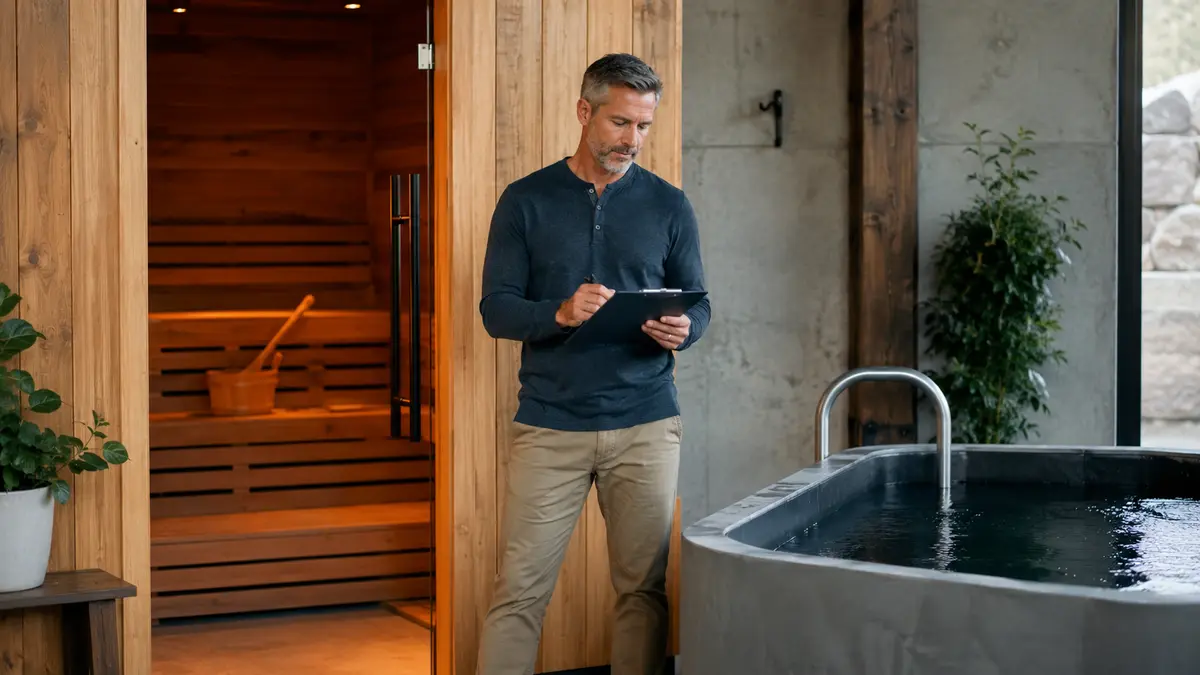
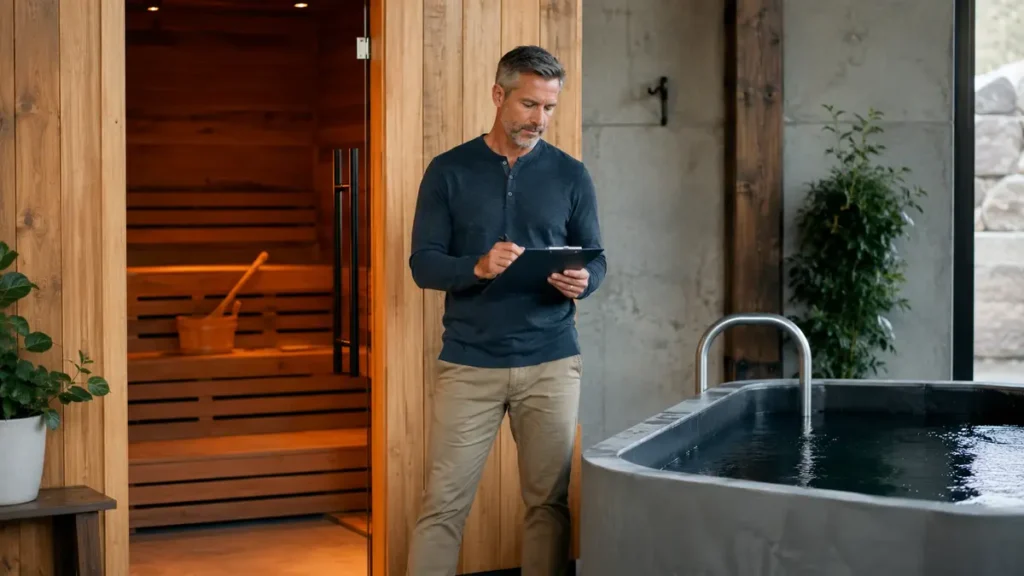
Sauna and cold-water immersion are different exposures with different evidence and risks. Treat them as optional practices to evaluate, not essential tools for living longer or substitutes for exercise and care.
The evidence and the problem
Sauna studies include observational associations, while cold-water research often examines short-term recovery or wellbeing. Those findings do not establish that either exposure extends an individual’s life.
The AHA warning about cold-water immersion explains why abrupt cold can challenge breathing and the cardiovascular system. Alternating extremes is not a necessary wellness routine.
A practical breakdown
Clarify the purpose
Why it matters: Relaxation, athletic recovery and longevity are different claims.
Practical application / what to track: Name the outcome you want and ask whether a simpler alternative would serve it.
Check personal risk
Why it matters: Health conditions and medication can change how exposure affects you.
Practical application / what to track: Discuss heart or blood-pressure concerns, fainting, circulation problems and relevant medicines before trying it.
Plan the environment
Why it matters: A safe exit and appropriate supervision matter.
Practical application / what to track: Avoid alcohol, do not plunge alone and do not combine immersion with breath-holding or hyperventilation.
Set boundaries with guidance
Why it matters: More time or greater extremes are not proof of benefit.
Practical application / what to track: Ask about appropriate limits and stop signs; do not copy an online temperature-and-time challenge.
Common mistakes and mindset guardrails
- Using discomfort as a badge of health.
- Assuming observational sauna findings prove causation.
- Buying equipment before checking suitability.
Do not push through warning symptoms. Stop activity and seek help for new or unexplained symptoms. For possible heart-attack or stroke symptoms, fainting or severe breathing difficulty, call 911 or your local emergency number. A comfortable pace or watch reading does not guarantee safety.
Primary care discussion checklist
Use the questions that fit your situation. Keep personal health notes private and bring them through your clinic’s approved channel.
- Is heat or cold exposure inappropriate given my conditions or medication?
- What symptoms should prompt stopping or urgent help?
- Is there a safer way to achieve the relaxation or recovery goal I have?
Next steps and related reading
Choose one useful next step rather than adding several new tasks at once.
Educational guidance. Not medical advice.
Sleep After 45: Better Rest, Recovery & Longevity
Continue with a focused guide, then keep the questions relevant to your situation.
Daily Movement After 45: A Flexible Exercise Framework
Continue with a focused guide, then keep the questions relevant to your situation.
Advanced Biomarker Tests After 45: What’s Worth Tracking?
Continue with a focused guide, then keep the questions relevant to your situation.
Evidence & Primary Sources
Original references and further reading are retained below. These include research and educational resources; inclusion is not a study-level appraisal or endorsement. See our evidence and editorial policy.
- Effects of cold-water immersion on health and wellbeing: systematic review (2025)
- American Heart Association warning signs
- Association between sauna bathing and fatal cardiovascular and all-cause mortality events
- Randomized trial of exercise plus sauna bathing
- Cold-water immersion and training adaptations: systematic review and meta-analysis
- AHA warning about cold-water immersion
Authorship and editorial disclosures. This editorial update does not claim a new independent medical review. Report a correction.
FREE LONGEVITY STARTER KIT
Choose one useful next step.
A six-health-numbers checklist and a weekly habit planner, ready to use without signing up.
Email delivery is optional and includes occasional Fruitful Years emails. Unsubscribe anytime.