
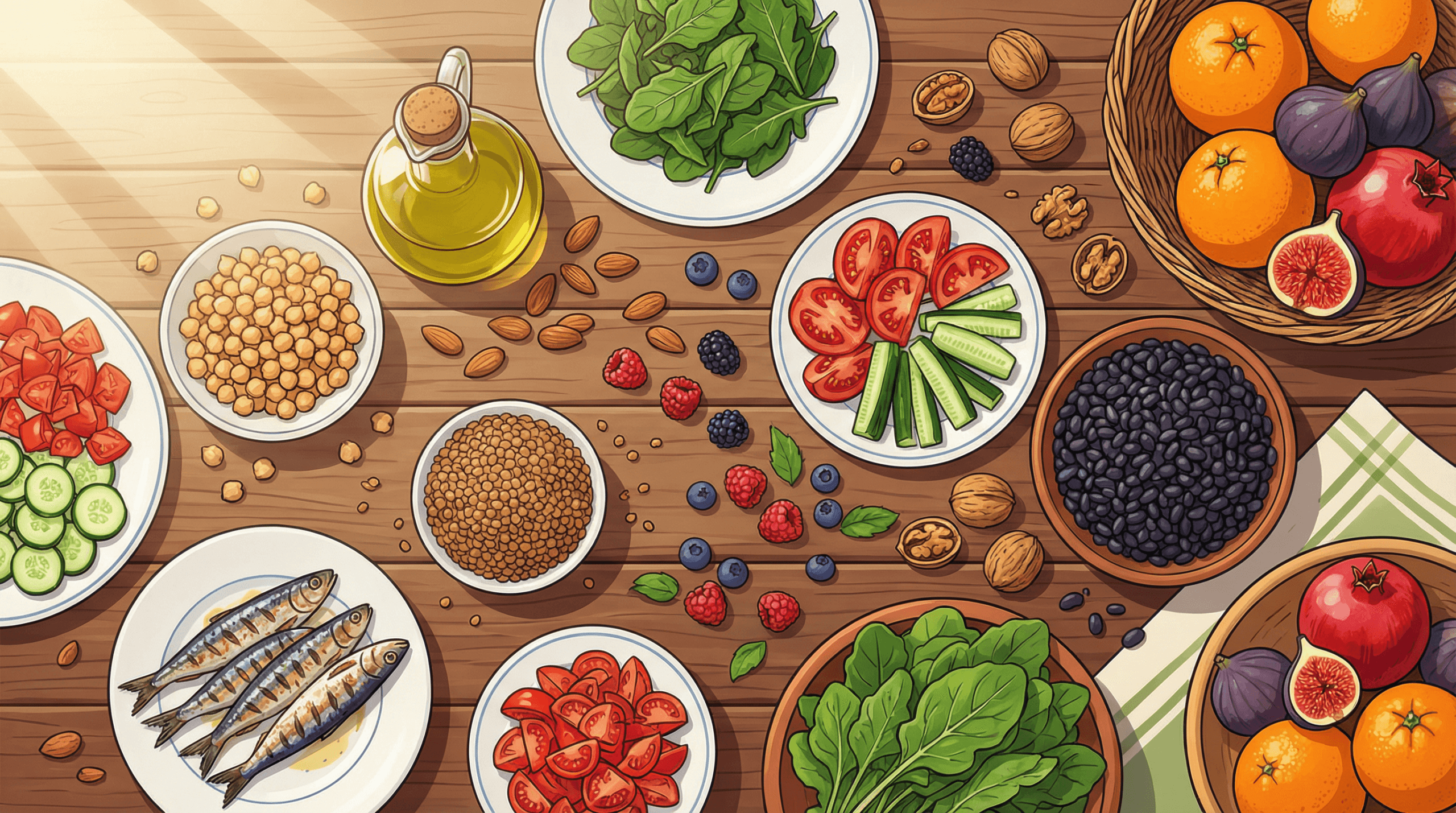
For decades, we’ve been searching for the perfect diet for longevity. We’ve tried low-fat, low-carb, high-protein, and everything in between. Yet, the answer may not lie in a rigid, prescriptive diet, but in the time-tested eating patterns of the world’s longest-lived populations.
These regions, known as the “Blue Zones,” are home to a remarkable number of centenarians who not only live longer but also maintain vibrant health well into old age. By studying their traditional diets, we can uncover a set of common principles that form a powerful, evidence-based blueprint for our own longevity. This guide will explore the nine foundational principles of the Blue Zones diet and show you how to apply them to your own life.
TL;DR: The Blue Zones Diet in a Nutshell
* What it is: A plant-forward eating pattern based on the traditional diets of the world’s five Blue Zones: Okinawa (Japan), Sardinia (Italy), Nicoya (Costa Rica), Ikaria (Greece), and Loma Linda (California).
* The Core Principle: Eat a diet that is 95-100% whole-food, plant-based. Meat is eaten sparingly, as a small side dish or for special occasions, not as the centerpiece of a meal.
* Key Food Groups: The diet is rich in vegetables, fruits, whole grains, and legumes (especially beans). Beans are the cornerstone of every Blue Zone diet.
* What to Avoid: Blue Zone diets are naturally low in processed foods, sugar, and unhealthy fats. Dairy is consumed in moderation, typically from goat’s or sheep’s milk.
The Five Blue Zones: A Global Snapshot of Longevity
The concept of the Blue Zones was born from the demographic work of Gianni Pes and Michel Poulain, who identified Sardinia, Italy, as a region with an exceptionally high concentration of male centenarians. Journalist Dan Buettner then expanded on this research, identifying four other longevity hotspots around the globe [1].
- Okinawa, Japan: Home to the world’s longest-lived women. Their diet is based on sweet potatoes, soy, and other vegetables.
- Sardinia, Italy: This mountainous region has the highest concentration of men over 100. Their diet is rich in whole grains, beans, and garden vegetables.
- Nicoya, Costa Rica: This Central American peninsula has a diet based on the “three sisters” of Mesoamerican agriculture: squash, corn, and beans.
- Ikaria, Greece: This Aegean island has very low rates of dementia and chronic disease. Their diet is a variation of the Mediterranean diet, rich in olive oil, vegetables, and potatoes.
- Loma Linda, California: This community of Seventh-day Adventists lives about a decade longer than the average American. Many follow a biblical, plant-based diet.
The 9 Principles of the Blue Zones Diet
Despite their geographic and cultural differences, the traditional diets of the five Blue Zones share a striking set of common denominators. These form the basis of the Blue Zones eating philosophy.
- Plant Slant (95-100% Plant-Based): The cornerstone of all Blue Zone diets is an emphasis on plant foods. Meat is consumed, on average, only about five times per month, in small 3-4 ounce servings.
- Retreat from Meat: In the Blue Zones, meat is a celebratory food, not a daily staple. The diet is not strictly vegetarian, but it is very close.
- Fish is Fine: In the Blue Zones with coastlines (Ikaria, Sardinia, Nicoya), fish is a common part of the diet, consumed up to three times per week. The best choices are small, mid-chain fish like sardines, anchovies, and cod, which are less likely to be contaminated with mercury.
- Diminish Dairy: Traditional Blue Zone diets include very little cow’s milk. Instead, they consume fermented dairy products from goats and sheep, such as yogurt and cheese, in moderation.
- The Daily Dose of Beans: Beans are the undisputed superfood of the Blue Zones. Centenarians eat, on average, at least a half-cup of cooked beans every day. They are an excellent source of fiber, protein, and complex carbohydrates.
- Slash Sugar: People in the Blue Zones eat sugar intentionally, not by accident. They consume about the same amount of naturally occurring sugars as North Americans, but only about one-fifth as much added sugar. Soda is almost completely absent.
- Snack on Nuts: Nuts are a common daily snack in the Blue Zones. A handful of nuts per day provides healthy fats, protein, and fiber.
- Sourdough and Whole Grains: Bread in the Blue Zones is either whole grain or sourdough. Traditional sourdough bread actually lowers the glycemic load of a meal.
- Go Whole: The overarching principle is to eat whole foods—foods that have not been processed or have been minimally processed. As Dan Buettner says, “Eat food that is recognizable for what it is.”
A Blue Zones-Inspired Meal Plan
What does a day of eating the Blue Zones way look like? Here is a sample meal plan.
| Meal | Sample Dish |
|---|---|
| Breakfast | Oatmeal with nuts and berries, or a slice of whole-grain toast with avocado. |
| Lunch | A large salad with a variety of greens, vegetables, and a scoop of black bean and corn salsa. |
| Dinner | Minestrone soup (a Sardinian favorite), packed with beans, vegetables, and whole-grain pasta, served with a small piece of sourdough bread. |
| Snacks | A handful of almonds or walnuts, a piece of fruit. |
My Personal Approach: I’ve found the Blue Zones framework to be the most sustainable and enjoyable way to eat for longevity. I don’t follow it with 100% rigidity, but it is my guiding philosophy. My diet is about 90% plant-based, with an emphasis on beans, lentils, and a wide variety of vegetables. I eat fish a couple of times a week and meat maybe once or twice a month.
FAQ About the Blue Zones Diet
- Do I have to give up meat completely?
No. The Blue Zones model is about reducing meat consumption, not necessarily eliminating it. Think of meat as a condiment or a side dish rather than the main event.
- What about wine?
People in most Blue Zones (except for the Adventists in Loma Linda) drink alcohol moderately and regularly. Moderate wine consumption, especially with a meal, is associated with longevity. The key is moderation—typically 1-2 glasses per day.
- Is this diet expensive?
It doesn’t have to be. In fact, it can be quite affordable. Staples like beans, lentils, and whole grains are some of the least expensive foods in the supermarket.
- Where can I learn more?
Dan Buettner’s book, The Blue Zones Kitchen, is an excellent resource with recipes from all five Blue Zones.
Next Steps: Your Blue Zones Checklist
- Make Beans Your Best Friend: Find ways to incorporate at least a half-cup of beans into your daily diet. Add them to soups, salads, or as a side dish.
- Go Meatless One Day a Week: Start with “Meatless Mondays” and see how it feels. You can gradually increase the number of plant-based days.
- Change Your Snack Strategy: Replace processed snacks with a handful of raw nuts.
- Bake or Buy Sourdough: Switch your regular bread for whole-grain or traditional sourdough bread.
- Eat a Rainbow of Vegetables: Aim to get as many different colors of vegetables onto your plate as possible each day.
References
[1] Buettner, D. (2012). The Blue Zones: 9 Lessons for Living Longer From the People Who’ve Lived the Longest. National Geographic Books.
[2] The Blue Zones, LLC. (n.d.). The Blue Zones Diet. https://www.bluezones.com/recipes/food-guidelines/
Deep Dive AI Prompts
Use these prompts with ChatGPT or any AI assistant to explore this topic further:
- “Summarise the dietary patterns of each of the five Blue Zones (Okinawa, Sardinia, Nicoya, Ikaria, Loma Linda). What do they have in common, and where do they differ?”
- “What is the scientific evidence linking legume consumption to longevity? Include specific studies and proposed mechanisms such as fibre, resistant starch, and plant protein.”
- “How does the Blue Zones dietary pattern compare to the Mediterranean diet, the MIND diet, and the DASH diet in terms of longevity and cognitive health outcomes?”
- “Design a practical one-week Blue Zones-inspired meal plan for a Canadian adult in their 60s, using locally available ingredients and keeping costs reasonable.”
Frequently Asked Questions
Do Blue Zones residents eat meat at all? Yes, but very little. Most Blue Zones populations eat meat occasionally — roughly five times per month or less — and in small portions (85g or less). The exception is the Seventh-day Adventist community in Loma Linda, California, where many members are vegetarian or vegan. The common thread is that meat is a condiment or a celebratory food, not a daily staple.
Is wine really part of the Blue Zones diet? Moderate wine consumption (one to two glasses per day, typically with meals and in social settings) is observed in Sardinia and Ikaria. However, the research on alcohol and longevity has become more nuanced in recent years — several large studies suggest that no amount of alcohol is truly “safe.” The social and stress-reduction aspects of shared meals may be more important than the wine itself. This is not a recommendation to start drinking.
What is the single most important food group in the Blue Zones diet? Legumes — beans, lentils, chickpeas, and soybeans — are the cornerstone of virtually every Blue Zones diet. They appear in nearly every meal in some form. They are high in fibre, plant protein, and resistant starch, and are associated with reduced risk of heart disease, type 2 diabetes, and colorectal cancer. Dan Buettner, who popularised the Blue Zones concept, calls beans the world’s greatest longevity food.
Can I follow a Blue Zones diet if I live in Canada? Absolutely. The Blue Zones diet is a pattern, not a rigid prescription. Canadian-friendly adaptations include: lentil soups and bean stews (dried legumes are inexpensive and widely available), wild-caught salmon and sardines instead of Sardinian fish, locally grown root vegetables and leafy greens, walnuts and flaxseed, and whole grains like oats, barley, and rye. The key principles — mostly plants, minimal processed food, moderate portions — are universally applicable.
Related Reading
- NAD+ Supplements: What Does the Science Actually Say About NMN and NR?
- The Longevity Diet: 7 Foods That Fight Aging at a Cellular Level
- Intermittent Fasting After 60: A Practical Guide to Benefits and Risks
9 thoughts on “The Blue Zones Diet: What Do the World’s Longest-Lived People Actually Eat?”